
Valencia feminists protest against far-right coalition
Feminist activists in Valencia protest the far-right's institutional presence, sparking debate on public subsidies and turnout.
English · Original discussion in Spanish · Published
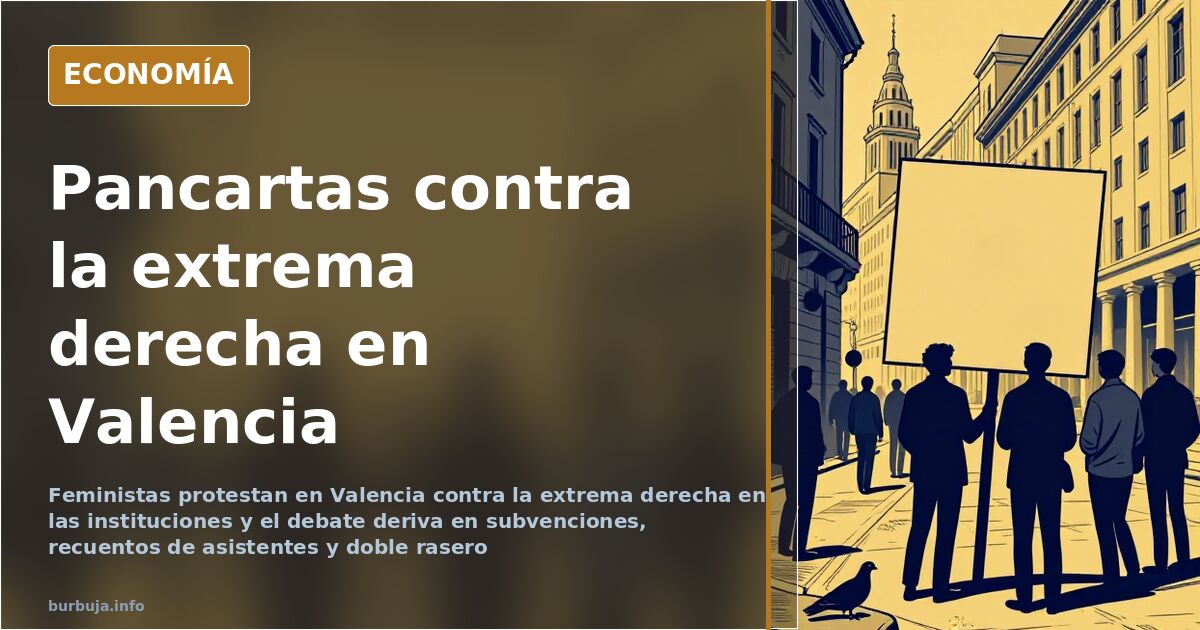
Feminists protest in Valencia against the far right
The new government in Valencia’s region has barely settled into office before facing opposition. A group of feminist activists demonstrated in Valencia with a message that spread widely on social media: "We disagree with a far-right party holding institutional power." Attendance was low, according to one participant’s count. However, the discussion it triggered is likely to last for days.
The core issue isn't who holds the placard, but the question raised by an early comment: if democracy’s strength lies in people voting as they wish, shouldn’t everyone accept the result? Or not?
Is protesting election results anti-democratic?
In theory, protesting is a right, and losing a vote doesn’t oblige you to applaud the winner. In practice, some argue that protesting the result itself—rather than specific policies—borders on denying the voters’ verdict. This view dominates much of the exchange: if the vote decides, the losers must comply and stay silent until the next election.
One participant ironically noted that we have moved from representative democracy to an emotional democracy, where respect for results depends on how each person feels about them. Another called on media outlets to equally criticize anyone who protests after elections simply because they dislike the outcome, regardless of political tonalidad.
It is worth noting the timing, which is significant. One participant recalled that previously, newly formed governments were granted a hundred-day grace period before criticism began. Now, they added, that window closes even before the executive takes office. Criticism now precedes action.
Subsidies and "chiringuitos": the economic argument behind the protest
Here, the debate moves from the street to the budget. The most common hypothesis is that much of the civil society protesting relies on public funds: entities and structures sustained by subsidies that antiestéticar losing financing with the change of government. Closing these chiringuitos (a colloquial term for wasteful or unnecessary public bodies), the harshest version argues, would benefit the majority and harm only those who, in their view, contribute nothing more than slogans.
For now, this claim lacks documentation. No budgets, agreements, or specific line items quantify how much public money flows to whom. This absence of data is, in itself, part of the debate.
A historical parallel runs through this section: over a century ago, when governments changed, entire staffs—from mail carriers to ministry ushers—were fired en masse until the separation of civil service from political appointments. The current system, the comparison suggests, has rebuilt that patronage through public and semi-public companies, with workforces reshuffled based on who is in charge.
Eight attendees, two taxis, and a headcount turned into a joke
There is also a battle over numbers, though none officially declared. An observer counted eight attendees, arriving in two taxis. From there, jokes emerged: suggesting these eight were founders—and sole members—of at least six different organizations. There is no data from the organizers or any administration to confirm or refute such arithmetic.
The call to protest was sarcastically described as a spontaneous demonstration, fueled by curiosity about the abundance of CCOO (Spain’s major trade union) t-shirts, quotes, and scarves among those present. This detail cast doubt on whether the event was truly improvised.
Does the far right bother them, or just the right?
The sharpest suspicion is that the problem isn’t the adjective "far," but the noun "right." If the targeted party were far-left, this reading suggests, the protest wouldn’t exist. Some add that the opposite end of the political spectrum does not generate the same alarm or mobilization.
This argument is completed with an uncomfortable comparison: claims that extremism within the left is greater than on the right, yet provokes no banners.
While all this was debated, another image circulated in parallel: the national anthem returned to Valencian public institutions after eight years, accompanied by emotion and tears, according to the video’s caption. Two photos, two Valencias, neither able to answer the initial question. Accepting a result is much harder when it belongs to the other side.
The new government in Valencia’s region has barely settled into office before facing opposition. A group of feminist activists demonstrated in Valencia with a message that spread widely on social media: "We disagree with a far-right party holding institutional power." Attendance was low, according to one participant’s count. However, the discussion it triggered is likely to last for days.
The core issue isn't who holds the placard, but the question raised by an early comment: if democracy’s strength lies in people voting as they wish, shouldn’t everyone accept the result? Or not?
Is protesting election results anti-democratic?
In theory, protesting is a right, and losing a vote doesn’t oblige you to applaud the winner. In practice, some argue that protesting the result itself—rather than specific policies—borders on denying the voters’ verdict. This view dominates much of the exchange: if the vote decides, the losers must comply and stay silent until the next election.
One participant ironically noted that we have moved from representative democracy to an emotional democracy, where respect for results depends on how each person feels about them. Another called on media outlets to equally criticize anyone who protests after elections simply because they dislike the outcome, regardless of political tonalidad.
It is worth noting the timing, which is significant. One participant recalled that previously, newly formed governments were granted a hundred-day grace period before criticism began. Now, they added, that window closes even before the executive takes office. Criticism now precedes action.
Subsidies and "chiringuitos": the economic argument behind the protest
Here, the debate moves from the street to the budget. The most common hypothesis is that much of the civil society protesting relies on public funds: entities and structures sustained by subsidies that antiestéticar losing financing with the change of government. Closing these chiringuitos (a colloquial term for wasteful or unnecessary public bodies), the harshest version argues, would benefit the majority and harm only those who, in their view, contribute nothing more than slogans.
For now, this claim lacks documentation. No budgets, agreements, or specific line items quantify how much public money flows to whom. This absence of data is, in itself, part of the debate.
A historical parallel runs through this section: over a century ago, when governments changed, entire staffs—from mail carriers to ministry ushers—were fired en masse until the separation of civil service from political appointments. The current system, the comparison suggests, has rebuilt that patronage through public and semi-public companies, with workforces reshuffled based on who is in charge.
Eight attendees, two taxis, and a headcount turned into a joke
There is also a battle over numbers, though none officially declared. An observer counted eight attendees, arriving in two taxis. From there, jokes emerged: suggesting these eight were founders—and sole members—of at least six different organizations. There is no data from the organizers or any administration to confirm or refute such arithmetic.
The call to protest was sarcastically described as a spontaneous demonstration, fueled by curiosity about the abundance of CCOO (Spain’s major trade union) t-shirts, quotes, and scarves among those present. This detail cast doubt on whether the event was truly improvised.
Does the far right bother them, or just the right?
The sharpest suspicion is that the problem isn’t the adjective "far," but the noun "right." If the targeted party were far-left, this reading suggests, the protest wouldn’t exist. Some add that the opposite end of the political spectrum does not generate the same alarm or mobilization.
This argument is completed with an uncomfortable comparison: claims that extremism within the left is greater than on the right, yet provokes no banners.
While all this was debated, another image circulated in parallel: the national anthem returned to Valencian public institutions after eight years, accompanied by emotion and tears, according to the video’s caption. Two photos, two Valencias, neither able to answer the initial question. Accepting a result is much harder when it belongs to the other side.
Summary of a discussion on Burbuja.info - Foro de economía, actualidad y política., translated from Spanish and reviewed before publication. Read the full discussion (192 replies).
More summaries
-
Sumar Proposes Migrant Quotas for Public Sector Jobs in Spain
Sumar proposes migrant quotas in public institutions and companies, but critics argue that nationality requirements in civil service exams make the measure ineffective.
-
Abdellah Mustafa: The Neighbourhood Voice of Ceuta on TV
Abdellah Mustafa, neighbourhood president of Sidi Embarek, has become omnipresent on television while critics accuse him of not mentioning Morocco.
-
Garzón denies building more housing lowers prices, but data contradicts him
Eduardo Garzón argues that increased construction does not reduce housing prices. However, supply and demand data in Spain suggest otherwise.
-
Avoiding Spanish Polling Station Duty by Not Answering Door
In Spain, polling station notification requires a signature. Without it, there is no summons. The lottery runs from October 31 to November 4.
-
Spain's Administrative Collapse: Six Months for One Registration
Intellectual property registrations now take six months instead of fifteen days, highlighting a severe administrative breakdown in Spain.
-
Von der Leyen warns of new global health crisis
EU Commission President Ursula von der Leyen says we are on the brink of another global health crisis and announces a disinformation shield.