
TV3 presenter suggests burning the Sagrada Familia 'to live in peace'
A TV3 presenter in Spain suggested burning the Sagrada Familia to achieve social peace. The remark, shared in a tweet, sparks a debate over the limits of…
English · Original discussion in Spanish · Published
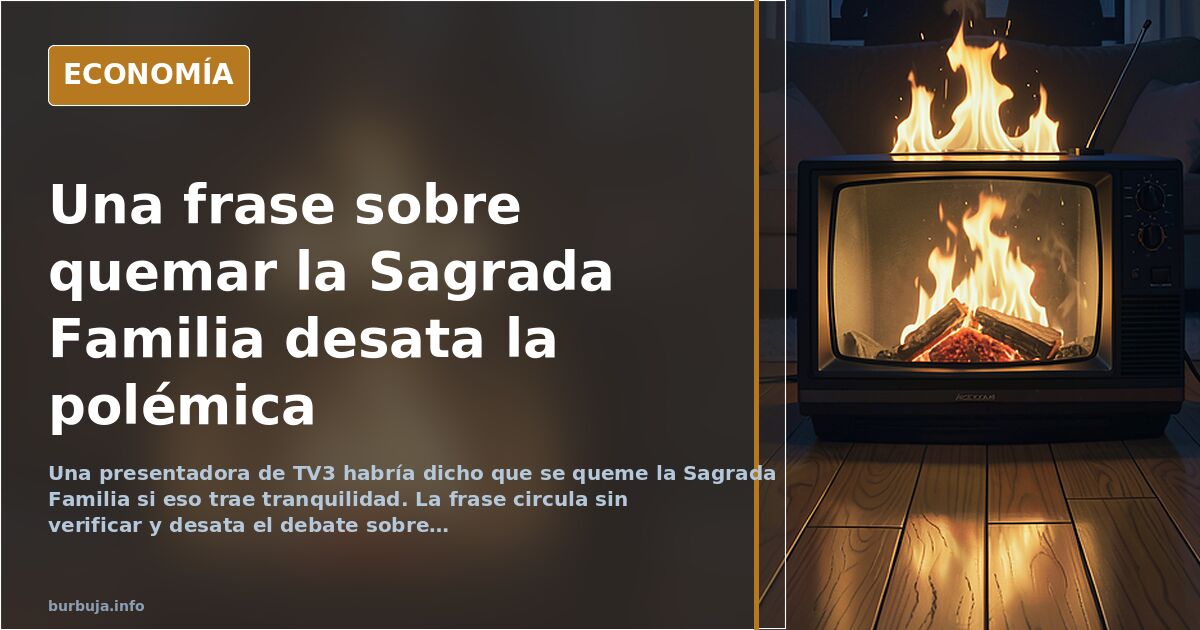
TV3 presenter suggests burning the Sagrada Familia 'to live in peace'
A seven-second remark was enough to set fire to more than a basilica. A TV3 presenter, in the context of the riots that shook France, blurted out that "if burning the Sagrada Familia is what it takes for us all to live in peace, then let it burn!" The comment, captured in a viral tweet, has unleashed a storm mixing outrage over heritage, political calculation and an uncomfortable question: how far does rhetorical license go when the destruction of a symbol is placed on the altar of social peace?
The first instinct was to doubt. "It must be AI", someone wrote, as if the absurdity of the proposal demanded a technological culprit. It wasn't. From there the responses spread: from those demanding accountability for an alleged hate crime to those sarcastically suggesting the same treatment be applied to the author's own house or car. The Sagrada Familia, Gaudí's unfinished masterpiece and Barcelona's main tourist magnet, suddenly became the battleground of a culture war that had long been looking for a spark.
Heritage held hostage to social peace
The presenter's argument has an internal logic that collapses at the first puff of air: if collective tranquility demands sacrifices, no symbol is safe. The problem is that the syllogism fails to distinguish between a garbage bin and a basilica declared a World Heritage Site. Burning the Sagrada Familia would calm no one; it would most likely inflame the very conflict it claims to want to solve. Several posts point out exactly that: the remedy would worsen the disease.
The discussion soon turned to double standards. Would the same criterion apply to other temples? The question hangs over the exchange without a clear answer, and there the suspicion takes root that destructive zeal is not distributed equally depending on the building's creed. It is the kind of asymmetry that breeds resentment and that no official spokesperson bothers to deny.
From outrage to economic calculation
Beyond the noise, there is one fact nobody disputes: the Sagrada Familia is a first-rate economic asset. Its impact on tourism, employment and the Barcelona brand is hard to exaggerate. Whoever proposes burning it is not throwing out a harmless hyperbole; they are suggesting, even as a joke, the destruction of infrastructure that sustains thousands of jobs. Money is money, and in Catalonia they know that well.
The thread also exposes nervousness about the basilica's security. Someone points out that, surrounded by social tensions and imported riots, the monument has every chance of becoming a target. It is not a pleasant prediction, but it does reveal how far the debate has moved from a television anecdote to genuine concern for heritage.
Public broadcasting's tone and the responsibility of the microphone
The underlying question is what is expected of a public television presenter. She is not a bar-stool pundit; her voice carries reach, and her remark, even wrapped in a conditional, becomes a headline. Rhetorical license comes at a price when broadcast from a platform funded with public money. And that price is paid in credibility.
The majority reaction ranges from rejection to mockery. Her education, her sensitivity and even her right to voice an opinion about a symbol that transcends her personal taste are all called into question. Some argue it is all an exaggeration by the media right; others, that the remark is a symptom of a drift that no longer hides itself. What is certain is that the episode has peine the eternal debate about bias in public media.
What remains when the fire goes out?
The remark will die down, like all of them. But it leaves a residue: the feeling that certain discourses, however figurative, normalize destruction as a tool of debate. And a question nobody has answered: if tomorrow a group of hotheads takes the suggestion literally, who bears responsibility for having floated the idea?
Summary of a discussion on Burbuja.info - Foro de economía, actualidad y política., translated from Spanish and reviewed before publication. Read the full discussion (167 replies).
More summaries
-
Sagrada Família Demolishes Two Eixample Blocks for Grand Staircase
The Sagrada Família staircase project requires demolishing 3,000 homes. Residents clash with Gaudí's original plan. Who pays the bill?
-
Sagrada Familia: Spain's Icon or Controversial Choice?
Debate on the Sagrada Familia as a Spanish icon, weighing costs and delays against rivals like the Alhambra.
-
What happens if 70% of the electorate doesn't vote in general elections?
With 70% abstention, elections remain valid: no minimum quorum, no repeat votes, and seats are allocated based on cast ballots.
-
Spain the only country to vote against EU regulation speeding up migrant returns
The EU Returns Regulation passed with 23 votes in favour, one against (Spain) and Belgium abstaining, amid the crisis in Ceuta.
-
Ukraine would accept losing 25% of its territory, with Europe footing the bill
Zelensky would accept the current demarcation line as the new border: Ukraine keeps 75% of its territory and Europe bears the energy cost.
-
Aldama intensifies accusations against Sánchez as Spain's PSOE calls them hoaxes
Aldama warns that Sánchez will "end up in jail", while Spain's PSOE dismisses the claims as baseless hoaxes. The Public Prosecutor's Office is said to have given credence to part of the material.