
Toledo's Alcázar: 90 Years of Myth and a Questioned Call
90 years after the liberation of Toledo's Alcázar, the reality of Moscardó's call to his son remains debated: myth or propaganda?
English · Original discussion in Spanish · Published
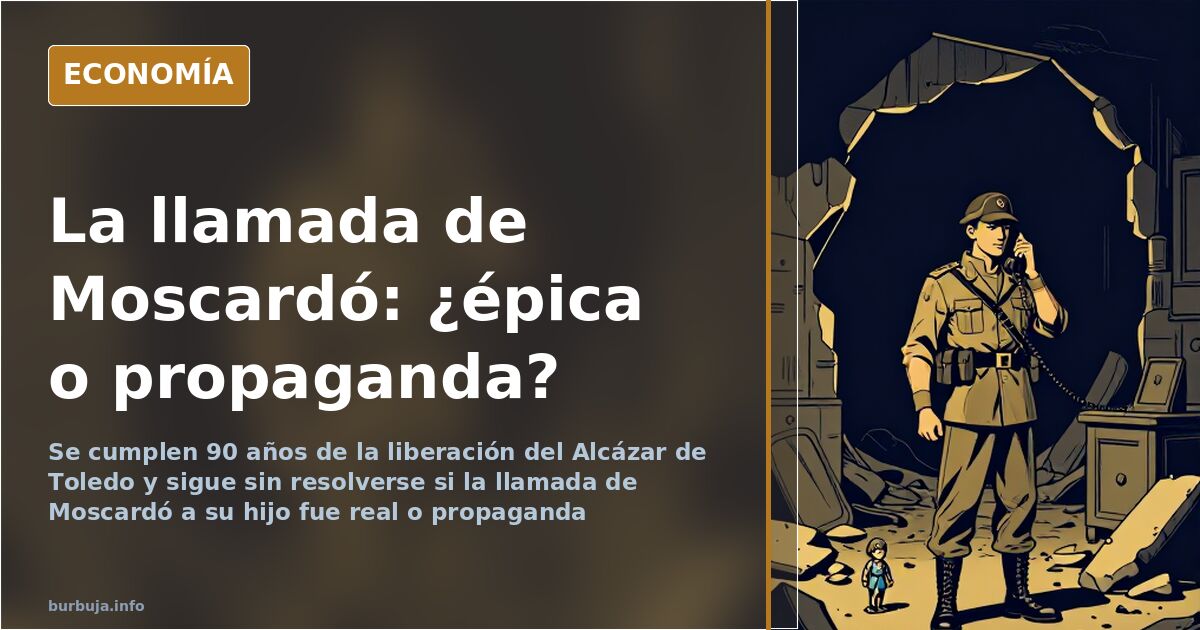
90 Years of the Alcázar: Moscardó's Call Still Debated
It's been 90 years since the liberation of Toledo's Alcázar, an episode Francisco Franco turned into his great war myth. In his own words, as recorded in accounts of the time, it was "the greatest ambition of my entire life", and with it, the war was won. But the anniversary brings back the uncomfortable question: the emotional phone conversation between Colonel Moscardó and his son Luis, central to the narrative, remains unresolved.
Was the Call Between Moscardó and His Son Real?
The version repeated in recordings, museums, and textbooks says yes. The son, captured, allegedly called the Alcázar to relay the ultimatum: if the colonel didn't surrender the fortress, he would be shot. The response attributed to Moscardó—entrusting his soul to God and dying as a patriot—is one of the most cited phrases of the 20th century in Spain. It gave you goosebumps, recalls someone who heard it repeatedly for years.
The problem is that the piece fits together too perfectly. Some argue that the Alcázar's phone line was cut from the very beginning of the siege, making the conversation impossible as recounted. The technical counter-argument: with control of Toledo's telephone exchange, the Republican side didn't need to physically cut anything to cut off the fortress. The call might have peine; the content, however, could have been fabricated later as propaganda. The most significant detail: Moscardó's son was captured and shot, yes, but months later and on another front, not as a bargaining chip in the siege.
The Tabor of Regulares Who Entered First
Official epic narratives tend to erase their own protagonists. The first unit to enter the Alcázar was the Tabor of Regulares led by Mohammed ben Mizzian ben el Kasem, a detail now claimed as an essential part of the story but often relegated to the background by rigid historical memory. The staged photo opportunity is also remembered: the invitation to international press to witness the Republican takeover ultimately immortalized Franco's victorious entry.
The Alcázar You Can Visit Today
From a besieged fortress to a military museum. Those who knew it years ago recall a brief visit, with a recording that played the conversation over and over. Today, they note, it's an endless visit of rooms and display cases. Memory, some say, is also administered by meters of exhibition space.
And that's where everything gets stuck. The call functioned as propaganda regardless of what was actually said over that phone. Ninety years later, we're still debating whether there was a conversation or just a script. Perhaps that was the objective all along.
It's been 90 years since the liberation of Toledo's Alcázar, an episode Francisco Franco turned into his great war myth. In his own words, as recorded in accounts of the time, it was "the greatest ambition of my entire life", and with it, the war was won. But the anniversary brings back the uncomfortable question: the emotional phone conversation between Colonel Moscardó and his son Luis, central to the narrative, remains unresolved.
Was the Call Between Moscardó and His Son Real?
The version repeated in recordings, museums, and textbooks says yes. The son, captured, allegedly called the Alcázar to relay the ultimatum: if the colonel didn't surrender the fortress, he would be shot. The response attributed to Moscardó—entrusting his soul to God and dying as a patriot—is one of the most cited phrases of the 20th century in Spain. It gave you goosebumps, recalls someone who heard it repeatedly for years.
The problem is that the piece fits together too perfectly. Some argue that the Alcázar's phone line was cut from the very beginning of the siege, making the conversation impossible as recounted. The technical counter-argument: with control of Toledo's telephone exchange, the Republican side didn't need to physically cut anything to cut off the fortress. The call might have peine; the content, however, could have been fabricated later as propaganda. The most significant detail: Moscardó's son was captured and shot, yes, but months later and on another front, not as a bargaining chip in the siege.
The Tabor of Regulares Who Entered First
Official epic narratives tend to erase their own protagonists. The first unit to enter the Alcázar was the Tabor of Regulares led by Mohammed ben Mizzian ben el Kasem, a detail now claimed as an essential part of the story but often relegated to the background by rigid historical memory. The staged photo opportunity is also remembered: the invitation to international press to witness the Republican takeover ultimately immortalized Franco's victorious entry.
The Alcázar You Can Visit Today
From a besieged fortress to a military museum. Those who knew it years ago recall a brief visit, with a recording that played the conversation over and over. Today, they note, it's an endless visit of rooms and display cases. Memory, some say, is also administered by meters of exhibition space.
And that's where everything gets stuck. The call functioned as propaganda regardless of what was actually said over that phone. Ninety years later, we're still debating whether there was a conversation or just a script. Perhaps that was the objective all along.
Summary of a discussion on Burbuja.info - Foro de economía, actualidad y política., translated from Spanish and reviewed before publication. Read the full discussion (33 replies).
More summaries
-
Spanish Cinema's Missed Opportunities: Civil War Stories Beyond the Revolution
Spanish film often focuses on the revolutionary left during the Civil War. Explore alternative narratives of internal conflict and exile.
-
Open War Between Marlaska and JUPOL Over Ceuta Reports
JUPOL demands Marlaska's resignation over Ceuta reports the government ignored. The 300,000 euro spending day before the crisis reveals they knew...
-
“Zapatero will die killing”: Police and Government officials see the former President's hand in Ceuta reports
Police and government officials suspect former President Zapatero is behind reports on Ceuta. We analyze the keys to this alleged operation.
-
Euthanasia in Old Age: Autonomy vs. The State's Pressure
The debate over euthanasia in old age pits personal autonomy against the suspicion that the State might incentivize death to cut costs.
-
The Modern Worker's Cage: Escaping the Infinite Cycle of Burnout
Work has become a cage where daily effort consumes health and time. Discover why we push ourselves so hard and how to break the cycle.
-
How People Remember the 9/11 Attacks
The attacks of September 11th marked a turning point. Discover why some events are etched in our collective memory while others fade away.