
The Video of the 'Surgeons' on Ceuta Beach: A Double Standard
A video shows illegal vendors on a Ceuta beach as Spaniards face fines for a simple umbrella. The contrast between the official narrative and reality is stark.
English · Original discussion in Spanish · Published
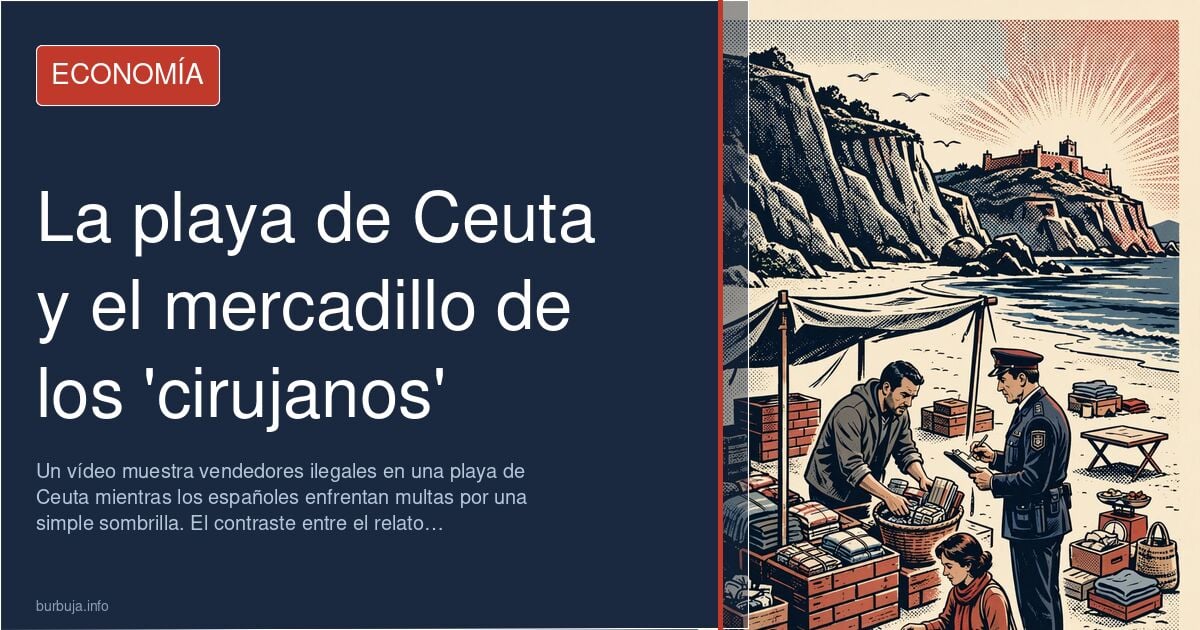
The Video of the Beach 'Surgeons': The Informal Economy Dividing Ceuta
A video circulated this week shows a Ceuta beach transformed into an impromptu market. Hundreds of people sell products without licenses, fueling the chorus of those who view it as an example of legal breakdown. The irony couldn't be crueler: some refer to these vendors as 'surgeons, engineers, lawyers' because the government insists they represent the country's future. But that future lacks permits, taxes, and controls.
Fines for Some, Tolerance for Others
The difference in treatment is the central argument. According to current regulations, camping on the beach can cost up to 3,000 euros; setting up an umbrella and leaving costs up to 750; playing in the sand, up to 3,000; sleeping in the sand, up to 1,500; and showering with soap, between 50 and 750. These fines are applied to Spaniards, according to various reports. But on Ceuta beach, the alleged illegal vendors seem unrestrained. Why is the law applied unequally? That is the question echoing among Ceutans.
Official Narrative Versus Neighborhood Reality
The government insists that immigration is an opportunity. At Columbia University, the Prime Minister stated that in the last seven years, over two million immigrants have been accommodated and unemployment has dropped by 40%. Furthermore, the Secretariat of State for Migration projects the need for 3.5 million migrants in the next decade to offset retirements. But on the beach, the image is different: makeshift stalls, lack of services, and an atmosphere described by some as neglect.
The Economy as Metaphor: Spain in Freefall
For some analysts, the Ceuta scene reflects a country in decline. The comparison to a stock losing 99% of its value describes the trend: Spain as an asset in freefall, with a target price of zero. Future pensions, paid by these supposed entrepreneurs, are the alibi. But the reality is that the informal economy does not contribute to Social Security, nor does it pay taxes or integrate into the productive model.
The winter approaches. If the situation persists, the clash between daily reality and official discourse may play out in the streets, not in boardrooms. But, as with everything in this country, no one dares to predict the date.
A video circulated this week shows a Ceuta beach transformed into an impromptu market. Hundreds of people sell products without licenses, fueling the chorus of those who view it as an example of legal breakdown. The irony couldn't be crueler: some refer to these vendors as 'surgeons, engineers, lawyers' because the government insists they represent the country's future. But that future lacks permits, taxes, and controls.
Fines for Some, Tolerance for Others
The difference in treatment is the central argument. According to current regulations, camping on the beach can cost up to 3,000 euros; setting up an umbrella and leaving costs up to 750; playing in the sand, up to 3,000; sleeping in the sand, up to 1,500; and showering with soap, between 50 and 750. These fines are applied to Spaniards, according to various reports. But on Ceuta beach, the alleged illegal vendors seem unrestrained. Why is the law applied unequally? That is the question echoing among Ceutans.
Official Narrative Versus Neighborhood Reality
The government insists that immigration is an opportunity. At Columbia University, the Prime Minister stated that in the last seven years, over two million immigrants have been accommodated and unemployment has dropped by 40%. Furthermore, the Secretariat of State for Migration projects the need for 3.5 million migrants in the next decade to offset retirements. But on the beach, the image is different: makeshift stalls, lack of services, and an atmosphere described by some as neglect.
The Economy as Metaphor: Spain in Freefall
For some analysts, the Ceuta scene reflects a country in decline. The comparison to a stock losing 99% of its value describes the trend: Spain as an asset in freefall, with a target price of zero. Future pensions, paid by these supposed entrepreneurs, are the alibi. But the reality is that the informal economy does not contribute to Social Security, nor does it pay taxes or integrate into the productive model.
The winter approaches. If the situation persists, the clash between daily reality and official discourse may play out in the streets, not in boardrooms. But, as with everything in this country, no one dares to predict the date.
Summary of a discussion on Burbuja.info - Foro de economía, actualidad y política., translated from Spanish and reviewed before publication. Read the full discussion (63 replies).
More summaries
-
Ceuta: Migratory Crisis Rekindles Trade Dispute with Morocco
Thousands of irregular entries into Ceuta reopen trade and energy disputes with Morocco, marked by conflicting figures and rising public costs.
-
Córdoba Father Self-Immolates: Mental Illness or Societal Despair?
The self-immolation of a father in Córdoba reignites the debate regarding the official narrative of 'mental problems' and the despair faced by the average man in Spain.
-
Euthanasia in Old Age: Autonomy vs. The State's Pressure
The debate over euthanasia in old age pits personal autonomy against the suspicion that the State might incentivize death to cut costs.
-
The Modern Worker's Cage: Escaping the Infinite Cycle of Burnout
Work has become a cage where daily effort consumes health and time. Discover why we push ourselves so hard and how to break the cycle.
-
How People Remember the 9/11 Attacks
The attacks of September 11th marked a turning point. Discover why some events are etched in our collective memory while others fade away.
-
Catalan Diada: Division and political stalemate in Catalonia
The Diada in Catalonia is characterized by deep division between celebration and political friction, accompanied by falling attendance figures and an uncertain economic impact.