
The Mad Max Scenario: Preparing for Economic Collapse
Economic debate shifts to survival: zero cash in banks, pepper spray, and ready documents. Is collapse imminent?
English · Original discussion in Spanish · Published
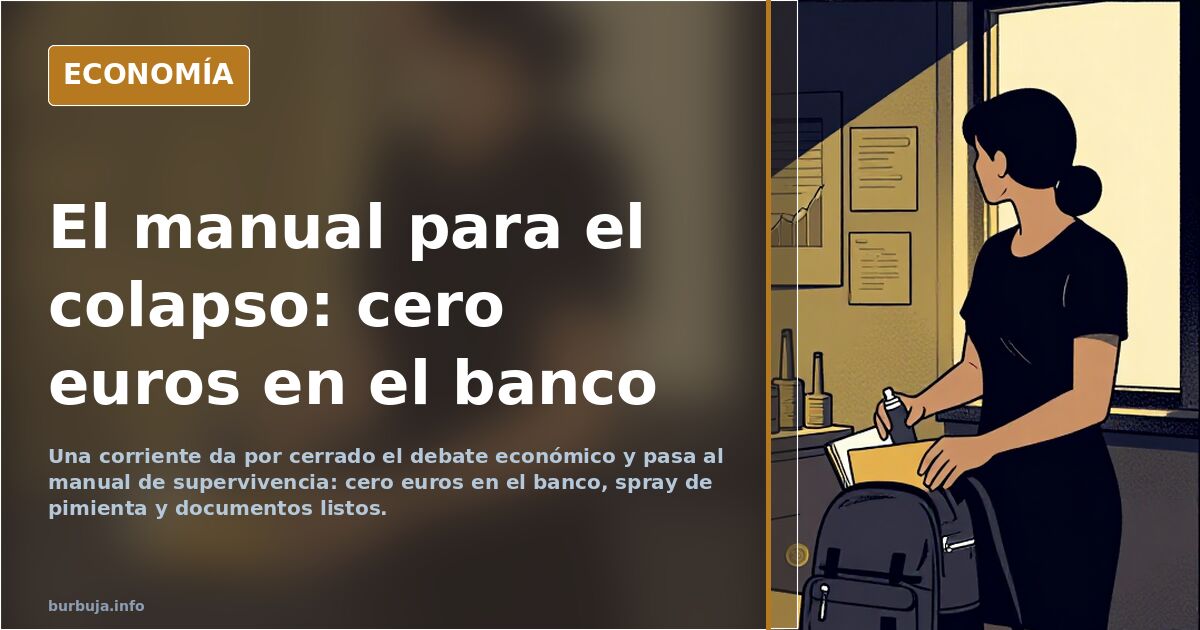
Preparing for the End: Cash Out of the Bank and Documents Ready
What do you do when the diagnosis isn't about how much it will hurt, but how much time is left? A segment of economic analysis has closed the debate: U.S. pressure on Europe will be settled, they maintain, with a bill paid by the European taxpayer. Nothing to be done but pay, is the slogan. Without a single figure to back it up.
The Survival Manual Circulating
The juicy part isn't the prophecy. It's the to-do list. Zero euros in the bank, a pepper spray in the pocket, and documentation ready to leave the country. This isn't idle chatter: some claim to have been waiting two years for this scenario from a country house, and others warn that without an underground bunker, the rest of the measures are of little use. There wouldn't be enough bullets for everyone, in any case.
The package is completed with the prediction of a false flag attack and the thesis that any leak to the press aims to keep the masses prepared. There's no data there. Not one bit. It's the same apocalyptic forecast that is reformulated from time to time, always on the verge of happening and never dated.
Why the End Narrative Returns Without a Date
The mechanism repeats with almost liturgical fidelity. First, an external actor is identified who imposes conditions; then, this pressure is translated into a specific patrimonial loss for the average citizen; finally, an individual solution—cash, self-protection, escape—is recommended instead of a collective response. What changes is the packaging. What doesn't change is the absence of numbers.
It's worth separating two things. Discussing the weight of defense spending, debt, or external dependence is economics. Turning it into a forecast of collapse without a deadline, without figures, and without a source is not. And whoever maintains it actually admits that they have been signing off on it the same way for years.
Meanwhile, the only concrete magnitude in the entire package remains the two years of waiting. The rest is faith.
What do you do when the diagnosis isn't about how much it will hurt, but how much time is left? A segment of economic analysis has closed the debate: U.S. pressure on Europe will be settled, they maintain, with a bill paid by the European taxpayer. Nothing to be done but pay, is the slogan. Without a single figure to back it up.
The Survival Manual Circulating
The juicy part isn't the prophecy. It's the to-do list. Zero euros in the bank, a pepper spray in the pocket, and documentation ready to leave the country. This isn't idle chatter: some claim to have been waiting two years for this scenario from a country house, and others warn that without an underground bunker, the rest of the measures are of little use. There wouldn't be enough bullets for everyone, in any case.
The package is completed with the prediction of a false flag attack and the thesis that any leak to the press aims to keep the masses prepared. There's no data there. Not one bit. It's the same apocalyptic forecast that is reformulated from time to time, always on the verge of happening and never dated.
Why the End Narrative Returns Without a Date
The mechanism repeats with almost liturgical fidelity. First, an external actor is identified who imposes conditions; then, this pressure is translated into a specific patrimonial loss for the average citizen; finally, an individual solution—cash, self-protection, escape—is recommended instead of a collective response. What changes is the packaging. What doesn't change is the absence of numbers.
It's worth separating two things. Discussing the weight of defense spending, debt, or external dependence is economics. Turning it into a forecast of collapse without a deadline, without figures, and without a source is not. And whoever maintains it actually admits that they have been signing off on it the same way for years.
Meanwhile, the only concrete magnitude in the entire package remains the two years of waiting. The rest is faith.
Summary of a discussion on Burbuja.info - Foro de economía, actualidad y política., translated from Spanish and reviewed before publication. Read the full discussion (19 replies).
More summaries
-
Ignacio Lázaro: 'Maricarmen paid €154 rent while we paid €750'
Ignacio Lázaro, grandson of the original owner, reveals the other side of the Maricarmen case: 'We subsidized her for years and now, with our taxes.'
-
Euthanasia in Old Age: Autonomy vs. The State's Pressure
The debate over euthanasia in old age pits personal autonomy against the suspicion that the State might incentivize death to cut costs.
-
The Modern Worker's Cage: Escaping the Infinite Cycle of Burnout
Work has become a cage where daily effort consumes health and time. Discover why we push ourselves so hard and how to break the cycle.
-
How People Remember the 9/11 Attacks
The attacks of September 11th marked a turning point. Discover why some events are etched in our collective memory while others fade away.
-
Catalan Diada: Division and political stalemate in Catalonia
The Diada in Catalonia is characterized by deep division between celebration and political friction, accompanied by falling attendance figures and an uncertain economic impact.
-
Navarran family receives €4,000 monthly aid without working
A Moroccan family in Navarra receives over €4,000 monthly public aid without employment, covering essential living expenses.