
Ten-year relationship with infidelity: AI analysis sparks debate on couple stability
We analyze a 10-year relationship marked by infidelity and emotional dependence. Discover how objective factors influence couple stability.
English · Original discussion in Spanish · Published
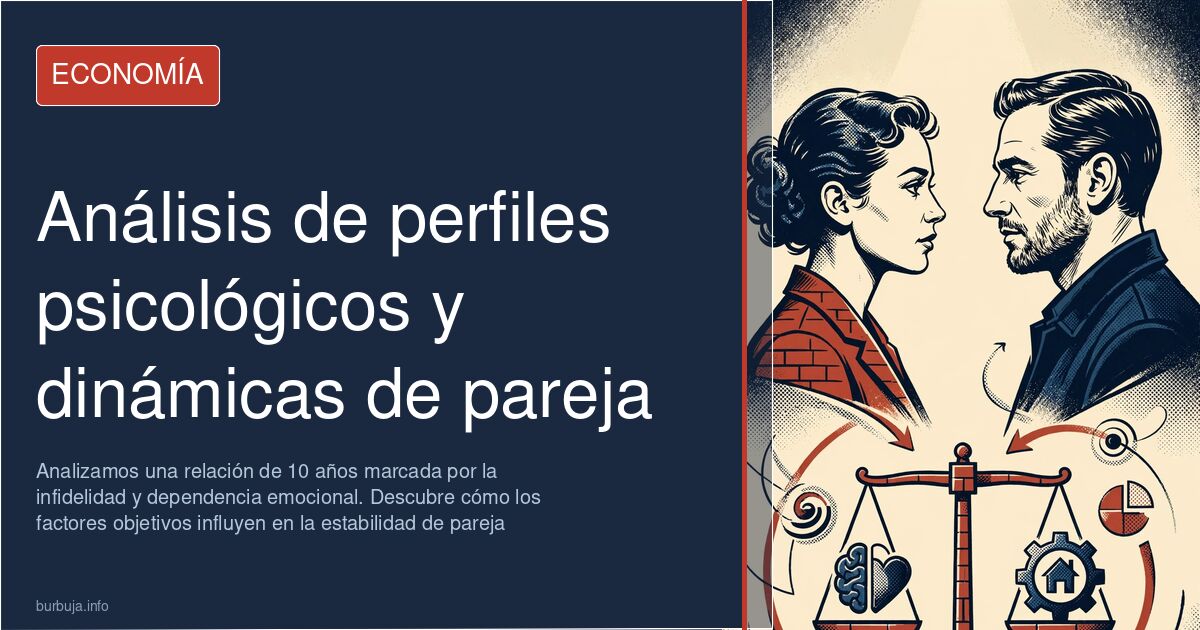
Analysis of psychological profiles and relationship dynamics
The thread presents a behavioral analysis exercise in which a user lays out a series of personal details and situations from his private life, asking an artificial intelligence for a psychological assessment and a forecast of his romantic relationship's stability. The conversation moves from an initial evaluation based on professional performance to the scrutiny of complex relationship dynamics, including episodes of deliberate infidelity and structures of emotional dependence. The debate centers on how objective facts, such as the length of cohabitation or the occurrence of breaches of trust, radically alter the future projections of an emotional bond.
The essentials of the case presented
What forum members think about these dynamics
Why this thread is getting people talking
The thread stands out for the technical contradiction between the analysis of hard data — the length of cohabitation — and the interpretation of behavioral psychology. The unexpected twist comes when the relationship's probability of success rises drastically after an infidelity is confirmed, raising the unsettling thesis that, in certain bonds, the breakdown of trust does not hasten the end but rather cements a power dynamic that guarantees long-term permanence.
Related debates on the forum
The thread presents a behavioral analysis exercise in which a user lays out a series of personal details and situations from his private life, asking an artificial intelligence for a psychological assessment and a forecast of his romantic relationship's stability. The conversation moves from an initial evaluation based on professional performance to the scrutiny of complex relationship dynamics, including episodes of deliberate infidelity and structures of emotional dependence. The debate centers on how objective facts, such as the length of cohabitation or the occurrence of breaches of trust, radically alter the future projections of an emotional bond.
The essentials of the case presented
- Cohabitation history: The relationship under analysis has lasted 10 years in total, with 6 years of shared cohabitation.
- The infidelity factor: An episode of infidelity committed half a year ago is confirmed, described by the user as a deliberate act rather than a circumstantial mistake.
[*]Stability assessment: The forecast for the relationship's continuity swung drastically between 0.5/10 and 8/10, depending on the interpretation of events and the integration of new data about the power dynamics between those involved.
What forum members think about these dynamics
Those who analyze the relationship as a system of domination: They argue that, in the presence of deliberate acts to test boundaries, the relationship ceases to be a conventional emotional bond and becomes a structure of submission. In such cases, they claim, stability is not synonymous with success but with an emotional asymmetry in which one party has lost its ability to respond to conflict.
Against them, those who prioritize the weight of time: They maintain that the objective data of prolonged cohabitation are the only reliable indicators of the future. For this group, even if crises or disruptive behaviors exist, a decade of shared life creates a resistance to change that makes the continuation of the relationship highly likely, regardless of its emotional health.
Why this thread is getting people talking
The thread stands out for the technical contradiction between the analysis of hard data — the length of cohabitation — and the interpretation of behavioral psychology. The unexpected twist comes when the relationship's probability of success rises drastically after an infidelity is confirmed, raising the unsettling thesis that, in certain bonds, the breakdown of trust does not hasten the end but rather cements a power dynamic that guarantees long-term permanence.
Related debates on the forum
- The paradigm needs updating: highly promiscuous women aged 30 to 50 are happy living life on easy mode... · 68 replies
- Hee, hee, I'm just a blonde. Shitty influencer with 15k trinc oversteps the mark · 70 replies
- Breaking News: The UDEF awaits the judge's orders to arrest Zapatero · 15 replies
- LATIN STRIKES BACK: "Loving your region means opening its doors. They integrate as one more from day one" · 38 replies
Also available in: Deutsch
Summary of a discussion on Burbuja.info - Foro de economía, actualidad y política., translated from Spanish and reviewed before publication. Read the full discussion (32 replies).
More summaries
-
Vox cuts €161,000 in LGTBI aid in Spain's Aragon region
The regional government of Aragon has redirected €161,000 from LGTBI support to disability programs, reducing the total budget by 15.5%.
-
Pedro Sánchez and the 2026 World Cup: the economics of the lucky charm effect
Spain's Prime Minister will attend the 2026 World Cup final amid calls for a vote on his presence. Does it influence the outcome? The Zapatero precedent and the cost.
-
The missing photo in Ceuta: the political use of the dead
Over 100 dead in Ceuta and not a single photo: the contrast with the image of the drowned boy on the beach exposes the political logic of images.
-
Roberto Vaquero: the Spanish leftist pivoting to anti-immigration
The Frente Obrero leader is courting Vox voters with an anti-immigration message, sparking an internal war on the Spanish left.
-
Sex dolls: the elite's cozy monopoly is coming to an end
Advanced sex dolls threaten the monopoly on sex controlled by the 'sexual elite'. Spain is already preparing a ban. How far will it go?
-
TVE turns to 'massive cleavage' to rescue its ratings
TVE is airing content featuring massive cleavage on La 1. A desperate ratings strategy or a symptom of Spain's public television crisis?