
STIs in Spanish women surge 1,073% over seven years
A report reveals a 1,073% rise in STIs among women in Spain from 2012 to 2019, with chlamydia leading the cases.
English · Original discussion in Spanish · Published
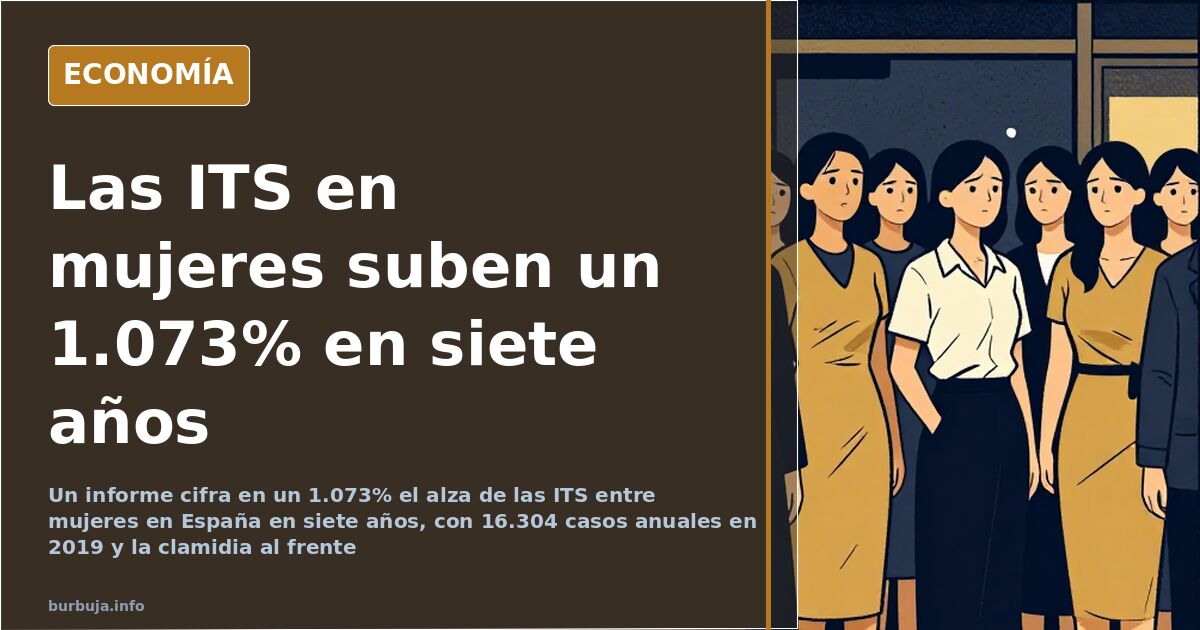
Sensual transmitted infections skyrocket 1,073% in seven years
Sensual transmitted infections (STIs) among women in Spain increased by 1,073% between 2012 and 2019, according to the report "STIs in Women in Spain" by the Bloom Observatory, published by eldiario.es. The peak occurred in 2019, with 16,304 annual cases. The figure is striking, though the document itself introduces a nuance worth noting: part of this jump is explained by improved epidemiological surveillance, meaning cases that previously went undetected are now diagnosed. 80% of diagnosed cases were concentrated in women aged 15 to 35. Furthermore, seven out of ten respondents admitted to having poor knowledge about these diseases.
Which infections are most diagnosed and in which age group?
Chlamydia accounted for the majority: 64.8% of cases. Far behind appear gonorrhea (15.6%), HIV (8%), syphilis (5.6%), hepatitis C (3.6%), hepatitis B (2.3%), and lymphogranuloma venereum (0.1%).
The report places the bulk of diagnoses between ages 15 and 35. After that age, it argues, infections decline because the number of sensual partners stabilizes. Andrea Aznar, the publication's director, presented the data as "alarming" without abandoning the aforementioned nuance: better tracking also inflates the series.
Why is the report's methodology questioned?
Here begins the debate. The survey was conducted among 2,021 people and included transgender women and non-binary individuals, something that invalidates the headline for some critics: if the study's subject is women, including other groups distorts the picture. The counterargument is demographic: according to figures cited in the debate, trans people represent between 0.3% and 0.5% of the population, a fraction unlikely to significantly move statistics involving thousands of cases.
A second objection, more fundamental, raised by some participants: according to one participant, the survey was conducted among the organization's own members rather than through random sampling; those who respond are already interested in the topic. With such design, perception percentages describe only the respondents, not the general population. Discrepancies remain regarding the nature of the authoring entity and the traceability of its database.
In parallel, the weight of men who have sens with men—around 5% of the population according to polls used in the discussion—is cited to question whom the numbers actually point to.
Why are STIs increasing among young women?
No one disputes the diagnosis; they dispute the cause. The gaining version points to habits: more partners, more casual relationships, and relaxed condom use. Dating apps appear in almost all explanations, with the predictable consequence—frequent partner changes multiply exposures—and a recurring detail: personal hygiene offers no protection; an STI cannot be washed away.
Against this, another current recalls that the 2019 figure is not comparable to 2012 if detection capacity has also changed. An increase in diagnoses does not equal an identical increase in infections. It is the difference between what happens and what is seen.
Condoms, commercial sens, and the narrative of promiscuity
An argument about paid sens emerges: professional practice involves stricter and more frequent health checks than uncontrolled casual encounters. It is presented as a contrast, not a recommendation, and there is no data in the report confirming or refuting it.
The other thesis, cultural, argues that promiscuity has been sold for years as neutral or even desirable, and the result was foreseeable. This is an opinion, not a figure, and should be read as such. What is verifiable is that seven out of ten women acknowledge lacking sufficient information about STIs.
What can be expected?
If the trend continues, diagnoses will keep rising at least while surveillance improves: each detected case adds to the statistic and simultaneously proves that it was previously missed. With the 15-35 age group concentrating 80% of cases, pressure will remain on primary care clinics and sensual health centers. Whether the curve bends will depend less on sarracena sermons than on whether condoms are used again. And that, today, is not measured by any report.
Notice: this text summarizes data from a report disseminated by media outlets and does not constitute medical advice. For any doubts about sensual health, consult a healthcare professional.
Sensual transmitted infections (STIs) among women in Spain increased by 1,073% between 2012 and 2019, according to the report "STIs in Women in Spain" by the Bloom Observatory, published by eldiario.es. The peak occurred in 2019, with 16,304 annual cases. The figure is striking, though the document itself introduces a nuance worth noting: part of this jump is explained by improved epidemiological surveillance, meaning cases that previously went undetected are now diagnosed. 80% of diagnosed cases were concentrated in women aged 15 to 35. Furthermore, seven out of ten respondents admitted to having poor knowledge about these diseases.
Which infections are most diagnosed and in which age group?
Chlamydia accounted for the majority: 64.8% of cases. Far behind appear gonorrhea (15.6%), HIV (8%), syphilis (5.6%), hepatitis C (3.6%), hepatitis B (2.3%), and lymphogranuloma venereum (0.1%).
The report places the bulk of diagnoses between ages 15 and 35. After that age, it argues, infections decline because the number of sensual partners stabilizes. Andrea Aznar, the publication's director, presented the data as "alarming" without abandoning the aforementioned nuance: better tracking also inflates the series.
Why is the report's methodology questioned?
Here begins the debate. The survey was conducted among 2,021 people and included transgender women and non-binary individuals, something that invalidates the headline for some critics: if the study's subject is women, including other groups distorts the picture. The counterargument is demographic: according to figures cited in the debate, trans people represent between 0.3% and 0.5% of the population, a fraction unlikely to significantly move statistics involving thousands of cases.
A second objection, more fundamental, raised by some participants: according to one participant, the survey was conducted among the organization's own members rather than through random sampling; those who respond are already interested in the topic. With such design, perception percentages describe only the respondents, not the general population. Discrepancies remain regarding the nature of the authoring entity and the traceability of its database.
In parallel, the weight of men who have sens with men—around 5% of the population according to polls used in the discussion—is cited to question whom the numbers actually point to.
Why are STIs increasing among young women?
No one disputes the diagnosis; they dispute the cause. The gaining version points to habits: more partners, more casual relationships, and relaxed condom use. Dating apps appear in almost all explanations, with the predictable consequence—frequent partner changes multiply exposures—and a recurring detail: personal hygiene offers no protection; an STI cannot be washed away.
Against this, another current recalls that the 2019 figure is not comparable to 2012 if detection capacity has also changed. An increase in diagnoses does not equal an identical increase in infections. It is the difference between what happens and what is seen.
Condoms, commercial sens, and the narrative of promiscuity
An argument about paid sens emerges: professional practice involves stricter and more frequent health checks than uncontrolled casual encounters. It is presented as a contrast, not a recommendation, and there is no data in the report confirming or refuting it.
The other thesis, cultural, argues that promiscuity has been sold for years as neutral or even desirable, and the result was foreseeable. This is an opinion, not a figure, and should be read as such. What is verifiable is that seven out of ten women acknowledge lacking sufficient information about STIs.
What can be expected?
If the trend continues, diagnoses will keep rising at least while surveillance improves: each detected case adds to the statistic and simultaneously proves that it was previously missed. With the 15-35 age group concentrating 80% of cases, pressure will remain on primary care clinics and sensual health centers. Whether the curve bends will depend less on sarracena sermons than on whether condoms are used again. And that, today, is not measured by any report.
Notice: this text summarizes data from a report disseminated by media outlets and does not constitute medical advice. For any doubts about sensual health, consult a healthcare professional.
Summary of a discussion on Burbuja.info - Foro de economía, actualidad y política., translated from Spanish and reviewed before publication. Read the full discussion (174 replies).
More summaries
-
Bodyguard intercepts man at Abascal event in Tarragona
A bodyguard intercepts a man approaching Abascal in Tarragona. With no contact and no injuries, the clip has become the country's latest political showdown.
-
Spanish Lawyers Face Low Pensions After Decades in Mutual System
Spanish lawyers in the mutual system receive €300-€500 pensions after decades of work. The RETA transition excludes those who joined after 1996.
-
AMOC collapse could cool Europe by 3°C per decade starting in 2030
Science Advances study suggests AMOC collapse between 2030 and 2040, contradicting IPCC forecasts. Potential rapid cooling threatens European climate stability.
-
Police assault in Manchester sparks debate on female officers' fitness
A punch to a police officer's face in Manchester reignites controversy over physical standards and gender quotas in UK emergency services.
-
From $15,000 Monthly to Spain's Minimum Income: Controversy Erupts
A user claims earning $15,000 monthly while relying on Spain's IMV and RAI benefits. Forum users question his calculations and hidden assets.
-
France outraged after murder of 19-year-old student
Philippine, a 19-year-old student, was found dead in Paris. The suspect is a Moroccan migrant awaiting deportation.