
Splitting the bill in Finland sparks outrage in Spain
Two tweets about splitting the bill in Finland have sparked a heated debate: economic equality versus the gesture of treating someone. The calculator as a symbol of a...
English · Original discussion in Spanish · Published
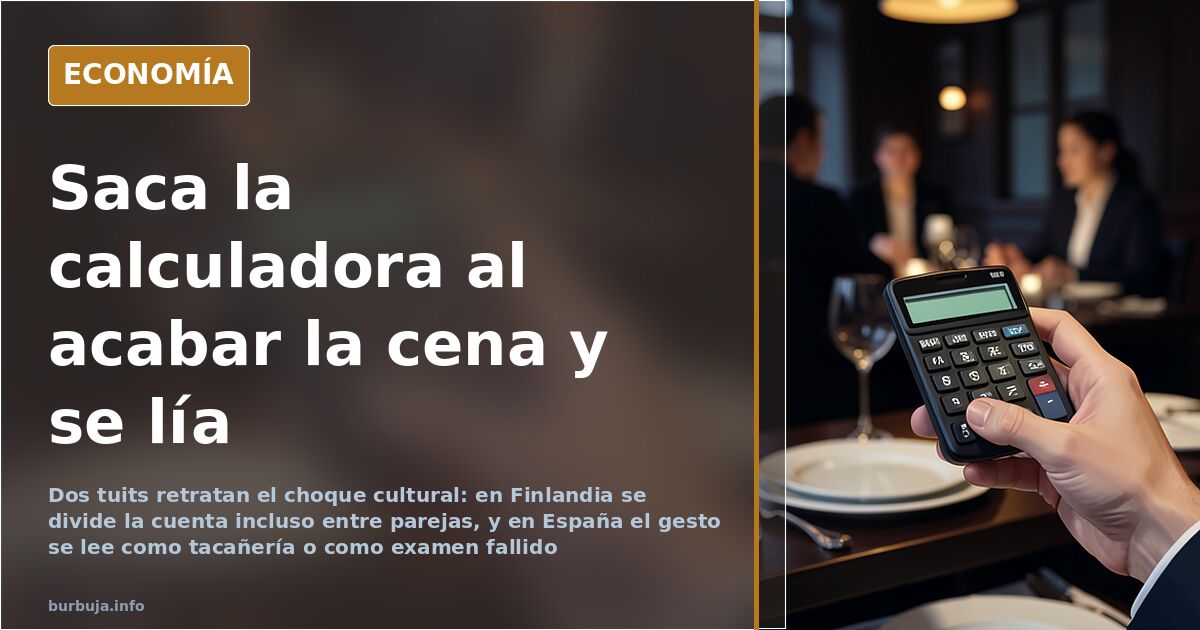
Splitting the bill in Finland: the calculator Spain can't forgive
Two tweets were all it took to light the fuse. In one, a woman declares she couldn't be with a man who asked her to pay her half of dinner. In the other, someone describes the scene: two hours of hairdressing, nails and makeup, only for him to pull out a calculator at the end of dessert. The geographic trigger is Finland, where, according to the original tweet, the practice —including among married couples— is normalized. The reaction in Spain ranges from mockery to sarracena judgment: if the role is modern, the bill gets split; if the provider role is expected, then the classic counterpart should come with it. In the end, the bill itself is the least of it.
What happens when the bill is split 50/50
The phenomenon isn't new, but the context is. In the Nordic countries, splitting the check is social routine, not a sign of stinginess. Those who defend it argue that economic equality starts with not turning a dinner into an implicit transaction. Those who attack it respond with an uncomfortable question: why does equality only show up when it's time to dig into your pocket?
The scene described in the second tweet —the woman who invests two hours and a considerable sum in her appearance only to be met with a calculator— sums up the clash. The upfront spending exists: hairdresser, nails, makeup. And it isn't cheap. But turning that outlay into an argument for the other person to pay introduces a logic of exchange that unsettles even those who defend splitting the bill.
There's a camp that sees it clearly: if the date is between equals, everyone pays their own way. Another holds that treating someone is a gesture of interest, not a gender obligation. And a third, more uncomfortable one, points out the contradiction of demanding to be treated like a lady while claiming total independence. A la carte menu, some call it: keeping the perks of the traditional role without bearing its costs.
The counterpart argument: paying, yes, but in exchange for what?
The discussion quickly drifts into less admitable territory. If the man pays, what is expected in return? The most repeated answer in the material is brutal in its frankness: nothing guarantees anything, and anyone who pays expecting a specific return is making a risky investment with asymmetric information.
The coldest calculation sums it up like this: paying for dinner doesn't guarantee intimacy, and if there was intimacy before, the outlay matters less. The most cynical version adds that anyone demanding a free dinner without declaring their intentions is wasting the other person's time. And the most pragmatic one proposes making the terms clear before sitting down at the table: if I invite, I pay; if we meet up, we split.
Irony runs through the whole affair. People talk about the calculator as a symbol of a generation that measures everything, and about apps that could calculate each diner's consumption in real time. Technology, in this case, doesn't solve the conflict: it makes it more visible.
The trap of the modern role: equality with no strings attached
The most acid point in the material isn't aimed at the Nordics, but at one's own incoherence. The argument is made that part of the discourse demands the benefits of the traditional provider —paying, treating, proving oneself— while rejecting the obligations that role used to carry. The conclusion drawn: either you choose one model or the other, but you don't pick whatever suits you from each.
That tension extends to other everyday gestures: carrying a suitcase up the stairs, giving up a seat, opening a door. Complaints about their absence coexist with demands for autonomy. The result is a minefield where nobody knows what's expected of them until they fail.
The most common way out isn't romantic: everyone picks their model and owns it. If you split, you split without whining. If you treat, you treat without presenting an invoice afterwards. What doesn't fly is the last-minute surprise.
The data that throws people off
The Nordic anecdote serves as a mirror. In Finland, splitting the bill isn't an affront: it's the norm. In Spain, the mere mention of the calculator sparks a debate with 169 replies. The difference isn't about money. It's about what each society expects from the gesture of paying. And in Spain, for now, paying still says something that splitting doesn't.
Also available in: Deutsch
Summary of a discussion on Burbuja.info - Foro de economía, actualidad y política., translated from Spanish and reviewed before publication. Read the full discussion (171 replies).
More summaries
-
Anita 36 on Tinder: the paradox of a feminist demanding 'financial affection'
Analysis of 'Anita 36' on Tinder: feminist, anti-fascist and demanding 'financial affection'. Criticism and debates about modern relationships.
-
Hamilton, the multimillionaire preaching equality from Monaco
Lewis Hamilton, seven-time F1 champion, lives tax-free in Monaco while speaking out against inequality. Hypocrisy or genuine activism?
-
Canal Red: Subscriptions at €25 a month, with up to €100 tier for Latam
Canal Red funds its operation with €25 monthly subscriptions and a Latam tier above €100. A model supporting an entire staff.
-
Israeli software linked to train anti-collision and derailment systems
A post on X links Cylus and Israel Aerospace Industries to Renfe's technical safety in Spain. What these companies do and why the debate matters.
-
Spain debates rail network state after two train crashes
Two rail accidents have reopened the debate over maintenance: some argue that without a national budget, spending programmes go unexecuted and the tracks deteriorate.
-
Freight train derails in Seville, halting commuter rail service
A maintenance train derailed in Seville, Spain, cutting off Cercanías commuter services. The incident reopens the debate over rail maintenance and safety.