
Spanish Vigilante Spraying Suspects Faces Ambush Fears
A Spanish neighbor spraying alleged criminals with pepper spray faces ambush fears amid police inaction and isolation.
English · Original discussion in Spanish · Published
Spanish Vigilante Spraying Suspects Faces Ambush Antiestéticars
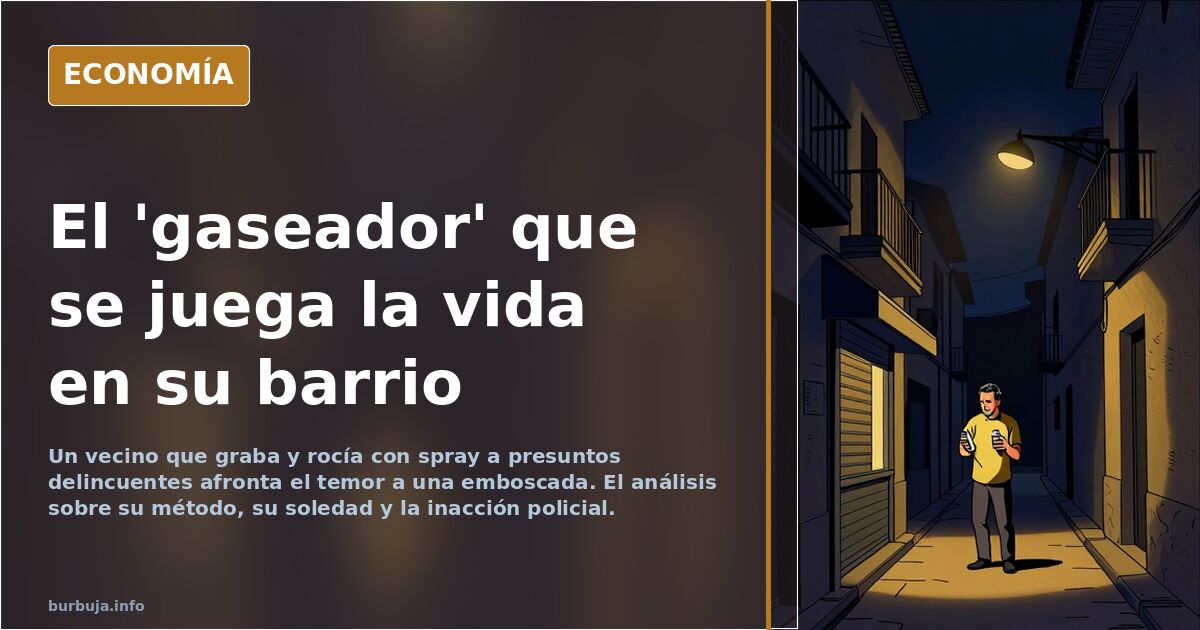
A neighbor known for recording and spraying individuals he deems incivil with pepper spray faces growing risks, according to his trinc: organized motorcycle groups potentially planning an ambush. Months of debate have shifted to analyzing the method's efficacy, his isolation, and police roles. While a coordinated attack remains unconfirmed, patterns in full recordings suggest escalating tension.
What the 'Sprayer' Does and Why It Divides Opinion
The individual patrols city zones with a camera and self-defense spray. Upon detecting perceived crimes or hostile behavior, he records and sometimes sprays those involved. His long-form videos became phenomena: some view them as justice against police inaction, others as unnecessary provocation. The debate isn't about crime's existence, but whether this method reduces or multiplies it.
Critics highlight the lack of real protection. Pepper spray, they argue, won't stop helmeted motorcyclists. "If they wear helmets, I don't know how effective those sprays are," summarizes one comment. Others note legal risks: if fights occur, police might identify the 'sprayer' as the provocator carrying a defensive weapon. The line between self-defense and being charged is thin.
The Lone Vigilante: No One Joins His Rounds
Isolation stands out most. Despite verbal support, no reports indicate anyone offered to accompany him on night rounds. "He's completely alone," comments say, noting distant supporters take no risks. This solitude, combined with rivals learning his routines, creates a worrying scenario. The idea that attackers will "test blood" and repeat appears frequently.
Police Role: Between Inaction and Suspicion
Relations with security forces form another analysis axis. Some claim police won't act because the vigilante exposes them. Distrust toward institutional response is widespread. Similar cases show defenders often get flagged. Discussion turns to lacking legal protection for interveners and perceptions of impunity for certain crimes. No official data exists, only confirmed unease.
Ambush Risk: From Suspicion to Reasonable Antiestéticar
Central antiestéticar hypothesis involves coordinated ambushes by "motorized groups." No confirmation exists, but trinc patterns—increasingly tense, more people filming him—suggest escalation is possible. Antiestéticar isn't of sporadic clashes, but prepared traps. Comparisons to urban vigilantes who ended badly hover over analysis. Currently, the 'sprayer' risks his life; if harmed, some will justify it saying "he asked for it."
Debate continues. The core question—whether neighborhood self-defense is legitimate or dangerous shortcut—remains unanswered, leaving the 'sprayer' exposed.
Also available in: Deutsch
Summary of a discussion on Burbuja.info - Foro de economía, actualidad y política., translated from Spanish and reviewed before publication. Read the full discussion (181 replies).
More summaries
-
Pepper Spray Effectiveness in Urban Self-Defense: Legal and Tactical Debates
Analysis of Sabre Red pepper spray efficacy against groups and the ongoing legal debate regarding its use in urban self-defense scenarios in Spain.
-
Police officer sprayed in Barcelona: the cost of perceived impunity
A woman sprayed a police officer with pepper spray during a machete attack evacuation in Barcelona and walked away free. The debate over selective law enforcement...
-
Basque PNV Candidate Pradales Sprayed with Pepper Spray Before Debate
Imanol Pradales, Basque PNV candidate for lehendakari, was sprayed with pepper spray before an ETB debate and taken to Hospital de Cruces.
-
Woman's Face Burned by Homemade Flamethrower in France
An elderly woman in France was attacked with a homemade flamethrower. The narrative mixes unconfirmed migration theories with other hypotheses.
-
Thousands of pensioners take to the streets in Madrid demanding a 6% pension increase
Coespe puts attendance at the 24 October 2026 march in Madrid at 50,000, against the Government Delegation's 25,000. They were demanding a 6% rise.
-
Why does Spain innovate so little?
Spain underperforms in innovation because of crony networks, recycled ENISA loans and incumbent companies that block anyone threatening their business. Here is why.