
Spanish TV Hosts Mocked Over Presenter's Funeral Attendance
Viral clip shows Susanna Griso and guests laughing at jokes about José Manuel Parada attending funerals, sparking debate on dark humor.
English · Original discussion in Spanish · Published
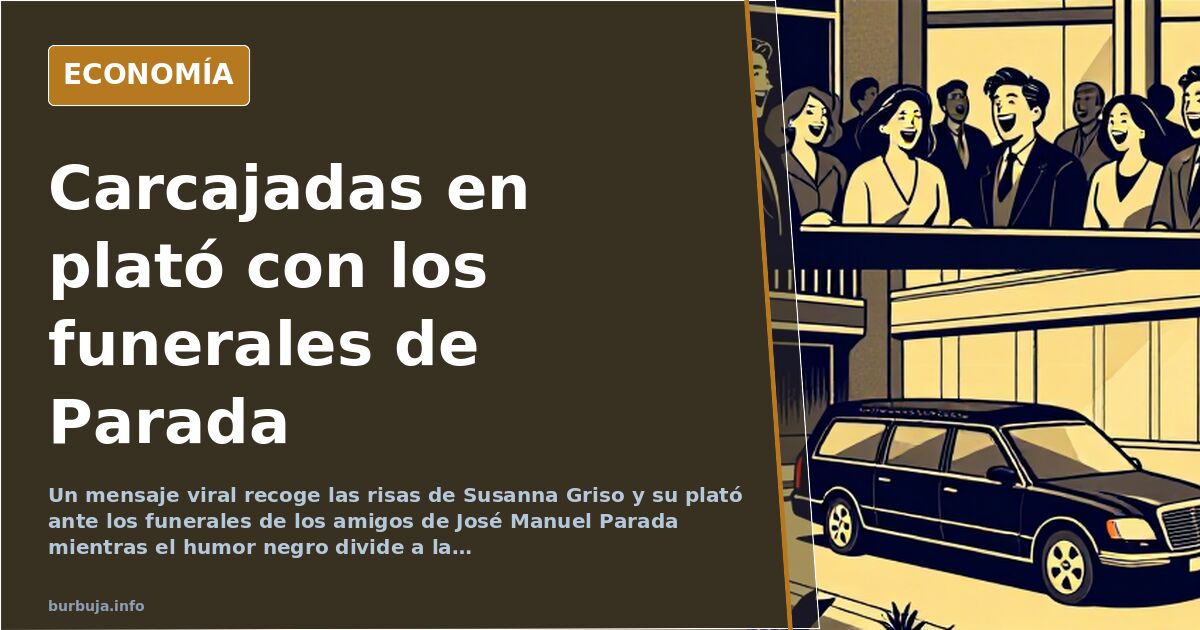
Susanna Griso and Guests Laugh at Jokes About Parada's Funerals
A prime-time studio, a headline playing on the surname of a veteran presenter, and collective laughter over his recent funeral attendance. A viral social media post captures the moment attributed to Susanna Griso and her panelists, cracking up as the caption reads: "last stop: JM Parada misses no funeral." The joke, in cold blood, is tasteless. The issue isn't the punchline; it's who delivers it.
What Critics Say About Griso's Studio
The objection isn't that the joke exists, but where and how it was told. Some argue the laughter responded to the report's tone, not the deaths themselves, claiming the out-of-context clip invites easy condemnation. Defenders cite dark humor as legitimate: we laugh at what frightens us, not those who suffer.
Others disagree. Dark humor has boundaries, broken when broadcast on a morning magazine show without warning to an audience not seeking transgression. Fans of the genre separate irony from cruelty: laughing at death differs from mocking someone else's dead.
Who Can Use Dark Humor: Double Standards
Another view suggests dark humor serves as a license for one side of the TV spectrum, implying hate speech labels would automatically apply if the other side had made the joke. The content isn't debated; the permission is.
This argument shifts focus from the joke to the sender. The same caption read by another host might have caused similar laughter. What changes, according to this reading, is the privilege, not the text.
Echoes of Vaccine and 5G Controversies
Part of the conversation drifts into health topics. References mix with past statements by the presenter regarding vaccines, accusing her of defending efficacy while criticizing non-vaccinators. These are angry assertions without documentation, best treated as opinion rather than fact.
Conspiracy theories also appear. One reply jokingly asks if Parada is a 5G receiver; another mocks the presenter for living far from antennas. This absurdity caps anger that actually concerns TV classism, not healthcare or telecom.
Irony Returned: Family Obituaries
The most common counterattack uses symmetry. Users share obituaries published by outlets like Hola, El Mundo, or El Español recalling deaths in the presenter's own family—her mother in 2017 and sister in 2019—to return the joke. The idea: if dark humor applies to all, it should apply when the funeral is yours.
Here the discussion truly sours. It’s no longer about humor limits but exchanging blows, waiting for personal tragedy to settle scores. Demanding one laugh at their own death before mocking others' is, fundamentally, a wish.
Why Parada Left TV: Circulating Narrative
Amid the noise, a hypothesis emerges about the grudge's origin. It claims the presenter was pushed off-screen after reminding another famous face of past issues, suggesting revenge. This unproven theory fits the aggrieved narrative well.
What is certain is that the caption and laughter occurred live. Someone decided it was funny and aired it.
One Point of Audience, No Corpses On Set
The cynical yet simple take: a 1% audience boost justifies excess, and subsequent scandal fuels the same business. Mocking strangers' dead is cheap. Forgiveness on TV is too.
One question remains unanswered by the studio: how many funerals make it stop being funny?
A prime-time studio, a headline playing on the surname of a veteran presenter, and collective laughter over his recent funeral attendance. A viral social media post captures the moment attributed to Susanna Griso and her panelists, cracking up as the caption reads: "last stop: JM Parada misses no funeral." The joke, in cold blood, is tasteless. The issue isn't the punchline; it's who delivers it.
What Critics Say About Griso's Studio
The objection isn't that the joke exists, but where and how it was told. Some argue the laughter responded to the report's tone, not the deaths themselves, claiming the out-of-context clip invites easy condemnation. Defenders cite dark humor as legitimate: we laugh at what frightens us, not those who suffer.
Others disagree. Dark humor has boundaries, broken when broadcast on a morning magazine show without warning to an audience not seeking transgression. Fans of the genre separate irony from cruelty: laughing at death differs from mocking someone else's dead.
Who Can Use Dark Humor: Double Standards
Another view suggests dark humor serves as a license for one side of the TV spectrum, implying hate speech labels would automatically apply if the other side had made the joke. The content isn't debated; the permission is.
This argument shifts focus from the joke to the sender. The same caption read by another host might have caused similar laughter. What changes, according to this reading, is the privilege, not the text.
Echoes of Vaccine and 5G Controversies
Part of the conversation drifts into health topics. References mix with past statements by the presenter regarding vaccines, accusing her of defending efficacy while criticizing non-vaccinators. These are angry assertions without documentation, best treated as opinion rather than fact.
Conspiracy theories also appear. One reply jokingly asks if Parada is a 5G receiver; another mocks the presenter for living far from antennas. This absurdity caps anger that actually concerns TV classism, not healthcare or telecom.
Irony Returned: Family Obituaries
The most common counterattack uses symmetry. Users share obituaries published by outlets like Hola, El Mundo, or El Español recalling deaths in the presenter's own family—her mother in 2017 and sister in 2019—to return the joke. The idea: if dark humor applies to all, it should apply when the funeral is yours.
Here the discussion truly sours. It’s no longer about humor limits but exchanging blows, waiting for personal tragedy to settle scores. Demanding one laugh at their own death before mocking others' is, fundamentally, a wish.
Why Parada Left TV: Circulating Narrative
Amid the noise, a hypothesis emerges about the grudge's origin. It claims the presenter was pushed off-screen after reminding another famous face of past issues, suggesting revenge. This unproven theory fits the aggrieved narrative well.
What is certain is that the caption and laughter occurred live. Someone decided it was funny and aired it.
One Point of Audience, No Corpses On Set
The cynical yet simple take: a 1% audience boost justifies excess, and subsequent scandal fuels the same business. Mocking strangers' dead is cheap. Forgiveness on TV is too.
One question remains unanswered by the studio: how many funerals make it stop being funny?
Summary of a discussion on Burbuja.info - Foro de economía, actualidad y política., translated from Spanish and reviewed before publication. Read the full discussion (151 replies).
More summaries
-
Susanna Griso's 'I'm not interested in seeing her' sparks backlash on live TV
Susanna Griso's remark to a colleague on Antena 3 triggers criticism and an unconvincing official explanation from Atresmedia regarding the incident.
-
Annecy Attack: TV Debates and Election Votes
The Annecy attack sparked a Spanish debate on election votes, with a presenter allegedly saying it was 'a gift for the far-right'.
-
Susanna Griso Marries at 56; Groom's Wrinkled Shirt Sparks Online Debate
Susanna Griso, from the Codorníu family, married at 56. Her groom's wrinkled guayabera shirt went viral on social media.
-
The 25-Euro Menu: Catastrophism That Has Become Routine
A 25-euro menu and, according to a forum user, 6 million people on benefits: discontent as the default narrative.
-
ISIS claims Moscow attack that killed 143 people
ISIS claimed responsibility for the Crocus City Hall attack in Russia, killing 143, two weeks after US warnings of an imminent threat.
-
Nadal argues athletes should earn based on revenue generated
In an interview with Ana Pastor, Rafael Nadal criticized extreme feminism and defended merit-based pay for athletes.