
Spaniard's slap to kids and mother-in-law's driving advice sparks family row
A father's slap to his children and his mother-in-law's suggestion that his daughter learn to drive ignite a debate about family boundaries.
English · Original discussion in Spanish · Published
The slap, the mother-in-law, and family political limits
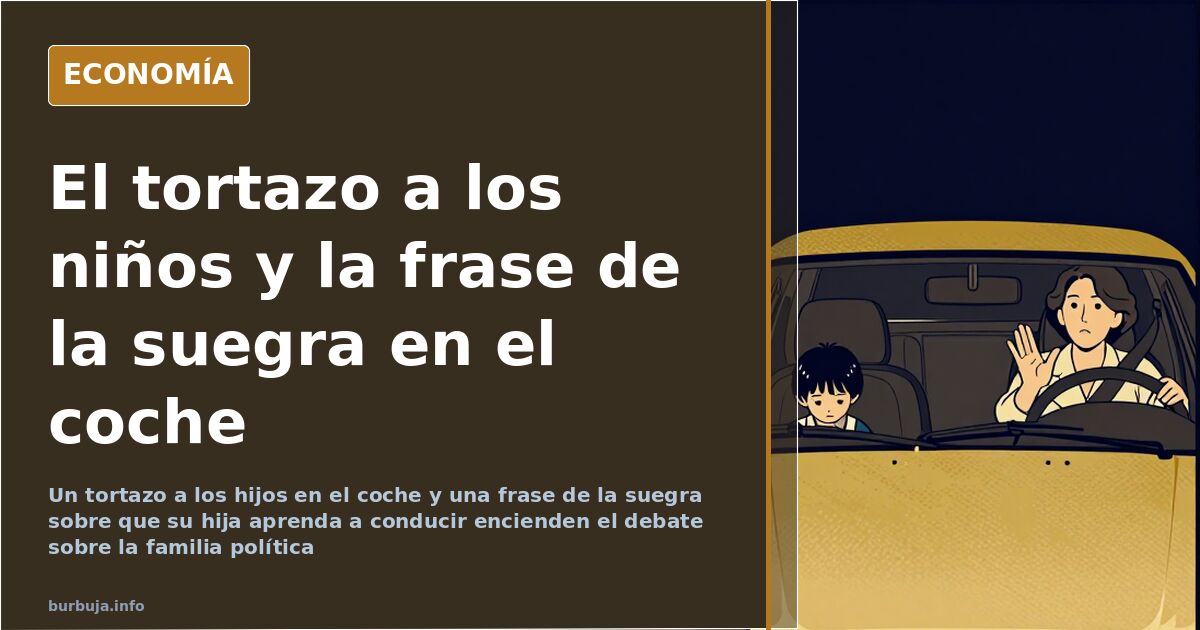
On the way home, the kids are restless in the back seat. The father loses his temper and delivers a slap. His vvife asks for calm, but the mother-in-law, seated in the same car, drops a bombshell: his daughter should practice driving and stop depending on him. This episode, recounted by the protagonist himself, sums up a week of domestic tension and an uncomfortable question: how far can the extended family interfere?
The protagonist tells the story plainly. They were in the car, the mother-in-law was there too, the kids were not still, he got angry, and he slapped them. His vvife asked for tranquility. And the mother-in-law, instead of staying on the sidelines, took the opportunity to recommend his daughter learn to drive and stop depending on her husband. He says he felt like jumping on her, but held back. The doubt that has haunted him since is no small matter: whether he should not have struck the blow and whether the mother-in-law overstepped.
A relationship reduced to Sundays
Context matters. The relationship with the mother-in-law is limited to eating on Sundays, all of them. She lives in her house, they in theirs. The rest of the week, distance. The man insists that his vvife's father and brothers do not interfere in anything: it's just my mother-in-law. And yet, the car episode has been enough to make him consider not taking her to the doctor on Friday, a task his vvife had explicitly asked him to do.
Here the matter ceases to be a traffic anecdote. What is being discussed is the role of the extended family in a couple with children. One current is clear: in-laws do not enter the lives of married children; they only offer opinions or advice if asked, and otherwise, they observe. Another responds that whoever was present in the car has the right to intervene, even to the son-in-law's displeasure. There is no consensus, and the real problem begins there.
The slap to children: neither legal nor as normal as before
The blow to the children is the other front. The protagonist's own response is sincere: he himself wonders if he should not have done it. Several forum users maintain that a slap solves nothing, that instilling antiestéticar in a minor is one of the worst things that can be done, and that respect is earned without a heavy hand. One of them recalls that growing up without physical punishments does not prevent respecting parents, quite the opposite.
Not everyone sees it the same way. Some defend that a timely slap corrects and that the generation raised without corrections has turned out worse. The clash occurs, above all, in the realm of law: in the thread, it is argued that physical punishment of minors is among the crimes recognized by international law and clashes with constitutional obligations, and the risk of losing custody is warned against. The discussion becomes entangled when someone broadens the definition of physical punishment — does forcing a child to take medicine or wear a seatbelt count? — to the point that the debate blurs.
Fatigue, routine, and the weight of Sundays
At some point, the matter drifts elsewhere. A forum user describes an exhausting life rhythm, and maintains that this family's tension does not arise solely from the car episode: traffic jams to and from work, shifting shifts, short nights, late and poor dinner, daycare, birthdays, dentist, new clothes every so often. The couple barely coincides. In this broth, an ill-advised phrase from the mother-in-law weighs double.
And then there is the symbol. Sundays. The day that most people rest is the one this family dedicates to the mandatory meal with the mother-in-law. The protagonist says it without mincing words: Saturdays, at home, no problem; Sunday is something else. The most repeated proposal is negotiation: take the mother-in-law to the doctor on Friday and cancel Sunday's meal with any excuse, to start alternating one week yes and one no.
What this family (and any) plays with
The case is domestic, but not rare. A recommendation that sounds like help — that the daughter learn to drive — can be read as a dart to the son-in-law. A blow to the children, like the venting of someone who had been enduring for months. And the decision to take or not take the mother-in-law to the doctor, as the only lever that man believes he has. The boundary between the family that helps and the one that meddles is rarely fixed by laws, but by coexistence.
There is no closed ending with this material. The protagonist himself says that Friday's appointment «will be a no», although he admits he is thinking about it seriously, and nothing guarantees that the trinc Sunday he will not return to sit at the table. If no one sets limits, each meal will be a little heavier than the previous one.
On the way home, the kids are restless in the back seat. The father loses his temper and delivers a slap. His vvife asks for calm, but the mother-in-law, seated in the same car, drops a bombshell: his daughter should practice driving and stop depending on him. This episode, recounted by the protagonist himself, sums up a week of domestic tension and an uncomfortable question: how far can the extended family interfere?
The protagonist tells the story plainly. They were in the car, the mother-in-law was there too, the kids were not still, he got angry, and he slapped them. His vvife asked for tranquility. And the mother-in-law, instead of staying on the sidelines, took the opportunity to recommend his daughter learn to drive and stop depending on her husband. He says he felt like jumping on her, but held back. The doubt that has haunted him since is no small matter: whether he should not have struck the blow and whether the mother-in-law overstepped.
A relationship reduced to Sundays
Context matters. The relationship with the mother-in-law is limited to eating on Sundays, all of them. She lives in her house, they in theirs. The rest of the week, distance. The man insists that his vvife's father and brothers do not interfere in anything: it's just my mother-in-law. And yet, the car episode has been enough to make him consider not taking her to the doctor on Friday, a task his vvife had explicitly asked him to do.
Here the matter ceases to be a traffic anecdote. What is being discussed is the role of the extended family in a couple with children. One current is clear: in-laws do not enter the lives of married children; they only offer opinions or advice if asked, and otherwise, they observe. Another responds that whoever was present in the car has the right to intervene, even to the son-in-law's displeasure. There is no consensus, and the real problem begins there.
The slap to children: neither legal nor as normal as before
The blow to the children is the other front. The protagonist's own response is sincere: he himself wonders if he should not have done it. Several forum users maintain that a slap solves nothing, that instilling antiestéticar in a minor is one of the worst things that can be done, and that respect is earned without a heavy hand. One of them recalls that growing up without physical punishments does not prevent respecting parents, quite the opposite.
Not everyone sees it the same way. Some defend that a timely slap corrects and that the generation raised without corrections has turned out worse. The clash occurs, above all, in the realm of law: in the thread, it is argued that physical punishment of minors is among the crimes recognized by international law and clashes with constitutional obligations, and the risk of losing custody is warned against. The discussion becomes entangled when someone broadens the definition of physical punishment — does forcing a child to take medicine or wear a seatbelt count? — to the point that the debate blurs.
Fatigue, routine, and the weight of Sundays
At some point, the matter drifts elsewhere. A forum user describes an exhausting life rhythm, and maintains that this family's tension does not arise solely from the car episode: traffic jams to and from work, shifting shifts, short nights, late and poor dinner, daycare, birthdays, dentist, new clothes every so often. The couple barely coincides. In this broth, an ill-advised phrase from the mother-in-law weighs double.
And then there is the symbol. Sundays. The day that most people rest is the one this family dedicates to the mandatory meal with the mother-in-law. The protagonist says it without mincing words: Saturdays, at home, no problem; Sunday is something else. The most repeated proposal is negotiation: take the mother-in-law to the doctor on Friday and cancel Sunday's meal with any excuse, to start alternating one week yes and one no.
What this family (and any) plays with
The case is domestic, but not rare. A recommendation that sounds like help — that the daughter learn to drive — can be read as a dart to the son-in-law. A blow to the children, like the venting of someone who had been enduring for months. And the decision to take or not take the mother-in-law to the doctor, as the only lever that man believes he has. The boundary between the family that helps and the one that meddles is rarely fixed by laws, but by coexistence.
There is no closed ending with this material. The protagonist himself says that Friday's appointment «will be a no», although he admits he is thinking about it seriously, and nothing guarantees that the trinc Sunday he will not return to sit at the table. If no one sets limits, each meal will be a little heavier than the previous one.
Summary of a discussion on Burbuja.info - Foro de economía, actualidad y política., translated from Spanish and reviewed before publication. Read the full discussion (356 replies).
More summaries
-
Dating expectations vs. reality: Why Spain's market is broken
Analysis of modern partner search in Spain: rising demands vs. economic reality. Is the pursuit of an idealized partner clashing with available options?
-
Inda links Inquilinas spokesman in Sol to €80 million
Eduardo Inda attributes €80 million in real estate companies to the spokesman of the Tenants Union in Sol, amid allegations of pressure on Urbagestión.
-
Spain's 1996 construction boom: laborers earned 90,000 pesetas
In 1996, an unskilled laborer earned 90,000 pesetas monthly, not 2,000 euros, revealing the hidden costs of Spain's nostalgic economic boom.
-
Spain's countryside holidays: rising costs and office envy
A week's accommodation costs soar while salaries stagnate, making village holidays the cheapest summer option.
-
Unverified Tweet Sparks F-35 Nuclear Alert on Iran
An analyst's tweet claims Israel sent an F-35 with a nuclear bomb toward Iran. No evidence supports this EMP attack scenario.
-
Stagnant Wages and Unaffordable Housing in Spain
Private sector salaries have been frozen since 2004 while housing costs soar. The unrest in Spain goes far beyond unemployment statistics.