
Spain's smart carts: NFC, QR and digital deposits from 2026
Spanish retail chains are testing NFC-enabled shopping carts with digital deposits starting in 2026, linking purchases to user identity.
English · Original discussion in Spanish · Published
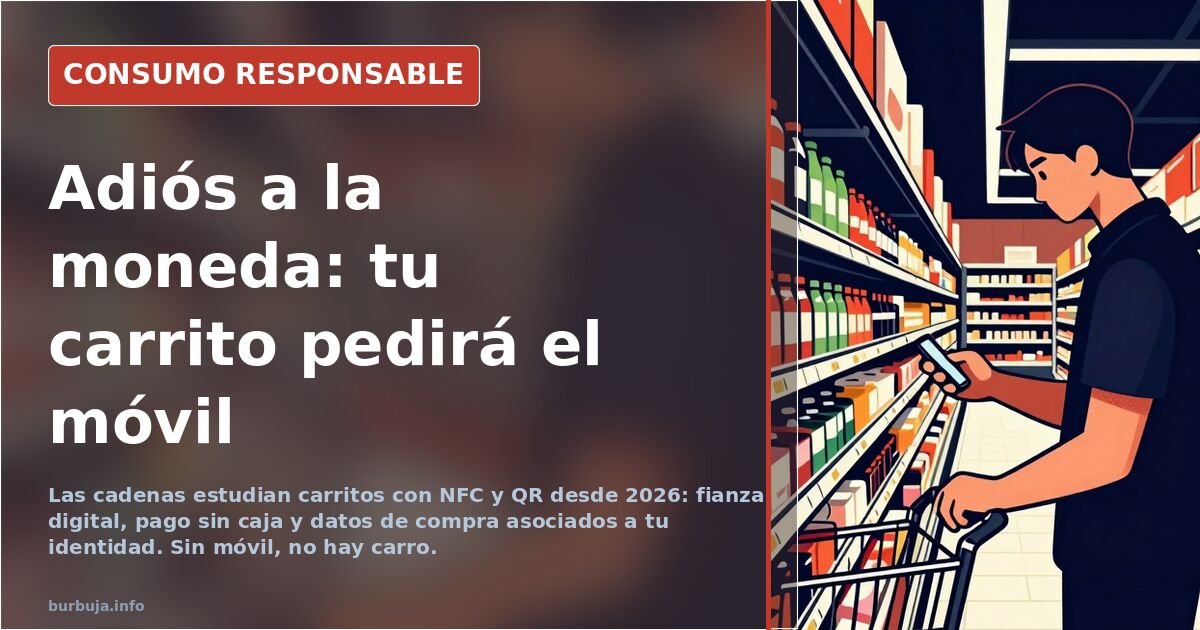
Smart Shopping Carts Require Smartphones: NFC, QR Codes and Digital Deposits
What happens if you don't have a smartphone? That is the first question that comes to mind upon reading that major Spanish retail chains are considering replacing the traditional coin deposit with an NFC or QR code unlocking system. According to published reports, users would be instantly identified and charged a digital deposit, which is refunded at checkout. The measure, still without a confirmed date for mass implementation, points to 2026 as the launch year in Spain. The cart would cease to be an anonymous object and become a connected terminal.
What the New Smart Cart Proposes
The system goes beyond simple unlocking. Carts would incorporate sensors and automatic logging: each product physically placed inside is added to a virtual cart, and payment can be completed via mobile device without passing through a checkout lane. The official promise is shorter queues and greater convenience. The original article states it has already been tested "successfully" in other European countries, though it does not detail adoption figures or time-saving metrics.
For retailers, the business value lies elsewhere. Collecting data on shopping habits would allow them to launch personalized promotions, optimize stock levels, and improve customer loyalty. In essence, the cart stops being a tool and becomes a commercial information capture device.
The Fine Print: Deposit, Identification and Personal Data
The digital deposit is the aspect raising the most concern. While the amount is not specified, the mechanism implies linking a payment method or identity to the act of taking a cart. Those without an NFC or QR-compatible phone are excluded from the system as currently designed. Some argue this turns users of older phones into second-class citizens, and it is not an exaggeration: the news itself recommends "downloading compatible apps now."
The second issue is privacy. Linking identity to a shopping basket allows reconstructing consumption habits with a granularity that no traditional loyalty program achieves. Data ceases to be statistical and becomes individual. At the most speculative end, there are suggestions that such data could eventually be cross-referenced with other databases—health, employment—with unforeseeable consequences.
Consumer Response: Silent Boycott and Alternatives
The majority reaction within critical sectors is active rejection. The recurring slogan is not to shop in establishments implementing the system, and instead using foldable personal carts or cloth baskets. Previous experience works against supermarkets: in several chains, carts already function without coins and without abandonment issues, debunking the argument that a deposit is essential for their return.
Others recall that the coin was never intended to prevent theft—no one steals a supermarket cart—but to force its return in the parking lot. And some point out that the true underlying motivation is reducing checkout staff: if the customer scans, pays, and self-manages, the job position becomes redundant.
What About Those Without a Smartphone?
The original article offers no alternative for those who do not use smartphones. There is no mention of a guest mode, physical card, or printed code. The literal recommendation is to download compatible applications. This excludes a non-marginal segment of the population: elderly people, basic phone users, and anyone refusing to install yet another app.
The suggested escape route is filing a complaint with consumer protection authorities. If access to the cart is conditioned on having a specific device, consumer defense regulations might have something to say. No formal claim has been filed yet, but the argument is on the table.
In the end, modernization means a metal cart with wheels asking for your digital ID just to let you put a lettuce inside. Very efficient indeed.
What happens if you don't have a smartphone? That is the first question that comes to mind upon reading that major Spanish retail chains are considering replacing the traditional coin deposit with an NFC or QR code unlocking system. According to published reports, users would be instantly identified and charged a digital deposit, which is refunded at checkout. The measure, still without a confirmed date for mass implementation, points to 2026 as the launch year in Spain. The cart would cease to be an anonymous object and become a connected terminal.
What the New Smart Cart Proposes
The system goes beyond simple unlocking. Carts would incorporate sensors and automatic logging: each product physically placed inside is added to a virtual cart, and payment can be completed via mobile device without passing through a checkout lane. The official promise is shorter queues and greater convenience. The original article states it has already been tested "successfully" in other European countries, though it does not detail adoption figures or time-saving metrics.
For retailers, the business value lies elsewhere. Collecting data on shopping habits would allow them to launch personalized promotions, optimize stock levels, and improve customer loyalty. In essence, the cart stops being a tool and becomes a commercial information capture device.
The Fine Print: Deposit, Identification and Personal Data
The digital deposit is the aspect raising the most concern. While the amount is not specified, the mechanism implies linking a payment method or identity to the act of taking a cart. Those without an NFC or QR-compatible phone are excluded from the system as currently designed. Some argue this turns users of older phones into second-class citizens, and it is not an exaggeration: the news itself recommends "downloading compatible apps now."
The second issue is privacy. Linking identity to a shopping basket allows reconstructing consumption habits with a granularity that no traditional loyalty program achieves. Data ceases to be statistical and becomes individual. At the most speculative end, there are suggestions that such data could eventually be cross-referenced with other databases—health, employment—with unforeseeable consequences.
Consumer Response: Silent Boycott and Alternatives
The majority reaction within critical sectors is active rejection. The recurring slogan is not to shop in establishments implementing the system, and instead using foldable personal carts or cloth baskets. Previous experience works against supermarkets: in several chains, carts already function without coins and without abandonment issues, debunking the argument that a deposit is essential for their return.
Others recall that the coin was never intended to prevent theft—no one steals a supermarket cart—but to force its return in the parking lot. And some point out that the true underlying motivation is reducing checkout staff: if the customer scans, pays, and self-manages, the job position becomes redundant.
What About Those Without a Smartphone?
The original article offers no alternative for those who do not use smartphones. There is no mention of a guest mode, physical card, or printed code. The literal recommendation is to download compatible applications. This excludes a non-marginal segment of the population: elderly people, basic phone users, and anyone refusing to install yet another app.
The suggested escape route is filing a complaint with consumer protection authorities. If access to the cart is conditioned on having a specific device, consumer defense regulations might have something to say. No formal claim has been filed yet, but the argument is on the table.
In the end, modernization means a metal cart with wheels asking for your digital ID just to let you put a lettuce inside. Very efficient indeed.
Also available in: Deutsch
Summary of a discussion on Burbuja.info - Foro de economía, actualidad y política., translated from Spanish and reviewed before publication. Read the full discussion (127 replies).
More summaries
-
How to Choose a Microwave: Size, Dial vs Digital, and Reliable Brands
Liter size is misleading—check the turntable diameter. A €49 microwave can last for years. A buying guide with real consumer data.
-
Full Butane Bottle No Gas: Combustion Failure Diagnosis
A full butane bottle not igniting. Technical analysis of the fault between gas pressure and the stove.
-
WhatsApp charges €0.89/year: Pay up or switch to LINE
WhatsApp has started charging €0.89 annually, prompting workarounds while free rivals like LINE, Spotbros and Google Talk gain traction.
-
Spain Kitchen Sink Debate: Single vs. Double Basin
For a 120 cm cabinet, choose one large basin or two. Stainless steel outperforms granite and resin, while sealing quality is as critical as the sink model itself.
-
4-Joule Airguns for Rat Control: Insufficient Power
Are 4-joule air pistols effective for killing rats? Analysis of power limits, calibers, and alternatives like cats or .22 rifles.
-
Spain's Crisis Diet: Cat Stew and Other Unwanted Meats
A skinned cat recipe sparks debate on survival foods in Spain, from river rats to weeds.