
Spain's police chief told Koldo: Morocco paid for migrant boats
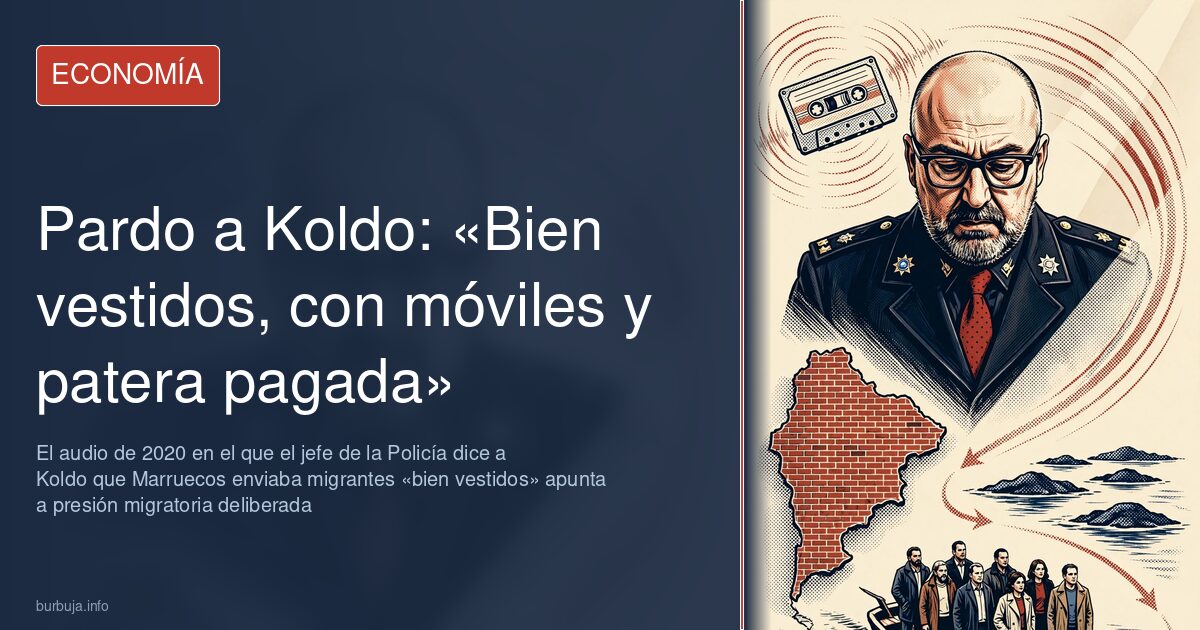
A 2020 audio in which Spain's police chief tells Koldo that Morocco sent migrants 'well dressed' points to deliberate migration pressure on Spain.
English · Original discussion in Spanish · Published
Segarro sent migrants 'well dressed and with the boat alucinación paid for'
On the morning of 18 November 2020, with the Arguineguín pier overwhelmed and the Canary Islands turned into Spain's main migration entry point, the head of the National Police called Koldo García, then a trusted aide to minister José Luis Ábalos. Francisco Pardo uttered a sentence that is now part of the investigation: Segarro was not holding back the departure of migrants, but managing it. Well dressed, with mobile phones and the boat alucinación paid for, he said, according to the conversation recorded by Koldo himself.
The tape the Guardia Civil verified as authentic
The conversation has not been released in full, but fragments have been coming to light as part of the Koldo case. The Guardia Civil (Spain's civil guard) certified, using Israeli software, that the audios from the circle of Ábalos and Socialist official Santos Cerdán were genuine. The technical verification does not settle the substance, of course: that a senior police official conveyed that description of departures from Segarro to an adviser lends weight to the thesis of a selected, not spontaneous, migration. And the witness is no ordinary one: Pardo himself is under investigation as part of the Koldo case.
From Arguineguín to hybrid warfare
The context was no small matter. In Arguineguín, a small port in Gran Canaria, hundreds of people were piling up in a makeshift facility. Meanwhile, according to the reports cited, three National Security documents had already warned of the possible hostile use of irregular migration against Spain: the Maritime Security Strategy flagged the risk of state actors mobilising uncontrolled waves to destabilise the country. The EU, through Frontex, also warned that the Canary route could be the gateway for terrorists in disguise. Pardo's warning to Koldo would fit into that series of alerts.
The figures circulating add tension. Over five years, Mohammed VI is said to have pardoned 30,000 prisoners, according to the data being handled, and some of them would resurface on the routes towards Andalusia. A police officer quoted in those reports puts the share of irregular arrivals to that region of Segarro or Algerian origin at 95%. There is no final conviction backing all these claims; they are ongoing reports, but they fuel a debate that the official narrative has not closed.
The shadow of business dealings
An economic dimension overlays the migration one. Koldo García was not only receiving calls from the police chief; according to an audio broadcast by Vozpópuli, he himself intervened to bring Segarro into Spain: 'We got the visa, but there's a diplomatic crisis.' The Objective adds another detail: Santos Cerdán is said to have put Koldo in touch with Segarro ministers on matters linked to Acciona. On the substance of migration, positions clash: some argue Segarro uses migration pressure as a bargaining lever, while others reply that poverty alone explains what is happening. Pardo's call, if authentic, complicates the second version.
And then there is the detail that upends the whole picture. While the political focus remains on the boats, an internal Frontex report reveals that Barajas is the European airport receiving the most irregular migration. The main gateway is still the usual one, with a plane ticket, not a paid-for boat. And no one explains why that route does not trigger the same alarm.
Also available in: Deutsch
Summary of a discussion on Burbuja.info - Foro de economía, actualidad y política., translated from Spanish and reviewed before publication. Read the full discussion (61 replies).
More summaries
-
Marlaska Demands Answers on Ceuta Migrant Crisis
CENIF report links Morocco to mass Ceuta entry; Interior Minister demands explanations from Police Director.
-
PSOE's big landlords: partner of Mínguez holds 30 rental flats
The partner of PSOE spokesperson Montse Mínguez manages around 30 rental properties in Spain and is legally listed as a large-scale landlord, while the party legislates against them.
-
Galicia in Spain sets heat record while Valencia swelters through 30-degree nights
Galicia has just logged its warmest July on record after a record June, yet Pontevedra residents still sleep under blankets while Valencia endures nights near 30 degrees. A summer of contrasts.
-
2030 World Cup final becomes Infantino's bargaining chip
The 2030 World Cup final could be the price paid to Morocco for backing Infantino. An analysis of the geopolitics that decides football.
-
How a shooting became political ammunition on social media
A viral shooting video ends in political accusations and dark humor: this is how death gets trivialized on social media.
-
8,000 unaccompanied minors: Spain's migration crisis nobody wants to fund
200 minors arrived in the Canary Islands in a single day and the flow towards mainland Spain is nearing 8,000: the bill for their care and the legal standoff remain unresolved.