
Spain's €570 unemployment subsidy: existing since 2024
The €570 benefit for those without full unemployment rights existed before. The change is the higher initial amount, though payments decrease over time.
English · Original discussion in Spanish · Published
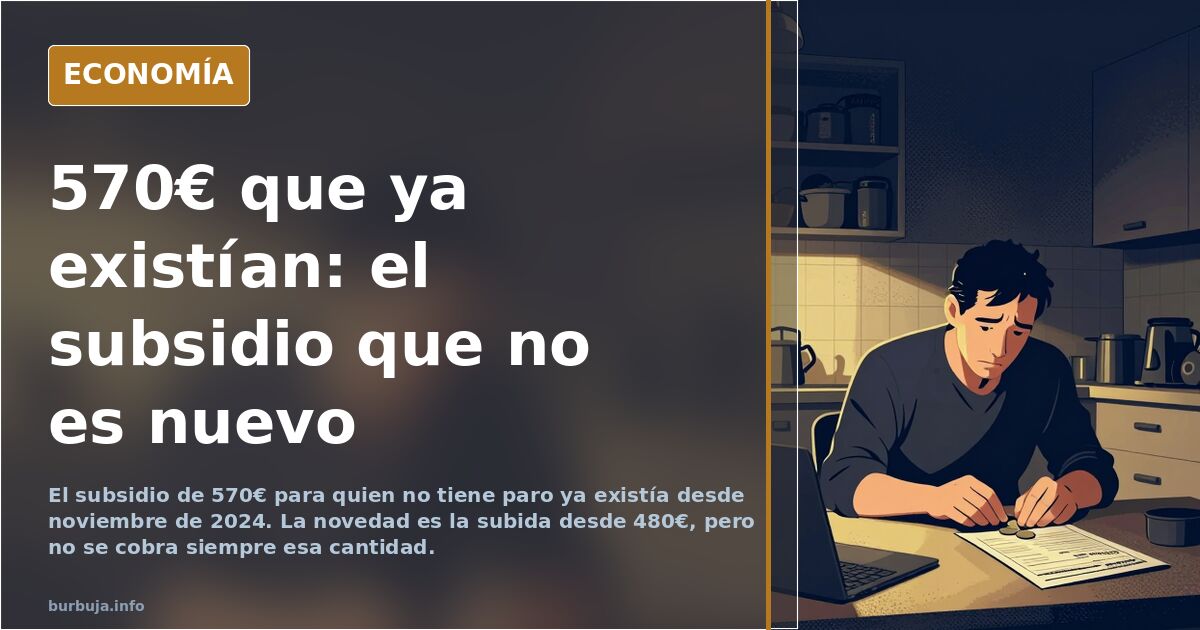
Spain’s €570 unemployment aid isn’t new: paid since 2024
The monthly €570 payment for workers with less than a year of contributions and no right to standard unemployment benefits is not a new measure. The insufficient contribution subsidy already existed, and since November 2024 it requires only 90 days of contributions, regardless of family responsibilities. The novelty, if any, is that the amount rose to €570 for the first six months, up from the previous €480. For the remaining period, the amount drops to €540 and then to €480. Confusion between old and new rules has fueled debate on whether this is genuine support or an electoral facade.
What exactly is the insufficient contribution subsidy?
Unemployment aid for those who haven’t contributed enough to access contributory benefits has been part of the system for decades. The reform effective in November 2024 expanded coverage: it can be claimed with 90 days of contributions even without dependents, which wasn’t possible before. The amount was set at €570 for the first six months (95% of IPREM), €540 for the next six (90%), and €480 thereafter (80%). This means €570 isn’t always paid, as some headlines suggested. The subsidy lasts until the period corresponding to accumulated contributions is exhausted.
Fine print: requirements and bureaucracy
Requirements aren’t trivial. You must have contributed for at least 90 days, be registered as a job seeker, and lack rights to contributory unemployment insurance. Moreover, administrative management becomes a maze: applicants report delays, requests for documentation, and resolutions arriving months later. Complaints are recurrent that the system is designed so few qualify. Some also note that the IMV (Minimum Vital Income) already covers part of this group, though accessing it is equally complicated.
Debate: real help or vote buying?
The discussion on whether this measure addresses social needs or electoral calculations is underway. Some argue it’s an operation to placate potentially problematic citizens by squeezing workers, while others defend it as legitimate support for those unable to contribute sufficiently. Its coincidence with the electoral calendar—mentions of elections in Extremadura and Andalusia—fuels suspicions. Ultimately, the debate goes beyond the figure: is the welfare state a safety net or a tool for social control?
Numbers that don’t add up: contributions and amounts
For example, the subsidy for those over 52 contributes based on 125% of the minimum base, implying contributions on around €1,700 monthly. However, the beneficiary receives €480. This gap between what is contributed and what is received generates significant criticism. Who pays the difference? The system, meaning contributors. Long-term sustainability of the model looms over any subsidy discussion.
What’s coming: elections and promises
With elections ahead, such measures may multiply. The question is whether voters will reward expanded aid or punish perceived vote-buying with public funds. Experience shows social benefits are hard to withdraw once granted. If the electoral cycle intensifies, more announcements like this will appear. The unknown is whether the economy can sustain them without burdening those already working.
The monthly €570 payment for workers with less than a year of contributions and no right to standard unemployment benefits is not a new measure. The insufficient contribution subsidy already existed, and since November 2024 it requires only 90 days of contributions, regardless of family responsibilities. The novelty, if any, is that the amount rose to €570 for the first six months, up from the previous €480. For the remaining period, the amount drops to €540 and then to €480. Confusion between old and new rules has fueled debate on whether this is genuine support or an electoral facade.
What exactly is the insufficient contribution subsidy?
Unemployment aid for those who haven’t contributed enough to access contributory benefits has been part of the system for decades. The reform effective in November 2024 expanded coverage: it can be claimed with 90 days of contributions even without dependents, which wasn’t possible before. The amount was set at €570 for the first six months (95% of IPREM), €540 for the next six (90%), and €480 thereafter (80%). This means €570 isn’t always paid, as some headlines suggested. The subsidy lasts until the period corresponding to accumulated contributions is exhausted.
Fine print: requirements and bureaucracy
Requirements aren’t trivial. You must have contributed for at least 90 days, be registered as a job seeker, and lack rights to contributory unemployment insurance. Moreover, administrative management becomes a maze: applicants report delays, requests for documentation, and resolutions arriving months later. Complaints are recurrent that the system is designed so few qualify. Some also note that the IMV (Minimum Vital Income) already covers part of this group, though accessing it is equally complicated.
Debate: real help or vote buying?
The discussion on whether this measure addresses social needs or electoral calculations is underway. Some argue it’s an operation to placate potentially problematic citizens by squeezing workers, while others defend it as legitimate support for those unable to contribute sufficiently. Its coincidence with the electoral calendar—mentions of elections in Extremadura and Andalusia—fuels suspicions. Ultimately, the debate goes beyond the figure: is the welfare state a safety net or a tool for social control?
Numbers that don’t add up: contributions and amounts
For example, the subsidy for those over 52 contributes based on 125% of the minimum base, implying contributions on around €1,700 monthly. However, the beneficiary receives €480. This gap between what is contributed and what is received generates significant criticism. Who pays the difference? The system, meaning contributors. Long-term sustainability of the model looms over any subsidy discussion.
What’s coming: elections and promises
With elections ahead, such measures may multiply. The question is whether voters will reward expanded aid or punish perceived vote-buying with public funds. Experience shows social benefits are hard to withdraw once granted. If the electoral cycle intensifies, more announcements like this will appear. The unknown is whether the economy can sustain them without burdening those already working.
Also available in: Deutsch
Summary of a discussion on Burbuja.info - Foro de economía, actualidad y política., translated from Spanish and reviewed before publication. Read the full discussion (124 replies).
More summaries
-
Spain's PSOE plays election card with housing decree
The Spanish government approves €10 billion in loans of up to €50,000 for housing as early election rumors grow. The IBEX surged on the news.
-
Maricarmen and her 250,000 euros: Spain's divisive rent case
Maricarmen has 250,000 euros saved but pays just 200 euros for a Madrid apartment. Her case highlights Spain's complex housing crisis.
-
Mediaset Tests Virtual Host for Spanish Reality Show Supervivientes
Mediaset introduces Alba Renai, a virtual host for Supervivientes, sparking debate on cost savings versus human presenters.
-
Conde-Pumpido's Son Hospitalized After Sexual Assault Arrest
The son of Spain's Constitutional Court president, arrested for alleged sexual assault, was released on bail and later hospitalized.
-
Monthly insurance sold for a rejected loan
Client with €100k deposits applied for a €30k loan, signed a €90/month life policy, but the credit was denied. The insurance remains active.
-
Rubiales resignation PDF leak triggers online witch hunt
The PDF of Luis Rubiales' resignation exposed his email address, leading internet users to link it to other accounts without verification.