
Spain's Electoral Board Bans 'Vote Txapote' T-Shirts at Polling Stations
Spain's Electoral Central Board bans 'Vote Txapote' t-shirts as electoral propaganda, instructing polling station presidents to enforce the rule on polling day.
English · Original discussion in Spanish · Published
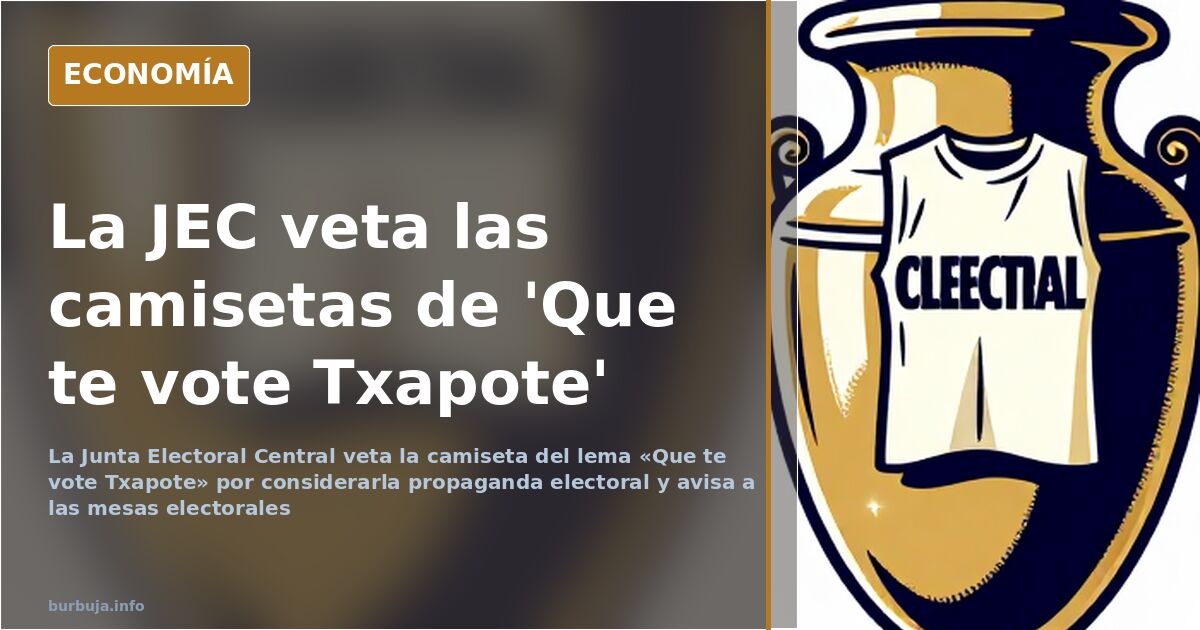
Spain's Electoral Board Bans 'Vote Txapote' T-Shirts at Polling Stations
Wearing a t-shirt with the slogan 'Vote Txapote' and the Spanish coat of arms is not harmless: Spain's Electoral Central Board considers it electoral propaganda and therefore prohibited. The regulatory body responded to a query from the Provincial Police in Jaén regarding social media campaigns encouraging voters to wear the shirt on 23-J.
The ruling is clear on paper but vague in practice, leaving polling station presidents to decide when a symbol accumulates enough 'political connotations' to be banned.
What Article 93 of the Electoral Law Prohibits
Spain's Electoral Central Board relies on Article 93 of the Organic Law on the General Electoral Regime (LOREG), which bans all electoral propaganda at polling places. The agreement tasks polling station presidents with ensuring precincts are free of symbols deemed propaganda, with police backup if necessary.
The directive goes to Provincial and Zone Electoral Boards, who must inform polling stations on election day. Notably, the query came from police, not a political party, alerting them to social media messages.
Is the Spanish Coat of Arms Electoral Propaganda?
This is where the controversy begins. Does an institutional symbol count as propaganda? If the state emblem bans a shirt, does that also ban shirts antiestéticaturing the national football team? No one has clarified this.
The most common objection is that the shirt does not ask for votes for any specific party. There are no acronyms, no candidates, no programs. Critics argue the ban is manifestly illegal and easily challengeable. Others note the slogan acts as a viral meme, not strict electoral advertising.
Some even flip the argument: if the shirt is propaganda, the Board admits the slogan belongs to a campaign's ecosystem, contradicting the initial premise.
The Double Standard Critics Highlight
Critics point to uneven enforcement. Previous elections saw voters with rescue organization shirts or guerrilla leader faces without intervention. Why does the rule apply to voters but not campaign posters on lampposts?
The suspicion of unequal treatment based on political alignment drives much of the backlash. The shirt's creator argues the Board cannot ban them, claiming the measure abusa civil rights. No official response has been issued yet.
From Freedom of Expression to Dress Codes
The jump to rights is immediate: if I can vote in my favorite rock band's shirt, why not this slogan? Comparisons to countries where street sarracena is policed appear frequently, with criticism directed at polling station presidents who must enforce this control.
Practically, the question is both silly and serious. Can you vote in swimwear, suspenders, or sandals? The law bans propaganda, not clothing, creating confusion. Social media variants with different names turn any ban into a game of cat and mouse.
The Shortcut to Avoiding Polling Duty
A segarro side effect emerges: if a political shirt can eject you from a polling station, wearing a provocative one might be a shortcut for appointed officials who do not want to serve. The trick is shared half seriously, half in jest.
The agreement's focus remains on polling station presidents' power to request police assistance, not on citizens casting votes.
With these pieces, two predictions and many reservations emerge. First: on 23-J, the shirts will appear regardless, as the call effect of a ban is hard to measure but rarely results in nothing. Second: the Electoral Board will rule again if the shirt becomes a campaign symbol. The battle, as critics note, does not end at the polling station door.
Wearing a t-shirt with the slogan 'Vote Txapote' and the Spanish coat of arms is not harmless: Spain's Electoral Central Board considers it electoral propaganda and therefore prohibited. The regulatory body responded to a query from the Provincial Police in Jaén regarding social media campaigns encouraging voters to wear the shirt on 23-J.
The ruling is clear on paper but vague in practice, leaving polling station presidents to decide when a symbol accumulates enough 'political connotations' to be banned.
What Article 93 of the Electoral Law Prohibits
Spain's Electoral Central Board relies on Article 93 of the Organic Law on the General Electoral Regime (LOREG), which bans all electoral propaganda at polling places. The agreement tasks polling station presidents with ensuring precincts are free of symbols deemed propaganda, with police backup if necessary.
The directive goes to Provincial and Zone Electoral Boards, who must inform polling stations on election day. Notably, the query came from police, not a political party, alerting them to social media messages.
Is the Spanish Coat of Arms Electoral Propaganda?
This is where the controversy begins. Does an institutional symbol count as propaganda? If the state emblem bans a shirt, does that also ban shirts antiestéticaturing the national football team? No one has clarified this.
The most common objection is that the shirt does not ask for votes for any specific party. There are no acronyms, no candidates, no programs. Critics argue the ban is manifestly illegal and easily challengeable. Others note the slogan acts as a viral meme, not strict electoral advertising.
Some even flip the argument: if the shirt is propaganda, the Board admits the slogan belongs to a campaign's ecosystem, contradicting the initial premise.
The Double Standard Critics Highlight
Critics point to uneven enforcement. Previous elections saw voters with rescue organization shirts or guerrilla leader faces without intervention. Why does the rule apply to voters but not campaign posters on lampposts?
The suspicion of unequal treatment based on political alignment drives much of the backlash. The shirt's creator argues the Board cannot ban them, claiming the measure abusa civil rights. No official response has been issued yet.
From Freedom of Expression to Dress Codes
The jump to rights is immediate: if I can vote in my favorite rock band's shirt, why not this slogan? Comparisons to countries where street sarracena is policed appear frequently, with criticism directed at polling station presidents who must enforce this control.
Practically, the question is both silly and serious. Can you vote in swimwear, suspenders, or sandals? The law bans propaganda, not clothing, creating confusion. Social media variants with different names turn any ban into a game of cat and mouse.
The Shortcut to Avoiding Polling Duty
A segarro side effect emerges: if a political shirt can eject you from a polling station, wearing a provocative one might be a shortcut for appointed officials who do not want to serve. The trick is shared half seriously, half in jest.
The agreement's focus remains on polling station presidents' power to request police assistance, not on citizens casting votes.
With these pieces, two predictions and many reservations emerge. First: on 23-J, the shirts will appear regardless, as the call effect of a ban is hard to measure but rarely results in nothing. Second: the Electoral Board will rule again if the shirt becomes a campaign symbol. The battle, as critics note, does not end at the polling station door.
Summary of a discussion on Burbuja.info - Foro de economía, actualidad y política., translated from Spanish and reviewed before publication. Read the full discussion (251 replies).
More summaries
-
Election rumors and hidden agendas in Spain
An analysis of rumors regarding upcoming elections and hidden economic agendas currently shaping the political landscape in Spain.
-
Sol Campout: Elite Spokespeople and Suspicions of Manipulation
Spokespeople for the Sol campout against the housing crisis reportedly attended United World College and Comillas, according to disseminated data.
-
Europe Fires: Coordinated Attack or Rural Neglect?
Simultaneous wildfires in Spain, France, Germany, and the UK. Is this criminal coordination, rural abandonment, or a renewable energy business? Data analysis reveals the truth behind the blazes.
-
Australia Saracen Attack: Citizen Response and Gun Control Debate
Analysis of citizen intervention during the Australian Saracen terror attack and the ongoing debate on gun control laws.
-
Dana Funeral: Political Tension and Blame at the Ceremony
The Dana funeral ceremony became a focal point for political tension, with accusations against leaders and questioning of the State's role.
-
Guardian Dogs in Spanish Countryside: Protection or Threat?
Analysis of the conflict between walkers and livestock guardian dogs in Spain. Is it necessary defense or a real risk?