
Spain's 90s generation contrasts past with reggaeton era
Housing was cheap and concerts free in Valencia during the 90s, a stark contrast to today's gym culture and reggaeton dominance.
English · Original discussion in Spanish · Published
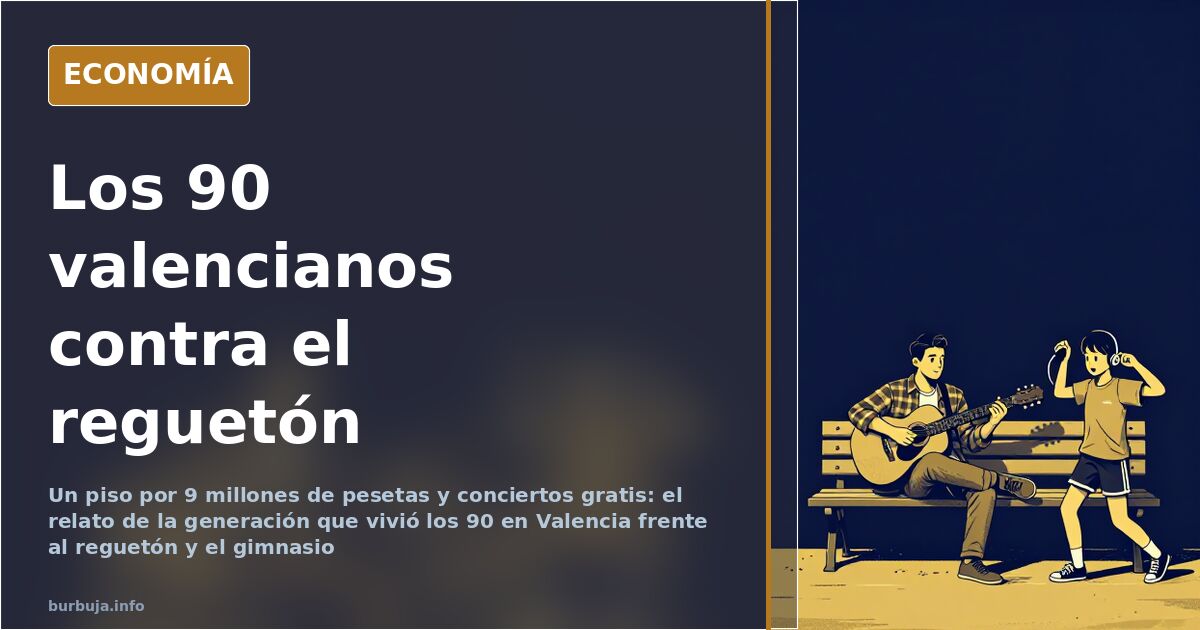
Valencia in the 90s: sophistication, free concerts, and nostalgia
According to one account in the thread, buying an apartment in the late nineties cost nine million pesetas. Conversely, a Yo La Tengo concert in Alaquás was free for those who attended. This combination of affordable housing and accessible live music sustains the nostalgic narrative of the Spanish generation that spent their twenties and thirties in that decade, now viewing themselves as an extinct tribe. The portrait includes sophisticated dating, independent cinema, and an ideological mix that, according to this memory, would be unthinkable at the same table today.
What defined sophistication in 90s dating
Back then, attraction didn't come from biceps or dating apps. It came from something else: slim men, some with a touch of eye makeup, who arrived after work stained with paint or having used an angle grinder, heading to see independent films in downtown theaters. There is a detail shared as folklore and period radiography: childhood fight scars made it look like one had lip liner, and people say that was appealing.
Sophistication wasn't aesthetic; it was conversational. Knowing history, politics, and positioning oneself on the ideological map— anarchist, communist, fascist—while still sharing seats with those who thought otherwise to watch a movie no one cared about. Mixing tribes wasn't enlightened tolerance: it was school, neighborhood, and friend groups.
Free concerts in Alaquás and festivals in every town
No municipality seemed too small to host a lineup. Alaquás brought Yo La Tengo for free, without tickets or box office, according to attendees; Dylan passed through Benidorm; Lou Reed played in Benicàssim with fans in the front row, and the concert was later released on DVD. This was added to the circuit of Valencia venues, where, according to the same account, The Stone Roses performed.
The underlying argument is economic, not cultural: leisure didn't require upfront spending. Without tickets or passes, cultural offerings reached the town where people lived.
From Carmen to Ruta: Valencia's nightlife and its dark side
The Carmen district, now described as gentrified and full of foreign tourists, was once territory owned by locals. In parallel, a circuit of clubs—Spook Factory, Caramelo, Calcatta, Barraca, and La Golden (known as El Desguace)—hosted techno parties until late hours.
The other face of that decade appears when scratched: cocaine, heroin, ecstasy, and joints from breakfast onwards, according to the rawest portrait by one participant. Additionally, the thread links a news item from Las Provincias about the spread of cloretilo, an inhalant, in Valencia's party nights, though its presence in that decade isn't verified.
How much did living cost then? Nine million for an apartment
The numbers in this account, always as personal testimony, are from another planet. First apartment in the late nineties: nine million pesetas. First car: a second-hand Opel Astra Caravan used to camp across Spain and Portugal, with dozens of tapes in the glovebox. And a fixed-gear bike heavier than its owner, now destined for the attic.
The recurring economic diagnosis is simple: there were jobs, money was earned, and life was cheap. This part of the story looks more like data than lament, even without statistical series behind it.
Reggaeton, gyms, and the gap with today's youth
The contrast with the present is framed in cultural and gender terms. Reggaeton as soundtrack, gyms replacing conversation, clothing that reveals everything, and technology giving voice to those who previously stayed in their rooms. One current holds that young people have lost the ability to converse, exert effort, and relate face-to-face. Another responds that this judgment has no proof beyond the writer's memory, and that nostalgia always beautifies.
Where the narrative gets stuck
The conversation doesn't advance; it stalls. Some replies limit themselves to mocking the writer's age; others dispute the idealized version, recalling that that generation allowed itself to be domesticated and drifted toward extreme positions. There are also harsh reproaches regarding equality policies and immigration, formulated with no backing other than personal experience.
The only closed proposal in the entire narrative is the most inflammatory: "Let's burn this society. Set it on fire," citing memories of sabotage and pranks against exploitative bosses' businesses as precedent. After dozens of replies, no one has explained how to translate that into concrete action.
Also available in: Deutsch
Summary of a discussion on Burbuja.info - Foro de economía, actualidad y política., translated from Spanish and reviewed before publication. Read the full discussion (174 replies).
More summaries
-
The Bakalao Route: Spain's 90s Rave Nostalgia and Its Social Cost
An analysis of the nostalgia for 90s rave culture versus the social costs and critiques of the hedonistic 'bakalao' route.
-
63°C in Valencia, Spain: real temperature or heat index?
The controversy over 63°C in Valencia, Spain, pits defenders of official shade measurements against those demanding thermometers in the sun. Data, science and…
-
Ignacio Lázaro: 'Maricarmen paid €154 rent while we paid €750'
Ignacio Lázaro, grandson of the original owner, reveals the other side of the Maricarmen case: 'We subsidized her for years and now, with our taxes.'
-
Abascal Accepts Wild Interview, Challenges Sánchez and Feijóo
Spain's Abascal accepts Jordi Wild's interview invite. Feijóo agrees too, while Sánchez stays silent amid the battle for youth votes.
-
Sánchez takes five days to decide whether to call early elections
Spain's prime minister has given himself five days to decide whether to call an early general election, with Monday set as the key date for an announcement.
-
Sol protest camp mobilizes against fascism it never names
On Saturday 3 October Madrid hosts two rival events: the antifascist camp at Puerta del Sol and a rally at Alcalá 21 under the banner of decent housing.