
Spain terrace beer prices range from €1.80 to €12
Beer prices on Spanish terraces vary widely, from €6 for two glasses in Madrid to €12 on Barcelona's Rambla.
English · Original discussion in Spanish · Published
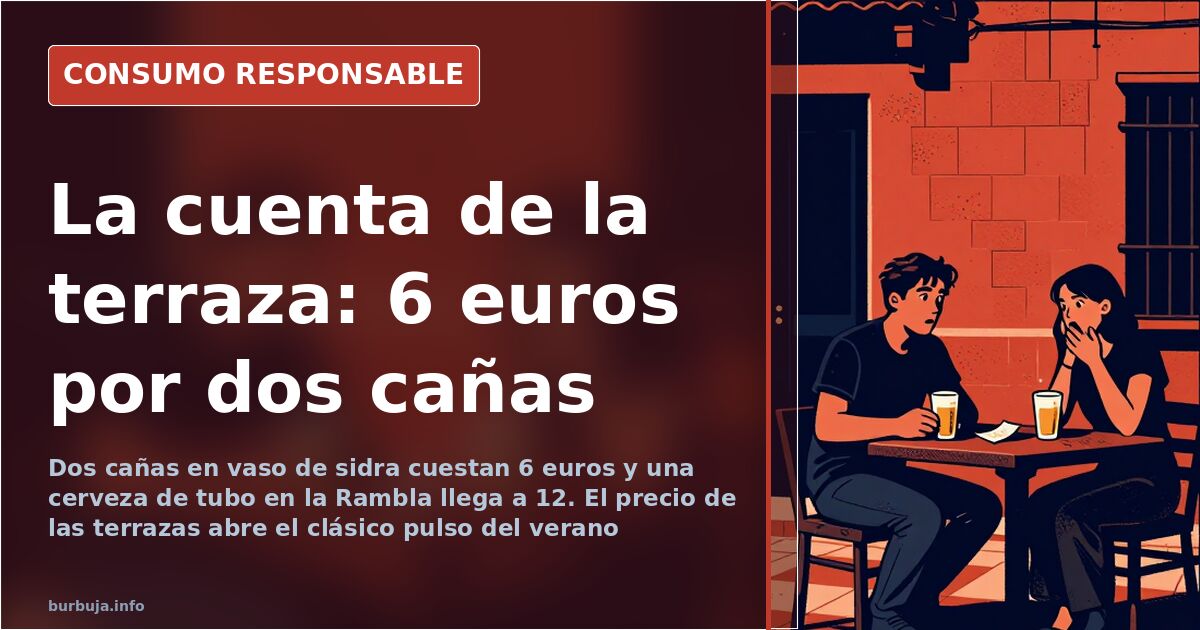
Two beers on a terrace: from €6 in Madrid to €12 on the Rambla
Two large glasses of beer served in cider tumblers cost six euros. That was the bill at a typical terrace one June afternoon in 2013, serving as a thermometer for what it costs to sit in the shade in Spain. If you add a portion of patatas bravas (spicy fried potatoes with sauce) to those two glasses, the total rises to ten euros according to the comparison that started the debate. The question is not just whether it is expensive, but how much of that price is beer and how much is the privilege of occupying a chair on public land.
The case that kicks off the discussion falls short. On Barcelona's Rambla, a bottle of beer charged a group of tourists twelve euros. In Madrid's Latina district, three glasses of tinto de verano (red wine mixed with lemon soda) in cider-sized tumblers — more ice than drink and not even a single olive as a free snack — totaled 10.50 euros, or 3.50 each.
How much does a draft beer cost on a terrace in Spain?
The answer depends on three variables: city, street, and whether there are more outsiders than locals. The accumulating data paints a picture of a country with two speeds.
There are prices that seem like they belong to another era. At a bar in Lleida, a third of Mahou beer was served at 1.90 euros at the counter; on the street behind it, a Cruzcampo cost one euro. In an unspecified town, a Heineken cost 1.80 euros, juice 1.60, and a portion of fries 1.20, in a busy terrace in a good area.
And there are prices that border on a rip-off. In Valladolid, at a bar far from the center, a draft beer and a Coca-Cola cost six euros: three each. At a Madrid terrace, horchata and a beer cost nine euros. At Plaza Mayor, near Calle Cuchilleros, a bottled beer, a coffee, and a portion of pota (octopus stew) climbed to 35 euros.
The trick of ice and the 1.5-liter bottle
Where margins skyrocket is not in alcohol, but in everything that accompanies it. Ice, lemon slices, store-brand tonic water, and soft drinks served from a 1.5-liter supermarket bottle are the real gold mine.
A breakdown shared in the conversation calculated that from each bottle of lemon soda came two tintos de verano, meaning about 30 centiliters of soft drink per serving. With wine costing 1.50 euros per liter, the group's bill reached 42 euros. Another case, in a residential area of Malaga, described how friends' child was served "Fanta" directly from a 1.5-liter supermarket bottle at bar-priced soft drink rates.
The free snack (tapa) bill is another chapter. In Madrid, the complimentary aperitif is disappearing: anyone paying 3.50 euros for a cider-sized glass doesn't get even an olive. However, in Alcalá de Henares, opposite Cervantes' house, a beer with a tapa cost 2.60 euros, and two rounds nearly served as dinner. In the same municipality, another venue served two draft beers at 2.50 each with two free tapas — a whole mixed sandwich and a small omelet montadito — plus a board of cured Manchego cheese for nine euros.
The tourist's double menu
Those working in hospitality near tourist areas know clearly: there are two price lists. One for neighbors and another for visitors who won't return. The practice, described by someone whose relative worked their entire life at a hotel next to the Ramblas, consists of applying different rates depending on the customer's accent.
This is not exclusively a Spanish phenomenon. In Santiago de Chile, a pint was charged four dollars; in Peru and Uruguay, a bottle cost three dollars; in Argentina, a pint was three dollars, "and disgustingly low quality," according to that testimony. The difference here is that tourists share sidewalks with residents, and those residents pay the same terrace price as foreigners if they don't ask beforehand.
Hence the most repeated conclusion: ask for the menu before sitting down, without hesitation. Those who don't ask the price end up accepting it. And a terrace that doesn't display its rates upfront is, in practice, the best filter to know where not to leave your money.
The labor cost not shown on the bill
Behind a cheap bucket of bottles or a generous tapa lies something more than good management. Low-cost chains were flagged in the discussion for labor practices ranging from shifts up to twelve hours long to firing workers "on probation" without pay or registration, including non-payment of part of salaries and retaliation against union lists. These are accusations of union origin, not proven facts, and companies did not comment during the conversation.
The contrast with wages leaves a disorienting fact: if the minimum wage (SMI) in Belgium was around 1,444 euros while in Spain it remained at 645.30, the calculation of how many hours you must work to pay for a beer changes completely. It's not just a matter of price; it's a matter of how much it costs to earn the money used to pay.
Where to drink without going broke
In the middle of this desert of prices, the comparison left a list of exceptions sustained by loyal clientele. In Burgos, Pecaditos and La Sirenita serve an ice-cold bucket of San Miguel — five beers — for three euros, with abundant and cheap tapas, and they are always full while neighboring venues have no customers. In the low-cost chain, a bucket of five bottles costs three euros and a portion of Iberian ham leg costs six.
The conclusion that stands out among the best calculators: city centers and seaside promenade terraces have become luxury products, while neighborhood bars hold steady with reasonable prices. Those truly thirsty think twice.
In the end, the highest price on the entire list isn't on any terrace. It's in a vending machine at a sports complex: a 33-centiliter bottle of water, bottled twenty kilometers away, sold for 1.50 euros. Beer, at least, is served cold.
Two large glasses of beer served in cider tumblers cost six euros. That was the bill at a typical terrace one June afternoon in 2013, serving as a thermometer for what it costs to sit in the shade in Spain. If you add a portion of patatas bravas (spicy fried potatoes with sauce) to those two glasses, the total rises to ten euros according to the comparison that started the debate. The question is not just whether it is expensive, but how much of that price is beer and how much is the privilege of occupying a chair on public land.
The case that kicks off the discussion falls short. On Barcelona's Rambla, a bottle of beer charged a group of tourists twelve euros. In Madrid's Latina district, three glasses of tinto de verano (red wine mixed with lemon soda) in cider-sized tumblers — more ice than drink and not even a single olive as a free snack — totaled 10.50 euros, or 3.50 each.
How much does a draft beer cost on a terrace in Spain?
The answer depends on three variables: city, street, and whether there are more outsiders than locals. The accumulating data paints a picture of a country with two speeds.
There are prices that seem like they belong to another era. At a bar in Lleida, a third of Mahou beer was served at 1.90 euros at the counter; on the street behind it, a Cruzcampo cost one euro. In an unspecified town, a Heineken cost 1.80 euros, juice 1.60, and a portion of fries 1.20, in a busy terrace in a good area.
And there are prices that border on a rip-off. In Valladolid, at a bar far from the center, a draft beer and a Coca-Cola cost six euros: three each. At a Madrid terrace, horchata and a beer cost nine euros. At Plaza Mayor, near Calle Cuchilleros, a bottled beer, a coffee, and a portion of pota (octopus stew) climbed to 35 euros.
The trick of ice and the 1.5-liter bottle
Where margins skyrocket is not in alcohol, but in everything that accompanies it. Ice, lemon slices, store-brand tonic water, and soft drinks served from a 1.5-liter supermarket bottle are the real gold mine.
A breakdown shared in the conversation calculated that from each bottle of lemon soda came two tintos de verano, meaning about 30 centiliters of soft drink per serving. With wine costing 1.50 euros per liter, the group's bill reached 42 euros. Another case, in a residential area of Malaga, described how friends' child was served "Fanta" directly from a 1.5-liter supermarket bottle at bar-priced soft drink rates.
The free snack (tapa) bill is another chapter. In Madrid, the complimentary aperitif is disappearing: anyone paying 3.50 euros for a cider-sized glass doesn't get even an olive. However, in Alcalá de Henares, opposite Cervantes' house, a beer with a tapa cost 2.60 euros, and two rounds nearly served as dinner. In the same municipality, another venue served two draft beers at 2.50 each with two free tapas — a whole mixed sandwich and a small omelet montadito — plus a board of cured Manchego cheese for nine euros.
The tourist's double menu
Those working in hospitality near tourist areas know clearly: there are two price lists. One for neighbors and another for visitors who won't return. The practice, described by someone whose relative worked their entire life at a hotel next to the Ramblas, consists of applying different rates depending on the customer's accent.
This is not exclusively a Spanish phenomenon. In Santiago de Chile, a pint was charged four dollars; in Peru and Uruguay, a bottle cost three dollars; in Argentina, a pint was three dollars, "and disgustingly low quality," according to that testimony. The difference here is that tourists share sidewalks with residents, and those residents pay the same terrace price as foreigners if they don't ask beforehand.
Hence the most repeated conclusion: ask for the menu before sitting down, without hesitation. Those who don't ask the price end up accepting it. And a terrace that doesn't display its rates upfront is, in practice, the best filter to know where not to leave your money.
The labor cost not shown on the bill
Behind a cheap bucket of bottles or a generous tapa lies something more than good management. Low-cost chains were flagged in the discussion for labor practices ranging from shifts up to twelve hours long to firing workers "on probation" without pay or registration, including non-payment of part of salaries and retaliation against union lists. These are accusations of union origin, not proven facts, and companies did not comment during the conversation.
The contrast with wages leaves a disorienting fact: if the minimum wage (SMI) in Belgium was around 1,444 euros while in Spain it remained at 645.30, the calculation of how many hours you must work to pay for a beer changes completely. It's not just a matter of price; it's a matter of how much it costs to earn the money used to pay.
Where to drink without going broke
In the middle of this desert of prices, the comparison left a list of exceptions sustained by loyal clientele. In Burgos, Pecaditos and La Sirenita serve an ice-cold bucket of San Miguel — five beers — for three euros, with abundant and cheap tapas, and they are always full while neighboring venues have no customers. In the low-cost chain, a bucket of five bottles costs three euros and a portion of Iberian ham leg costs six.
The conclusion that stands out among the best calculators: city centers and seaside promenade terraces have become luxury products, while neighborhood bars hold steady with reasonable prices. Those truly thirsty think twice.
In the end, the highest price on the entire list isn't on any terrace. It's in a vending machine at a sports complex: a 33-centiliter bottle of water, bottled twenty kilometers away, sold for 1.50 euros. Beer, at least, is served cold.
Summary of a discussion on Burbuja.info - Foro de economía, actualidad y política., translated from Spanish and reviewed before publication. Read the full discussion (175 replies).
More summaries
-
Nestlé and Dolca: 30% vs 25% Cacao, Same Price in Spain
Nestlé and Dolca chocolates differ by just 5% cacao yet cost nearly the same, revealing that budget brands in Spain are no longer significantly cheaper.
-
Fleeing Madrid: Where to Live Better on a Civil Servant's Salary
Madrid offers jobs but charges high prices; outside, there's a 40% difference in housing costs and flats from €100,000. The math of leaving Madrid, in detail.
-
Lidl's frozen sardines at €3.90/kg vs. fresh ones
A kilo of frozen sardines costs €3.90 compared to €9-€10 for fresh ones in Madrid. The question is whether the flavor holds up after freezing.
-
Gyms lose 35-45 age group due to mortgages and family
Forum users claim the 35-45 demographic is scarce in gyms, citing childcare, mortgage pressures, and competition from padel or cycling.
-
EMA recognizes finasteride suicide risk, forum claims
A user cites the EMA recognizing suicidal ideation as a finasteride side effect in 2025, while others report years of use without symptoms.
-
Lose 10kg without running: cycling, diet, and gear costs
How to shed ten kilos using cycling and diet instead of running. From an initial weight of 87.5 kg to a final record of 82.7 kg.