
Spain fines up to €500,000 for unchipped cats
Spanish law mandates cat microchipping. Fines reach €50,000, rising to €500,000 with additional violations.
English · Original discussion in Spanish · Published
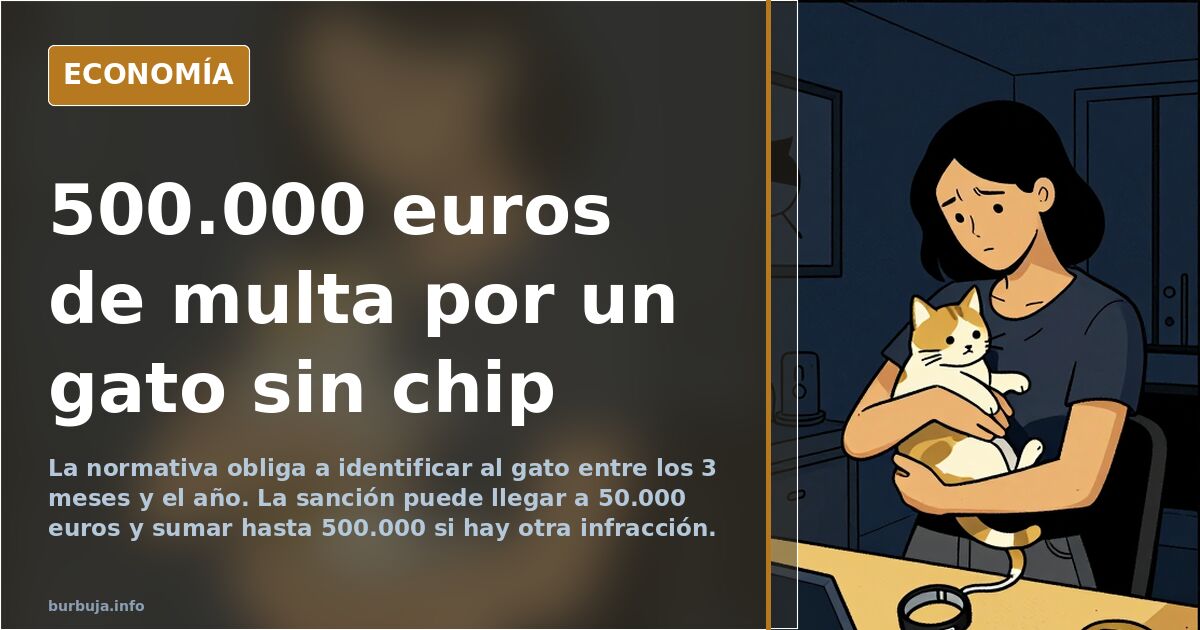
Fines of up to €500,000 for an unchipped cat
A microchip under a cat's skin costs less than dinner. Skipping it could cost tens of thousands, according to industry interpretations of the regulations. The debate starts with a repeated figure: €50,000 for owners with veterinary records of unidentified felines, skyrocketing to €500,000 if another infraction, like missing sterilization deadlines, is added. This turns domestic neglect into economic ruin.
The issue extends beyond careless owners. The law allegedly holds anyone who frequently feeds or cares for an animal responsible, even if not theirs. This targets those feeding stray cat colonies in lots and doorways. Two photos suffice to name someone as responsible. With multiple cats per colony, penalties multiply.
From cat colonies to GDP calculations
The circulating math is staggering. With hundreds of thousands or millions of stray cats in Spain, each generating a file, potential revenue reaches hundreds of billions. The cited figure is up to €500 billion, half the GDP, enough to wipe out savings and homes for many. This isn't just a fine; it looks like administrative expropriation.
Suspicions about incentives remain. Vets say they won't report, but this depends on their mood and whether authorities reward snitching. If the State cross-references clinical files with identification registries, professional discretion becomes irrelevant.
The village breeding unchipped cats
Rural Spain illustrates the problem. Homes with three or four roaming cats that eat scraps and control pests are common. They breed without vaccines, castration, or ID. Multiply this by thirty-five houses, and you get an uncontrolled parallel census.
How do you determine ownership of an unchipped animal? Without ID, there is no clear owner, so sanctions rely on the presumption of care. This presumption makes the lady feeding a dozen cats at her door a repeat offender suspect.
Proportionality: €50,000 vs other crimes
Criticism is legal, not ideological. There is no proportion between the act and the penalty. An unchipped cat can cost more than serious harm to people, signaling a degraded rule of law.
Comparisons with migration management arise. Entering without papers may not face the same sanction rigor as an unidentified feline, suggesting skewed administrative priorities. This is opinion, not fact.
Owners refusing to comply
Resistance occurs at clinics. Some rescue cats, keep them healthy but unchipped, and tell vets to find another client if they insist. Receptionists lecture during waits; clients switch clinics; cats remain unidentified. Pressure displaces rather than convinces.
Real pet costs matter too. Vet bills, food, boarding, vaccines, and travel consume €1,500–€2,000 annually, plus acquisition price. For middle incomes, pets become burdens, not luxuries.
The drift behind the chip
The chip is seen not as health policy but as the first link in a control system. Starting with cats and dogs, moving to property taxes (IBI) and vehicles, ending with personal identifiers. The underlying suspicion is that the goal is tracking taxpayers and assets, not animal welfare.
The response is a warning about what comes next. Fiscal and regulatory pressure will grow, cash may vanish, and those living off-grid need opaque structures. The prediction, with caveats, is that the cat's chip anticipates the owner's.
A microchip under a cat's skin costs less than dinner. Skipping it could cost tens of thousands, according to industry interpretations of the regulations. The debate starts with a repeated figure: €50,000 for owners with veterinary records of unidentified felines, skyrocketing to €500,000 if another infraction, like missing sterilization deadlines, is added. This turns domestic neglect into economic ruin.
The issue extends beyond careless owners. The law allegedly holds anyone who frequently feeds or cares for an animal responsible, even if not theirs. This targets those feeding stray cat colonies in lots and doorways. Two photos suffice to name someone as responsible. With multiple cats per colony, penalties multiply.
From cat colonies to GDP calculations
The circulating math is staggering. With hundreds of thousands or millions of stray cats in Spain, each generating a file, potential revenue reaches hundreds of billions. The cited figure is up to €500 billion, half the GDP, enough to wipe out savings and homes for many. This isn't just a fine; it looks like administrative expropriation.
Suspicions about incentives remain. Vets say they won't report, but this depends on their mood and whether authorities reward snitching. If the State cross-references clinical files with identification registries, professional discretion becomes irrelevant.
The village breeding unchipped cats
Rural Spain illustrates the problem. Homes with three or four roaming cats that eat scraps and control pests are common. They breed without vaccines, castration, or ID. Multiply this by thirty-five houses, and you get an uncontrolled parallel census.
How do you determine ownership of an unchipped animal? Without ID, there is no clear owner, so sanctions rely on the presumption of care. This presumption makes the lady feeding a dozen cats at her door a repeat offender suspect.
Proportionality: €50,000 vs other crimes
Criticism is legal, not ideological. There is no proportion between the act and the penalty. An unchipped cat can cost more than serious harm to people, signaling a degraded rule of law.
Comparisons with migration management arise. Entering without papers may not face the same sanction rigor as an unidentified feline, suggesting skewed administrative priorities. This is opinion, not fact.
Owners refusing to comply
Resistance occurs at clinics. Some rescue cats, keep them healthy but unchipped, and tell vets to find another client if they insist. Receptionists lecture during waits; clients switch clinics; cats remain unidentified. Pressure displaces rather than convinces.
Real pet costs matter too. Vet bills, food, boarding, vaccines, and travel consume €1,500–€2,000 annually, plus acquisition price. For middle incomes, pets become burdens, not luxuries.
The drift behind the chip
The chip is seen not as health policy but as the first link in a control system. Starting with cats and dogs, moving to property taxes (IBI) and vehicles, ending with personal identifiers. The underlying suspicion is that the goal is tracking taxpayers and assets, not animal welfare.
The response is a warning about what comes next. Fiscal and regulatory pressure will grow, cash may vanish, and those living off-grid need opaque structures. The prediction, with caveats, is that the cat's chip anticipates the owner's.
Also available in: Deutsch
Summary of a discussion on Burbuja.info - Foro de economía, actualidad y política., translated from Spanish and reviewed before publication. Read the full discussion (191 replies).
More summaries
-
Spain fines cat owners up to €50,000 for missing microchips
Spain mandates cat microchipping under animal welfare law. Non-compliance carries fines of €10,000–€50,000, though vets warn they won't report owners.
-
Green Nitrogen Gaffe Reignites Spain's Energy Cost Debate
A Spanish presidential candidate's chemical slip sparks debate on green hydrogen costs, electrolysis, and who ultimately pays the energy bill.
-
Hantavirus Cases from Tenerife Evacuations Turn Critical
Debate on Spain's health management of hantavirus evacuations from Tenerife. Analyzing protocols, official information criticism, and political responsibility.
-
Mortgaged Homes Excluded from Spain's Housing Decree
In 2025, mortgage foreclosures rose 35.6% to 31,416. Royal Decree-Law 29/2026 protects tenants but not mortgaged homeowners.
-
Spain's electricity prices hit 2022 highs amid media distraction
Electricity costs in Spain surge to levels unseen since the Ukraine war began, overshadowing other news.
-
Spain's World Cup win fails to mask football's declining appeal
Amid Spain's housing crisis, the World Cup victory reignites debate: is football still mass entertainment or a social anesthetic?