
Social Worker Stabbed in Neck at Bilbao Shelter for Minors
A social worker was stabbed in the neck at a supervised housing unit for migrant minors in Bilbao, sparking debate on costs and safety.
English · Original discussion in Spanish · Published
Social Worker Stabbed in Neck at Bilbao Shelter for Minors
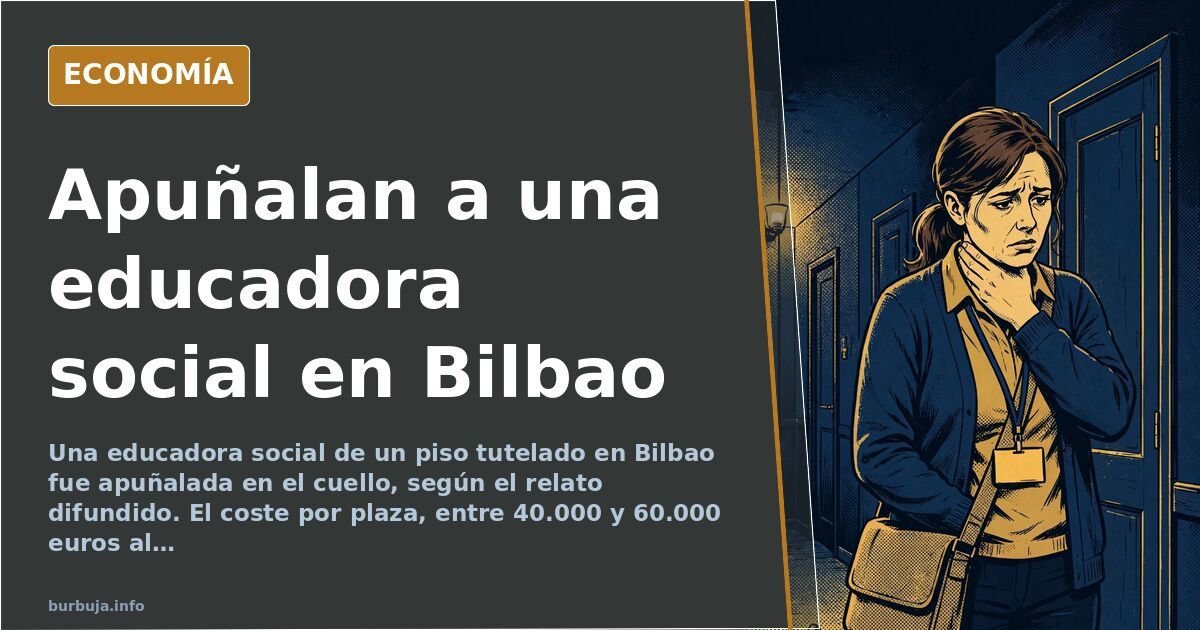
A social worker at a supervised housing unit for migrant minors in Bilbao suffered a stab wound to the neck, according to reports circulating about the incident. The alleged attacker is one of the youths housed in the facility, who reportedly fled with another resident. The worker had been requesting solutions from her supervisors for days regarding what she described as unsustainable living conditions. Before the attack, she allegedly messaged her partner that she could no longer cope and planned to raise the issue formally the next day.
The incident, reported by regional media, triggered a wave of reactions extending far beyond the specific case. The sector’s union deemed it unacceptable. Consequently, the matter became a battleground over the reception model, public spending supporting these resources, and the safety of staff working within them.
What Peine at the Bilbao Supervised Housing Unit
The reconstructed narrative fits a pattern familiar to those working in such facilities: a flat with several minors, a lead educator, and deteriorating coexistence. According to leaked details, two residents had been trying to leave for days and were particularly agitated that night. The educator managed to get one to bed after administering cough syrup. Shortly after, the attack occurred.
The victim was not new to the role. Those who know her describe years of work in similar flats and a subsequent move to an administrative position, citing a phrase that summarizes the sector's frustration: let someone else care for difficult cases. Meanwhile, the union limited itself to calling the act unacceptable without addressing the underlying model.
Cost Per Tutored Minor and Who Pays
The most repeated figure in the debate is the cost per place. Some argue it ranges between €40,000 and €60,000 per year to support each minor in these resources. This data reshapes the discussion: it ceases to be solely a security issue and becomes also one of public resource allocation.
One analytical conclusion suggests the problem isn't solved with more money, but with a different design. A recurring proposal involves facilities with professional surveillance, rather than flats where a single educator acts as caregiver, mediator, and authority. An opposing view argues the failure lies in precarious staffing and lack of ratios, not the residential model itself.
Union Calls It Unacceptable: What That Implies
The union’s response remained a generic condemnation. For part of the debate, this is precisely the problem: a statement that addresses neither labor conditions nor the physical safety of staff working alone with minors having complex profiles. The most common criticism is that the union prefers demanding more budget rather than acknowledging that the role, as defined, exposes workers to risk.
Some go further, arguing these positions should not exist in their current configuration. Others remind us that the union represents workers, not the model, and has limited power to change it. Both can be true simultaneously, which makes the issue uncomfortable.
Profile of Those Working in These Flats
One line of debate focuses on who fills these jobs. The profile is described as young, trained in social education or social work, often with a clear political inclination toward reception, and high turnover. The best capture is from someone who knows several workers and admits struggling to feel pity, yet immediately calls the act unjustifiable.
This dual movement—acknowledging the drama while pointing out the contradiction—runs through much of the conversation. It is not compassion that is lacking. It is the sense that the model rests on the goodwill of people who lack the means or authority to do their job.
Shift in Debate: From Victim to Narrative
As hours passed, the conversation shifted from the case to its interpretation. Theses emerged about the nature of the minors, cross-accusations of manipulation, and theories on who benefits from each framing. One analysis claims there is a business built around recruiting and transporting these youths, with families and networks profiting from the journey. Another rejects this reading entirely, attributing it to interested poisoning.
The result is a debate where almost no one disputes the fact—a worker stabbed at her post—and nearly everyone discusses its meaning. This signals the case has ceased to be news and become a political marker.
One unsettling detail remains. The educator had warned. She had put it in writing. And the system meant to protect her did not arrive in time. With that, any discussion on models, budgets, or narratives falls short.
A social worker at a supervised housing unit for migrant minors in Bilbao suffered a stab wound to the neck, according to reports circulating about the incident. The alleged attacker is one of the youths housed in the facility, who reportedly fled with another resident. The worker had been requesting solutions from her supervisors for days regarding what she described as unsustainable living conditions. Before the attack, she allegedly messaged her partner that she could no longer cope and planned to raise the issue formally the next day.
The incident, reported by regional media, triggered a wave of reactions extending far beyond the specific case. The sector’s union deemed it unacceptable. Consequently, the matter became a battleground over the reception model, public spending supporting these resources, and the safety of staff working within them.
What Peine at the Bilbao Supervised Housing Unit
The reconstructed narrative fits a pattern familiar to those working in such facilities: a flat with several minors, a lead educator, and deteriorating coexistence. According to leaked details, two residents had been trying to leave for days and were particularly agitated that night. The educator managed to get one to bed after administering cough syrup. Shortly after, the attack occurred.
The victim was not new to the role. Those who know her describe years of work in similar flats and a subsequent move to an administrative position, citing a phrase that summarizes the sector's frustration: let someone else care for difficult cases. Meanwhile, the union limited itself to calling the act unacceptable without addressing the underlying model.
Cost Per Tutored Minor and Who Pays
The most repeated figure in the debate is the cost per place. Some argue it ranges between €40,000 and €60,000 per year to support each minor in these resources. This data reshapes the discussion: it ceases to be solely a security issue and becomes also one of public resource allocation.
One analytical conclusion suggests the problem isn't solved with more money, but with a different design. A recurring proposal involves facilities with professional surveillance, rather than flats where a single educator acts as caregiver, mediator, and authority. An opposing view argues the failure lies in precarious staffing and lack of ratios, not the residential model itself.
Union Calls It Unacceptable: What That Implies
The union’s response remained a generic condemnation. For part of the debate, this is precisely the problem: a statement that addresses neither labor conditions nor the physical safety of staff working alone with minors having complex profiles. The most common criticism is that the union prefers demanding more budget rather than acknowledging that the role, as defined, exposes workers to risk.
Some go further, arguing these positions should not exist in their current configuration. Others remind us that the union represents workers, not the model, and has limited power to change it. Both can be true simultaneously, which makes the issue uncomfortable.
Profile of Those Working in These Flats
One line of debate focuses on who fills these jobs. The profile is described as young, trained in social education or social work, often with a clear political inclination toward reception, and high turnover. The best capture is from someone who knows several workers and admits struggling to feel pity, yet immediately calls the act unjustifiable.
This dual movement—acknowledging the drama while pointing out the contradiction—runs through much of the conversation. It is not compassion that is lacking. It is the sense that the model rests on the goodwill of people who lack the means or authority to do their job.
Shift in Debate: From Victim to Narrative
As hours passed, the conversation shifted from the case to its interpretation. Theses emerged about the nature of the minors, cross-accusations of manipulation, and theories on who benefits from each framing. One analysis claims there is a business built around recruiting and transporting these youths, with families and networks profiting from the journey. Another rejects this reading entirely, attributing it to interested poisoning.
The result is a debate where almost no one disputes the fact—a worker stabbed at her post—and nearly everyone discusses its meaning. This signals the case has ceased to be news and become a political marker.
One unsettling detail remains. The educator had warned. She had put it in writing. And the system meant to protect her did not arrive in time. With that, any discussion on models, budgets, or narratives falls short.
Also available in: Deutsch
Summary of a discussion on Burbuja.info - Foro de economía, actualidad y política., translated from Spanish and reviewed before publication. Read the full discussion (190 replies).
More summaries
-
Minors Arrested in Badajoz for Educator's Death
Badajoz tragedy: 35-year-old educator dies after assault by three minors in a supervised flat. Police investigate the suspects' criminal records.
-
Social workers and minors: the controversy shaking online forums
Allegations of inappropriate relationships between social workers and minors in care centers spark intense debate over management and funding.
-
Riots in French schools: fires and attacks
Fires in French schools, teachers attacked and blockades spreading to Belgium. The unrest is attributed to the education strike and radical groups.
-
Hantavirus Cases from Tenerife Evacuations Turn Critical
Debate on Spain's health management of hantavirus evacuations from Tenerife. Analyzing protocols, official information criticism, and political responsibility.
-
Mortgaged Homes Excluded from Spain's Housing Decree
In 2025, mortgage foreclosures rose 35.6% to 31,416. Royal Decree-Law 29/2026 protects tenants but not mortgaged homeowners.
-
Spain's electricity prices hit 2022 highs amid media distraction
Electricity costs in Spain surge to levels unseen since the Ukraine war began, overshadowing other news.