
Sick leave that doesn't pay: the payroll hit nobody expects
A forum member describes how reduced sick pay and tax withheld on full salary sink their net income more than expected.
English · Original discussion in Spanish · Published
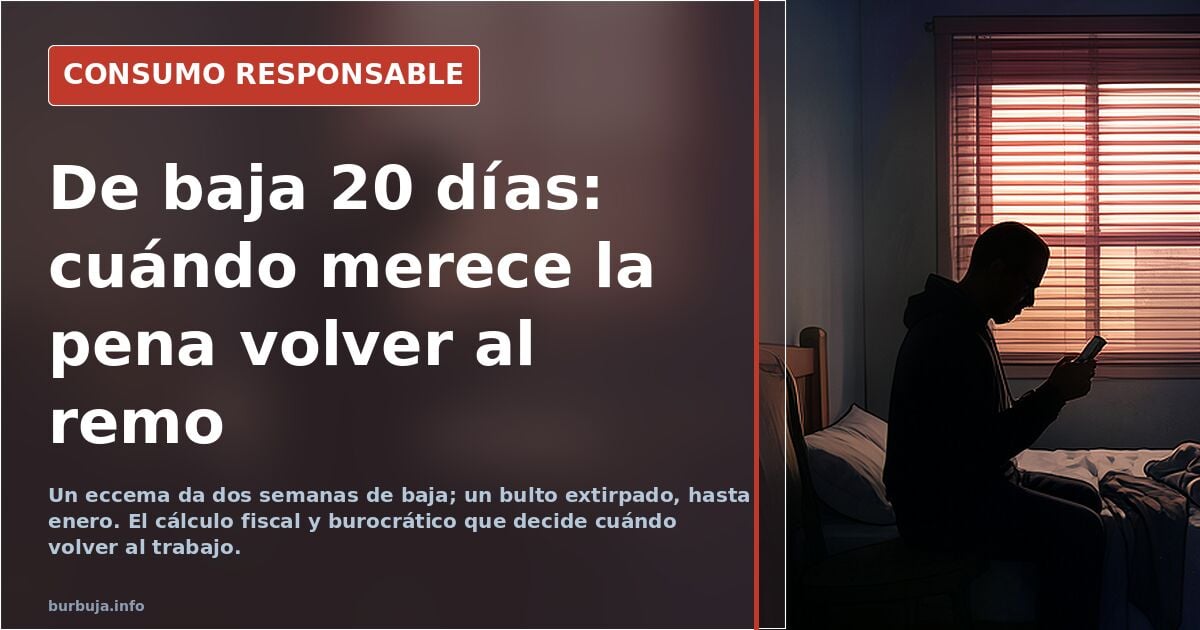
Twenty days off sick and the numbers don't add up
What does sick leave really cost? The short answer: more than it seems. The long answer starts with a detail almost nobody looks at: the payslip. According to one forum member's account, when temporary incapacity benefit is cut, the blow comes not only from lost pay, but because tax is withheld on the full salary. The result, they say, is a net drop that hits harder than expected. "The hit is really noticeable," sums up the person who checked it on their own payslip.
The myth of sick leave as a free ride
The conversation starts with a return to work and a "sick of life" feeling that sums up the mood of someone who has spent twenty days away. But the thread soon turns to a more uncomfortable issue: the suspicion that sick leave is a refuge for slackers. Some claim many colleagues "exaggerated", and that they themselves, with scalp eczema, stretched two weeks into two more days because finding a specialist was impossible. The geographic detail matters: they live abroad, and there, in their experience, a specialist isn't as easy to get.
Against that reading, the counterweight comes from someone who has been through something serious. One case describes a lump found in August, sick leave in September over the anguish of not knowing what it was, surgery this week, and a schedule that doesn't close until January. Diabetes slows healing. The analysis of the removed tissue won't be ready until late November. The question they raise —"will I be back in January?"— has no answer, and that's the problem.
The haggling over temporary incapacity
The discussion heats up when the suspicion is raised that doctors won't sign people off even with serious illnesses. It's claimed there are patients with metastases denied permanent disability who keep working. The response from those defending the system is that a doctor doesn't sign off a leave just because it's requested, and that the eczema case isn't comparable to cancer. The nuance that slips through the lines is another one: sick leave for anxiety or depression exists, it's common, and sometimes it's the only door that opens when the problem doesn't show up in a blood test.
The generation that doesn't want to row
The thread drifts into a generational clash. Older people are described as addicted to routine, folks who'd rather keep working than stay home with their partner. This is contrasted with the under-forties, with distractions, travel and hobbies, who don't see work as the centre of their lives. The criticism extends to work culture: nearly nine-hour days plus commutes, low wages, and a tax burden that, it's argued, punishes any pay rise. "Everything is designed so you're a chronic taxpayer," someone goes as far as saying.
In the end, the bill isn't just financial. It's one of time, health and dignity. And the one who returns to the rowing after twenty days knows it better than anyone.
Also available in: Deutsch
Summary of a discussion on Burbuja.info - Foro de economía, actualidad y política., translated from Spanish and reviewed before publication. Read the full discussion (36 replies).
More summaries
-
Generic Cialis without prescription: only the medical route is guaranteed
Generic cialis costs 17 euros for 4 pills and is not covered by Spain's public health system. Buying without a prescription has a catch. Here are the legal routes and the ones that aren't.
-
Hussars: quality menswear or just posturing?
Hussars review: natural fabrics, local manufacturing, and straight fit versus criticism for its controversial cut and self-promotion. Is it worth the price?
-
Replacing xenon bulbs: what DIY drivers need to know
Thinking of replacing your xenon bulbs yourself? Learn about the electrical risks, key safety tips and how to save money on your car's lighting maintenance.
-
Marathon and cardio experts torn over home training debate
A heated debate over home cardio, calisthenics and the difference between real training and just easing your conscience. What is enough?
-
Arcades become a refuge for men fleeing life at home
Men hiding out in gaming arcades to escape their homes. We look at the phenomenon of loneliness and the search for public spaces in the forum.
-
Testing my urine pH at home with test strips
We look at the growing trend of measuring urinary pH at home with test strips. Is it a useful health tool or an obsession with no scientific basis?