
Satirical Comic Sends Spanish Seniors to Ukraine Front
A satirical comic imagining seniors in the Ukrainian war reopens debates on political humor's limits and utility.
English · Original discussion in Spanish · Published
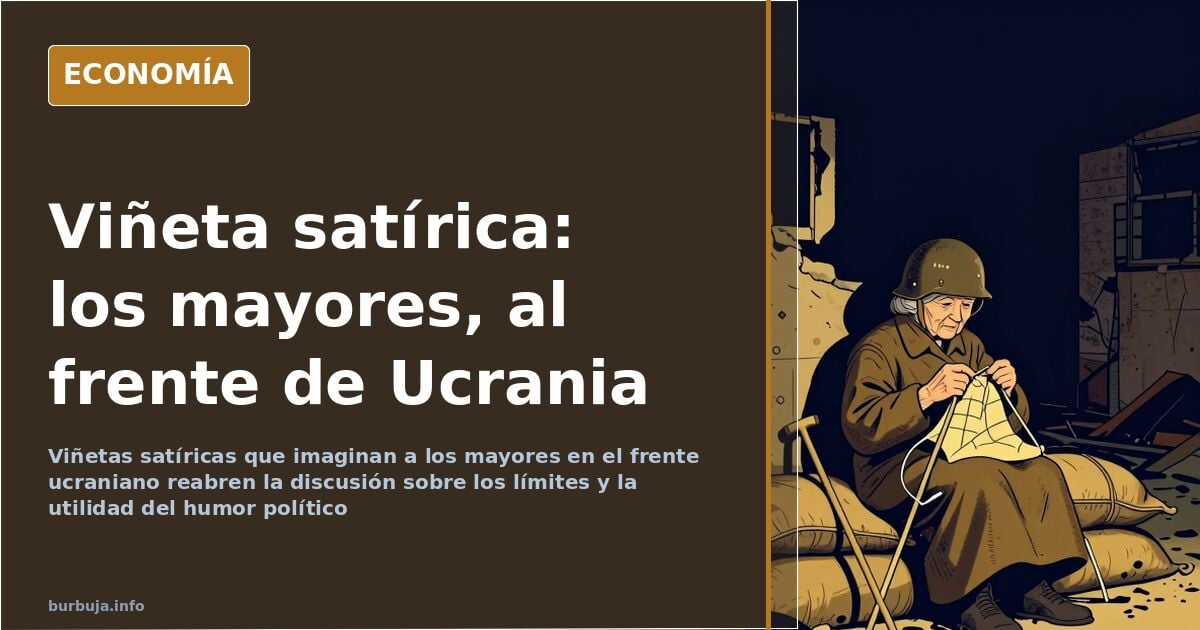
Cartoons Sending Seniors to Ukraine: Humor, Politics, and Jabs
An artist publishes satirical cartoons about the war and sending people to the front. The premise is that an entire generation might be drafted. It is not a plan or leak, but a joke. This joke has triggered numerous responses.
The opening asks no permission: "Hope you like it." Before anyone discusses the art style, initial reactions trinc the usual ritual; then real debate begins. Laughter, jabs, and exchanges spill over beyond the joke itself.
What the Comic About Sending Seniors to Ukraine Is About
The strength isn't the drawing. It's who it targets. Sending a whole generation to the front turns generational change into trench fodder. It’s a meaningful hyperbole, and each reader decides where it stings.
The scene is old at heart: someone with power points at a group and assigns them a fate. Swap uniforms for flags and fronts for any crisis, and the gag still works.
Some celebrate it as pure fun. Others see intergenerational score-settling, noting uncomfortably that the author likely isn’t draft-age. Some jump from the comic to anger at daily politics without pause. In this mix, the cartoon stops being just a cartoon and becomes conversation.
Why Does Political Humor Defend Itself by Citing Aristotle?
The author responds to jabs with a classic argument: humor served to fight power and as a political tool against oppression and tyranny. He attributes this to Aristotle’s second book of Poetics, echoing the old thesis that laughter disarms the strong.
The echo goes further. One response recalls The Name of the Rose, Umberto Eco’s novel where forbidden laughter drives the conflict, mentioning having read it nearly forty years ago. Not a minor detail: when criticized, satire defends itself with bibliography.
That defending the joke involves Greek poetics and an eighties novel says much about its audience. Here, discussion happens with citations, not just emojis.
The Detail That Separates a Joke from a Pamphlet
Here comes the grunt work. The author explains he put “¡qué agallas!” into Google Translate and got something odd, so he researched to ensure dialogues matched local speech. He doesn’t want the joke to feel forced. The goal is that no Eastern European reader notices the seam.
He tells it plainly, like correcting a typo: if the cartoon circulates outside Spain, better it doesn’t creak. A political comic’s credibility comes not from flags or caricature likeness, but from elements readers don’t verify yet intuit. The price of the laugh lies in unseen work.
From Applause to Reproach
Not everyone buys in. One reply dismisses the author as a mediocre artist and lamentable writer; another, kinder, warns about missing watermarks and potential copying. Meanwhile, some request more cartoons antiestéticaturing other European politicians, while others suggest moving to larger media outlets.
Interestingly, harsh criticism doesn’t come from political correctness or modesty, but from those scrutinizing the craft. The balance resembles most circulating satire: majority applause, minority reproach, and a conversation undecided between talent and witty pamphlet. That unstable equilibrium is likely its best card.
When the Joke Turns into a Slogan
As replies accumulate, the conversation shifts. Messages appear framing the war within a supposed global plan, making claims without evidence, while others drag the issue into personal mandatory mobilization: what would one do if called up?
This is the exact moment a joke ceases to be common property and becomes ammunition for a specific trench. Humor runs out, and something else begins. The cartoon mocked power; responses now debate refusing the front. The joke opens the door, but those entering don’t always leave smiling.
Does the same joke hold up when the laugher is no longer sure they’re watching from the sidelines?
An artist publishes satirical cartoons about the war and sending people to the front. The premise is that an entire generation might be drafted. It is not a plan or leak, but a joke. This joke has triggered numerous responses.
The opening asks no permission: "Hope you like it." Before anyone discusses the art style, initial reactions trinc the usual ritual; then real debate begins. Laughter, jabs, and exchanges spill over beyond the joke itself.
What the Comic About Sending Seniors to Ukraine Is About
The strength isn't the drawing. It's who it targets. Sending a whole generation to the front turns generational change into trench fodder. It’s a meaningful hyperbole, and each reader decides where it stings.
The scene is old at heart: someone with power points at a group and assigns them a fate. Swap uniforms for flags and fronts for any crisis, and the gag still works.
Some celebrate it as pure fun. Others see intergenerational score-settling, noting uncomfortably that the author likely isn’t draft-age. Some jump from the comic to anger at daily politics without pause. In this mix, the cartoon stops being just a cartoon and becomes conversation.
Why Does Political Humor Defend Itself by Citing Aristotle?
The author responds to jabs with a classic argument: humor served to fight power and as a political tool against oppression and tyranny. He attributes this to Aristotle’s second book of Poetics, echoing the old thesis that laughter disarms the strong.
The echo goes further. One response recalls The Name of the Rose, Umberto Eco’s novel where forbidden laughter drives the conflict, mentioning having read it nearly forty years ago. Not a minor detail: when criticized, satire defends itself with bibliography.
That defending the joke involves Greek poetics and an eighties novel says much about its audience. Here, discussion happens with citations, not just emojis.
The Detail That Separates a Joke from a Pamphlet
Here comes the grunt work. The author explains he put “¡qué agallas!” into Google Translate and got something odd, so he researched to ensure dialogues matched local speech. He doesn’t want the joke to feel forced. The goal is that no Eastern European reader notices the seam.
He tells it plainly, like correcting a typo: if the cartoon circulates outside Spain, better it doesn’t creak. A political comic’s credibility comes not from flags or caricature likeness, but from elements readers don’t verify yet intuit. The price of the laugh lies in unseen work.
From Applause to Reproach
Not everyone buys in. One reply dismisses the author as a mediocre artist and lamentable writer; another, kinder, warns about missing watermarks and potential copying. Meanwhile, some request more cartoons antiestéticaturing other European politicians, while others suggest moving to larger media outlets.
Interestingly, harsh criticism doesn’t come from political correctness or modesty, but from those scrutinizing the craft. The balance resembles most circulating satire: majority applause, minority reproach, and a conversation undecided between talent and witty pamphlet. That unstable equilibrium is likely its best card.
When the Joke Turns into a Slogan
As replies accumulate, the conversation shifts. Messages appear framing the war within a supposed global plan, making claims without evidence, while others drag the issue into personal mandatory mobilization: what would one do if called up?
This is the exact moment a joke ceases to be common property and becomes ammunition for a specific trench. Humor runs out, and something else begins. The cartoon mocked power; responses now debate refusing the front. The joke opens the door, but those entering don’t always leave smiling.
Does the same joke hold up when the laugher is no longer sure they’re watching from the sidelines?
Also available in: Deutsch
Summary of a discussion on Burbuja.info - Foro de economía, actualidad y política., translated from Spanish and reviewed before publication. Read the full discussion (111 replies).
More summaries
-
Von der Leyen: "The cheapest energy is the one you don't use"
Ursula von der Leyen preaches energy savings as the Economics forum debates whether this signals an era of imposed scarcity and degrowth.
-
Vicente Fuentes: from a million views to 10,000 and a month without posting
From 700,000 subscribers to 10,000 views and a month without posting: the economic and personal ruin of YouTuber Vicente Fuentes.
-
Barcelona Cookie Girl Video Sparks Debate on Human Behavior
A viral 2019 video shows a girl offering free cookies in Barcelona, triggering a rush that highlights human behavior when resources are unregulated.
-
Europe Controls Just 5% of AI Compute: Critical Dependency
Europe holds only 5% of global AI compute capacity versus the US's 75%. Strategic dependency and energy bottlenecks pose significant risks.
-
Spain's Transport Minister Mandates Green Paint for All Buses
Óscar Puente orders all state-concession buses to be painted green to unify public image, sparking criticism over costs and business suspicions.
-
Von der Leyen plans EU housing summit with three key measures
The European Commission President proposes a summit on affordable housing. Analysts warn that subsidies and regulation may backfire.