
Same ALDI cart costs less in Germany than in Spain
Frozen pizzas cost just 1 euro in Germany versus 1.80 euros in Spain, while German minimum wages are nearly double Spanish levels.
English · Original discussion in Spanish · Published
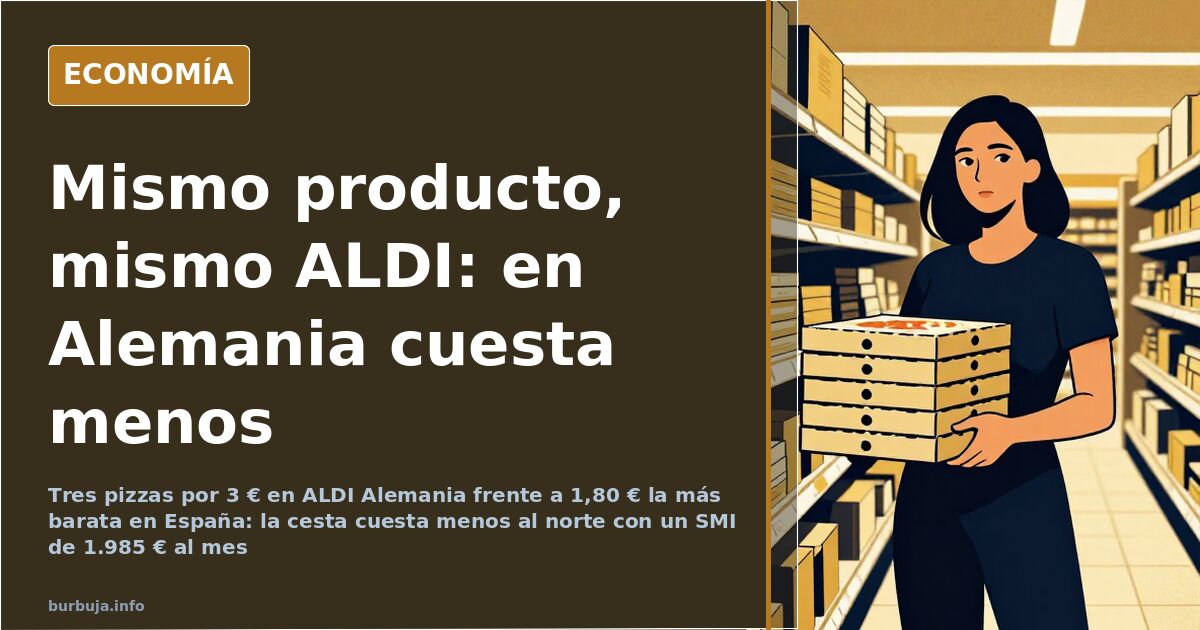
The same ALDI cart costs less in Germany than in Spain
ALDI's shopping basket is cheaper in Germany than in Spain. Not everything, nor all products, but a wide enough range to make the comparison sting. The starting point is a list of ALDI Nord prices covering bread, pastries, yogurts, cheese, pasta, rice, frozen pizzas, poultry, fish, and canned goods. The obvious conclusion: prices here with salaries from there. The uncomfortable detail is that the German minimum wage is roughly double the Spanish one, and food does not bridge that gap.
Three pizzas for three euros: the surprising comparison
The recurring example is frozen pizzas: in ALDI Germany, they cost one euro each, three for three euros. In Spain, that same type of product does not drop below 1.80 euros for the cheapest option. There is more. Milbona store-brand milk costs between 15 and 20 cents less at Lidl Germany than the same milk, brand, and chain in Spain. And sliced semi-cured cheese is almost 5 €/kg more expensive at Mercadona than at German ALDI.
Then there is olive oil. Spain is the world's top producer, yet the liter costs between 10 and 14 euros in national stores, while it is cheaper in Germany. The paradox has a simple and bitter reading: what is produced is bought more expensively abroad.
How much does a German worker earn compared to a Spanish one?
Here the comparison becomes juicy. The German minimum wage is set at 1,985 euros gross per month for 40 weekly hours, with increases in January and June bringing the figure to 2,299.96 euros gross, about 2,150 euros net plus 150 euros in health insurance assistance. In Spain, the minimum wage stands at 1,100 euros flat for the same 40 hours.
The gap widens when looking at the average. The average German salary reached 60,867 euros annually in 2023, 5.55% more than the previous year: a 3,200 euro increase and about 5,072 euros per month in twelve payments. In Spain, the average gross salary was around 1,900 euros in 2021, with a modal salary of 18,000 euros annually, which is what most people earn. Some temper the enthusiasm of the comparison: Germany also has low salaries, and measuring a shelf-stocker's position reveals little because both countries are governed by collective agreements. The nuance is reasonable, but it does not negate the price gap.
VAT and taxes: the fee hidden in the receipt
Part of the difference lies, according to forum users, in VAT and other fiscal measures that ultimately affect the final price. In Spain, food supports, according to that reading, rates between 5% and 21%, plus corporate charges, green fees, and regulatory costs paid by the buyer without seeing them broken down. The recurring thesis is uncomfortable: the state collects more the more expensive the food is, not the more it is consumed.
In Germany, the same measures exist, but according to thread participants, the sector operates with much more internal competition and less upward pressure on margins. Hence, identical products with the same brand cost less north of the Pyrenees.
Store brands, 'discounters,' and the real map of the German supermarket
It is important not to oversimplify. ALDI and Lidl are 'discounters' in Germany: limited variety, store brands, and aggressive pricing. The customer with more purchasing power shops at Edeka or REWE, which are more expensive and have a different atmosphere. With this hierarchy in mind, the argument that Spanish Mercadona and Carrefour are all store brands falls short: the Spanish white-label chain, with a similar structure, remains more expensive than the German one for identical products.
A factor of quality difficult to quantify also emerges. It is argued that much of Spain's best production is destined for export, and what remains on national shelves has lost quality in rice, pasta, fruit, or meat. This is a widespread impression, not verified data.
Qualified professionals earn as much as cashiers
The most uncomfortable point is not the price of yogurt. According to several forum users, a salary of 60,000 euros annually is in the 95th percentile in Spain: very few people earn that. An engineer in the provinces rarely exceeds 30,000 euros, and there are graduates—lawyers, economists, biologists—with collective agreement salaries of 21,000 euros and experience behind them. Meanwhile, unskilled employment relies on the minimum wage and 50-hour shifts to earn 800 or 900 euros per month.
In Germany, the high end of the salary range is much further from the low end. That, and not just the price of pizza, is what sustains the real difference in purchasing power.
Ireland and the Netherlands, other references
The comparison does not end in Germany. With a minimum wage of 1,700 euros per month in Ireland, it is claimed that supermarket prices are lower than in Spain. And in the Netherlands, the price of pasta and rice at ALDI is provided as a third reference, without data confirming that the pattern repeats there.
If the price and salary differential persists, pressure on qualified Spanish employment can only grow. Although no one should bet on the gap closing on its own: without more competition on the shelves and with taxation as it is, it is likely that the basket will remain equally expensive and salaries equally short. At least until someone explains why the same product costs less 2,000 kilometers away.
ALDI's shopping basket is cheaper in Germany than in Spain. Not everything, nor all products, but a wide enough range to make the comparison sting. The starting point is a list of ALDI Nord prices covering bread, pastries, yogurts, cheese, pasta, rice, frozen pizzas, poultry, fish, and canned goods. The obvious conclusion: prices here with salaries from there. The uncomfortable detail is that the German minimum wage is roughly double the Spanish one, and food does not bridge that gap.
Three pizzas for three euros: the surprising comparison
The recurring example is frozen pizzas: in ALDI Germany, they cost one euro each, three for three euros. In Spain, that same type of product does not drop below 1.80 euros for the cheapest option. There is more. Milbona store-brand milk costs between 15 and 20 cents less at Lidl Germany than the same milk, brand, and chain in Spain. And sliced semi-cured cheese is almost 5 €/kg more expensive at Mercadona than at German ALDI.
Then there is olive oil. Spain is the world's top producer, yet the liter costs between 10 and 14 euros in national stores, while it is cheaper in Germany. The paradox has a simple and bitter reading: what is produced is bought more expensively abroad.
How much does a German worker earn compared to a Spanish one?
Here the comparison becomes juicy. The German minimum wage is set at 1,985 euros gross per month for 40 weekly hours, with increases in January and June bringing the figure to 2,299.96 euros gross, about 2,150 euros net plus 150 euros in health insurance assistance. In Spain, the minimum wage stands at 1,100 euros flat for the same 40 hours.
- German minimum wage: 1,985 euros gross monthly, up to 2,299.96 euros after semi-annual increases
- Spanish minimum wage: 1,100 euros per month for 40 hours
- Irish minimum wage: 1,700 euros per month
The gap widens when looking at the average. The average German salary reached 60,867 euros annually in 2023, 5.55% more than the previous year: a 3,200 euro increase and about 5,072 euros per month in twelve payments. In Spain, the average gross salary was around 1,900 euros in 2021, with a modal salary of 18,000 euros annually, which is what most people earn. Some temper the enthusiasm of the comparison: Germany also has low salaries, and measuring a shelf-stocker's position reveals little because both countries are governed by collective agreements. The nuance is reasonable, but it does not negate the price gap.
VAT and taxes: the fee hidden in the receipt
Part of the difference lies, according to forum users, in VAT and other fiscal measures that ultimately affect the final price. In Spain, food supports, according to that reading, rates between 5% and 21%, plus corporate charges, green fees, and regulatory costs paid by the buyer without seeing them broken down. The recurring thesis is uncomfortable: the state collects more the more expensive the food is, not the more it is consumed.
In Germany, the same measures exist, but according to thread participants, the sector operates with much more internal competition and less upward pressure on margins. Hence, identical products with the same brand cost less north of the Pyrenees.
Store brands, 'discounters,' and the real map of the German supermarket
It is important not to oversimplify. ALDI and Lidl are 'discounters' in Germany: limited variety, store brands, and aggressive pricing. The customer with more purchasing power shops at Edeka or REWE, which are more expensive and have a different atmosphere. With this hierarchy in mind, the argument that Spanish Mercadona and Carrefour are all store brands falls short: the Spanish white-label chain, with a similar structure, remains more expensive than the German one for identical products.
A factor of quality difficult to quantify also emerges. It is argued that much of Spain's best production is destined for export, and what remains on national shelves has lost quality in rice, pasta, fruit, or meat. This is a widespread impression, not verified data.
Qualified professionals earn as much as cashiers
The most uncomfortable point is not the price of yogurt. According to several forum users, a salary of 60,000 euros annually is in the 95th percentile in Spain: very few people earn that. An engineer in the provinces rarely exceeds 30,000 euros, and there are graduates—lawyers, economists, biologists—with collective agreement salaries of 21,000 euros and experience behind them. Meanwhile, unskilled employment relies on the minimum wage and 50-hour shifts to earn 800 or 900 euros per month.
In Germany, the high end of the salary range is much further from the low end. That, and not just the price of pizza, is what sustains the real difference in purchasing power.
Ireland and the Netherlands, other references
The comparison does not end in Germany. With a minimum wage of 1,700 euros per month in Ireland, it is claimed that supermarket prices are lower than in Spain. And in the Netherlands, the price of pasta and rice at ALDI is provided as a third reference, without data confirming that the pattern repeats there.
If the price and salary differential persists, pressure on qualified Spanish employment can only grow. Although no one should bet on the gap closing on its own: without more competition on the shelves and with taxation as it is, it is likely that the basket will remain equally expensive and salaries equally short. At least until someone explains why the same product costs less 2,000 kilometers away.
Summary of a discussion on Burbuja.info - Foro de economía, actualidad y política., translated from Spanish and reviewed before publication. Read the full discussion (244 replies).
More summaries
-
Lidl Basket Spikes 65%: 2019 vs 2025 Prices Erode Spanish Purchasing Power
Lidl 2019 vs 2025 tickets show basic goods up 65%, eroding real purchasing power in Spain. Tomatoes, eggs, bananas surge.
-
Spain's Grocery Costs Soar as Social Resilience Faces Stress
Food prices spike sharply in Spain, forcing households to adapt to a soaring cost of living without breaking.
-
Galician regional government to fund driving licenses for legalized migrants
The Xunta will cover the cost of driver's licenses for migrants who have regularized their status: over €1,000 per person, and a growing debate about who should foot the bill.
-
Eroski Panthers and Marble Home: Viral Luxury Raises Tax Questions
A salon lined with marble and two 300-euro Eroski panther statues spark debate over the source of funds and the role of tax authorities.
-
Spain's Venezuela-Valencia response divided the country
The UME took 5 days to reach Paiporta while 237 died; it flew to Venezuela in hours to rescue 69 missing. The debate on the double standard continues.
-
Spain Mortgage Foreclosures Jump 36% in Q1 2026: Alarm or Noise?
Mortgage foreclosures in Spain rose 36% in the first quarter of 2026, with 44% linked to the 2005–2008 housing bubble. Numbers remain far below 2013 crisis peaks.