
Revolut leaks customer data to fraudulent entity posing as official agency
Revolut allegedly provided passports, selfies, and transaction histories after falling for a fake request supposedly from an official agency.
English · Original discussion in Spanish · Published
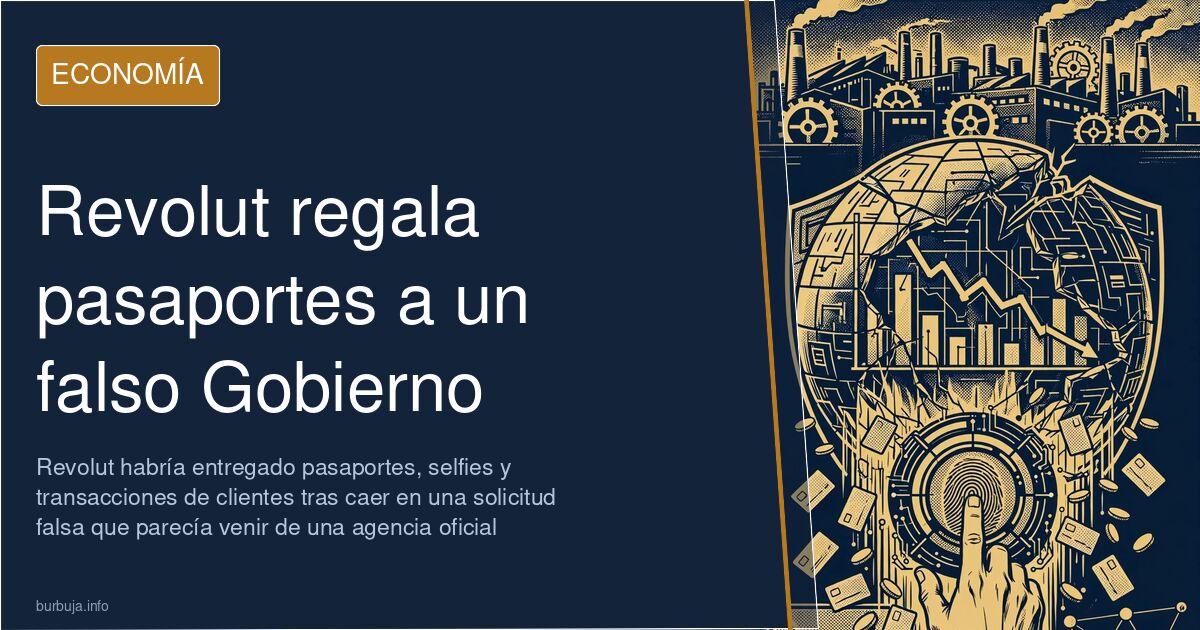
Revolut falls for fake request and leaks customer passports
What happens when a bank that boasts cutting-edge technology hands over your passport to a scammer? As of today, that is what has allegedly peine to Revolut. The leak did not come from a sophisticated hack, but rather from a fraudulent request that appeared to originate from a government agency. The company reportedly provided copies of passports, verification selfies, and complete transaction histories. The group targeting the firm is already circulating customer records —some high-profile— and demanding payment in exchange for not publishing more internal data.
A human error, not a system failure
The first trap in the narrative is calling it a hack. There would have been no technical breach here: someone with access validated a request that appeared official. And this is where the disagreement begins. The most lenient version points to an employee who failed to verify the requester's identity. The uncomfortable version suggests that no one with that level of permissions acts alone; moving that volume of documents would require several approvers. A third, cheaper, and more cynical hypothesis suggests the validation was done by an algorithm—and that saving on human review has these kinds of bills.
Biometrics under scrutiny
The collateral damage that nobody signed off on: the verification selfies. A photo of a face alongside an ID document is not the same as a password. With a face, ID, and an AI model, you can attempt to open accounts in someone else's name across dozens of sites, turning digital inconvenience into debt that is not yours. Against this backdrop, the solution most often cited is physical verification on a personal device—a certificate, token, or authenticator—and not massive biometric scanning. The problem is that the digital bank's business model thrives precisely on eliminating those steps.
While awaiting official confirmation, the sequence invites both calm and distrust in equal measure: reports are circulating on social media, and the true scope remains unverified.
The customer who hands over their face to open an account in three minutes discovers that the shortcut comes with a toll. Revolut sold immediacy. They are charging for it in passport copies.
What happens when a bank that boasts cutting-edge technology hands over your passport to a scammer? As of today, that is what has allegedly peine to Revolut. The leak did not come from a sophisticated hack, but rather from a fraudulent request that appeared to originate from a government agency. The company reportedly provided copies of passports, verification selfies, and complete transaction histories. The group targeting the firm is already circulating customer records —some high-profile— and demanding payment in exchange for not publishing more internal data.
A human error, not a system failure
The first trap in the narrative is calling it a hack. There would have been no technical breach here: someone with access validated a request that appeared official. And this is where the disagreement begins. The most lenient version points to an employee who failed to verify the requester's identity. The uncomfortable version suggests that no one with that level of permissions acts alone; moving that volume of documents would require several approvers. A third, cheaper, and more cynical hypothesis suggests the validation was done by an algorithm—and that saving on human review has these kinds of bills.
Biometrics under scrutiny
The collateral damage that nobody signed off on: the verification selfies. A photo of a face alongside an ID document is not the same as a password. With a face, ID, and an AI model, you can attempt to open accounts in someone else's name across dozens of sites, turning digital inconvenience into debt that is not yours. Against this backdrop, the solution most often cited is physical verification on a personal device—a certificate, token, or authenticator—and not massive biometric scanning. The problem is that the digital bank's business model thrives precisely on eliminating those steps.
While awaiting official confirmation, the sequence invites both calm and distrust in equal measure: reports are circulating on social media, and the true scope remains unverified.
The customer who hands over their face to open an account in three minutes discovers that the shortcut comes with a toll. Revolut sold immediacy. They are charging for it in passport copies.
Summary of a discussion on Burbuja.info - Foro de economía, actualidad y política., translated from Spanish and reviewed before publication. Read the full discussion (25 replies).
More summaries
-
Trade Republic and Revolut: Are They Safe for Your Savings or an Operational Risk?
Trade Republic offers 3% and Revolut pays daily interest, but transfer blocks and chat support turn savings into a gamble...
-
Euthanasia in Old Age: Autonomy vs. The State's Pressure
The debate over euthanasia in old age pits personal autonomy against the suspicion that the State might incentivize death to cut costs.
-
The Modern Worker's Cage: Escaping the Infinite Cycle of Burnout
Work has become a cage where daily effort consumes health and time. Discover why we push ourselves so hard and how to break the cycle.
-
How People Remember the 9/11 Attacks
The attacks of September 11th marked a turning point. Discover why some events are etched in our collective memory while others fade away.
-
Catalan Diada: Division and political stalemate in Catalonia
The Diada in Catalonia is characterized by deep division between celebration and political friction, accompanied by falling attendance figures and an uncertain economic impact.
-
Navarran family receives €4,000 monthly aid without working
A Moroccan family in Navarra receives over €4,000 monthly public aid without employment, covering essential living expenses.