
Quinqui Cinema and the Heroin Crisis of the 1980s in Spain
40 years since Navajeros: how quinqui cinema mirrored Spain's heroin crisis. An analysis of Eloy de la Iglesia’s social and cultural impact.
English · Original discussion in Spanish · Published
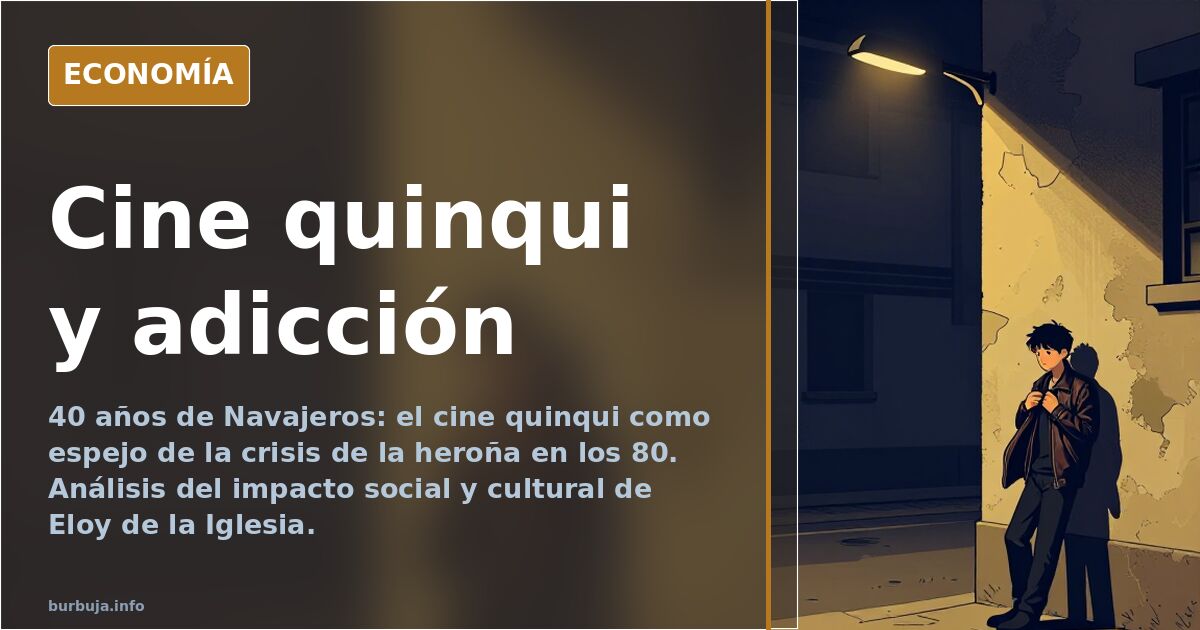
The Price of Authenticity: 40 Years of Navajeros
Quinqui cinema was not merely a genre; it was a shattered mirror reflecting 1980s Spain. Four decades after "Navajeros," the debate over its legacy transcends aesthetics to touch the nerve of a health and social crisis that marked a generation. The question is not whether the films were good, but what real cost was paid by those who starred in them.
Reality Behind the Fiction
The authenticity of Eloy de la Iglesia’s work relied on non-professional actors, many drawn from the streets. José Luis Manzano, the era’s most iconic face, played Paco in "El Pico" with a naturalness that was terrifying. However, the line between character and person blurred. Manzano, who could barely read or write before his debut, fell into heroin addiction, a substance allegedly introduced massively into Spain after Franco’s death, exploiting the power vacuum and open borders.
The film industry, which had explored taboo subjects like gaiity and social critique from a Marxist perspective in the seventies, shifted toward street cinema. Films like "Navajeros," "Colegas," and "La estanquera de Vallecas" depicted urban marginality with unprecedented rawness. But the movies’ warning about drug dangers did not shield their protagonists. Manzano, El Pirri, El Vaquilla... many died young, victims of overdose, AIDS, or violence. Furthermore, the industry was marginalized by Felipe González’s government, which rejected the image of Spain these films reflected, denying funding and leaving directors like De la Iglesia ostracized.
Legacy of a Lost Generation
Quinqui cinema captured the essence of a transitional Spain where insecurity and misery were constant companions. Today, forty years later, the genre is remembered with nostalgia and pain. The films, now considered historical testimony, show grey cities, abandoned peripheries, and youth without future. Heroin addiction was not an isolated phenomenon but a plague affecting all social classes, though its impact was most visible in marginalized neighborhoods.
The current debate on quinqui cinema also touches on historical memory. Was it a plot to destabilize working-class youth? Or simply the result of a poorly managed health crisis? Answers vary, but De la Iglesia’s and Manzano’s work remains a cultural reference, a reminder of the human costs of addiction and marginality. The final question is not whether quinqui cinema was art or propaganda, but whether Spanish society learned anything from that tragedy.
The authenticity of quinqui cinema is measured not by box office returns, but by the social impact it left behind. Forty years later, the films remain a raw testimony of an era that marked a generation. The question is not whether the cinema was good or bad, but whether society is prepared to face the next crises.
Quinqui cinema was not merely a genre; it was a shattered mirror reflecting 1980s Spain. Four decades after "Navajeros," the debate over its legacy transcends aesthetics to touch the nerve of a health and social crisis that marked a generation. The question is not whether the films were good, but what real cost was paid by those who starred in them.
Reality Behind the Fiction
The authenticity of Eloy de la Iglesia’s work relied on non-professional actors, many drawn from the streets. José Luis Manzano, the era’s most iconic face, played Paco in "El Pico" with a naturalness that was terrifying. However, the line between character and person blurred. Manzano, who could barely read or write before his debut, fell into heroin addiction, a substance allegedly introduced massively into Spain after Franco’s death, exploiting the power vacuum and open borders.
The film industry, which had explored taboo subjects like gaiity and social critique from a Marxist perspective in the seventies, shifted toward street cinema. Films like "Navajeros," "Colegas," and "La estanquera de Vallecas" depicted urban marginality with unprecedented rawness. But the movies’ warning about drug dangers did not shield their protagonists. Manzano, El Pirri, El Vaquilla... many died young, victims of overdose, AIDS, or violence. Furthermore, the industry was marginalized by Felipe González’s government, which rejected the image of Spain these films reflected, denying funding and leaving directors like De la Iglesia ostracized.
Legacy of a Lost Generation
Quinqui cinema captured the essence of a transitional Spain where insecurity and misery were constant companions. Today, forty years later, the genre is remembered with nostalgia and pain. The films, now considered historical testimony, show grey cities, abandoned peripheries, and youth without future. Heroin addiction was not an isolated phenomenon but a plague affecting all social classes, though its impact was most visible in marginalized neighborhoods.
The current debate on quinqui cinema also touches on historical memory. Was it a plot to destabilize working-class youth? Or simply the result of a poorly managed health crisis? Answers vary, but De la Iglesia’s and Manzano’s work remains a cultural reference, a reminder of the human costs of addiction and marginality. The final question is not whether quinqui cinema was art or propaganda, but whether Spanish society learned anything from that tragedy.
The authenticity of quinqui cinema is measured not by box office returns, but by the social impact it left behind. Forty years later, the films remain a raw testimony of an era that marked a generation. The question is not whether the cinema was good or bad, but whether society is prepared to face the next crises.
Also available in: Deutsch
Summary of a discussion on Burbuja.info - Foro de economía, actualidad y política., translated from Spanish and reviewed before publication. Read the full discussion (204 replies).
More summaries
-
Felipe González Questions Hamas's Hostage Release Stance
Felipe González questions why Hamas isn't releasing Israeli hostages, sparking debate on proportionality, occupation, and casualty figures.
-
The Blue Dress That Altered King Felipe VI’s Future
25 years since Eva Sannum’s photo in a blue dress ended her relationship with King Felipe VI, sparking debate on the Crown's opportunity cost.
-
Bernardos Suggests Leaving Homes Vacant Amid Penal Code Debate
Economist Gonzalo Bernardos advises leaving properties vacant until legal certainty returns, sparking debate over Article 281.1 of the Spanish Penal Code.
-
Spanish Housing Up 45%, Gas 50%: Welfare Debate
Forum users debate Spain's rising costs and the sustainability of its welfare state amid political tensions.
-
Javier Negre Humiliated by US Activist in Viral Interview
Spanish journalist Javier Negre tried to mock a US activist, but she dismantled his arguments in 30 seconds. The video he posted went viral.
-
Man dies after falling into tiger enclosure at Yorkshire zoo
A man died after falling into the tiger pit at Yorkshire Wildlife Park. Police are investigating the circumstances of the fall.