
Photo of elderly couple robbed in France is AI: the hoax obscuring an unconfirmed theft
The image of the elderly couple stripped of their belongings in France was AI-generated, according to Libération CheckNews. The robbery it accompanies remains officially unconfirmed.
English · Original discussion in Spanish · Published
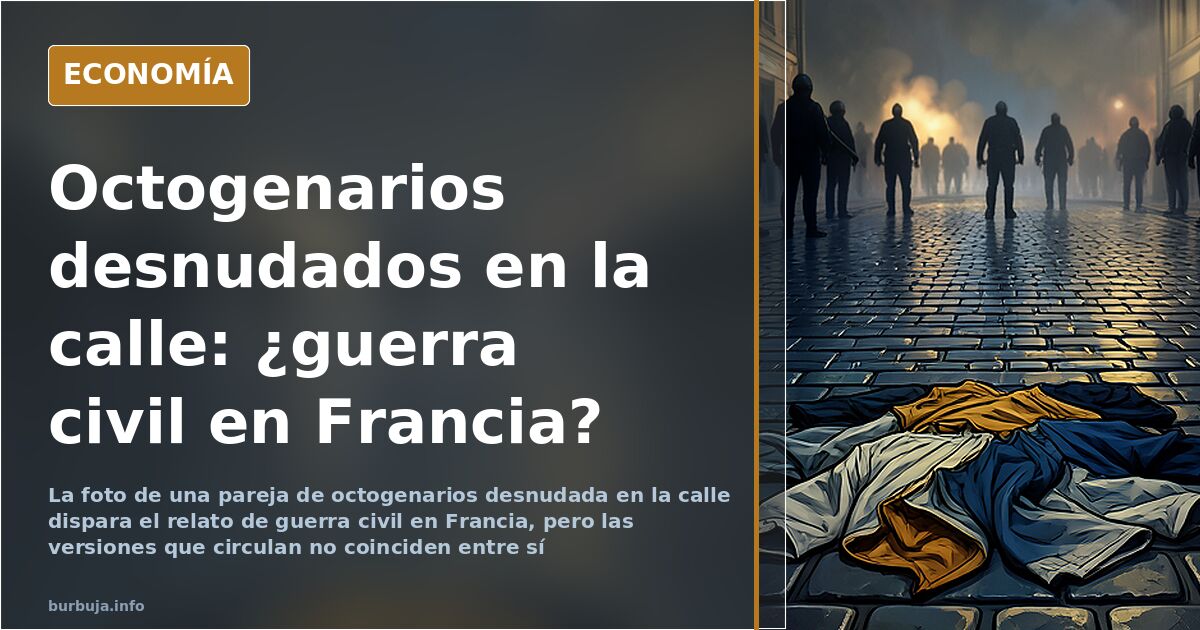
The image of the elderly couple in their underwear is fake; the robbery it describes is unconfirmed
Can a photograph spark a civil war? The one circulating on social media these days shows an elderly couple in their underwear, out on the street, supposedly robbed during the unrest that has shaken France. Millions of views. And one detail that changes everything: the image was generated or manipulated with artificial intelligence. That was determined by the fact-checkers at Libération CheckNews, using detectors such as Google's SynthID and visible anomalies in the scene itself.
The problem is that the hoax has worked in reverse from the usual pattern. It didn't invent a crime: it led part of the public to declare the robbery fake as well. And that's where the confusion begins.
What is known about the robbery of the elderly couple in France
The assault on the elderly couple has not been officially confirmed. That is all there is. The photograph that accompanied the viral story is not authentic, but the debate over whether the incident actually peine remains open and unresolved at the time of writing. Those demanding proof are right to demand it; those who take any screenshot at face value are equally wrong.
The confusion has an awkward side effect: the AI hoax becomes a shield for dismissing the entire story. It's the reverse of the classic mechanism. First a real event spreads; then a fabricated image is attached to it; in the end, the fake image drags down the fact. The result is that nobody knows what peine and everyone feels vindicated about something.
The context: riots, looting and a country on edge
The material fueling the debate speaks of looting at Rolex, Louis Vuitton, Hermès, Dior and Sephora for resale, of streets filled with Palestinian and communist flags, of vandalized shops. None of that comes with official figures in the conversation: these are scene descriptions. And on that basis, the question that headlines the whole affair takes off: whether this is leading to a civil war.
The most repeated answer is not the one you'd expect. Some argue that there will be no civil war because in France everything is already lost, while others point out that the real scenario is not armed confrontation but the introduction of surveillance and control measures presented as a restoration of order. The thesis of chaos as a prelude to control has legs: divide, spread insecurity, then offer the solution. You don't have to believe it to recognize that the script fits a little too well.
The hoax as a weapon: who wins when the image is fake
Psychological warfare is the other big theme. The argument goes that fact-checkers, by debunking the photo, generate more confusion than certainty, and that the glut of professional denials ends up producing the same effect as the lie: nobody trusts anything anymore. It's a hypothesis, not a fact, but it explains why the hoax detector has become the new battleground.
Meanwhile, the conversation drifts toward the underlying economic framework: a system designed to reward cheap labor and a political-ideological pact that, according to this reading, nobody ever voted for. The question of whether the riots are a social revolt, a student protest or a horde of incivil goes unanswered, and probably cannot be answered in the short term.
Who votes for whom, and why demographics explain nothing
Trying to read someone's vote off the face of two robbed pensioners is the conversation's favorite pastime. It is claimed that retirees and civil servants are the groups most likely to vote left, and from there it jumps to the couple "getting what they voted for." It's a syllogism without data: nobody knows how that particular couple is registered, their electoral history, or whether they even voted. Age proves nothing either: in May '68 they would indeed have been in their twenties, but they may just as well have been working.
What does have analytical traction is the erosion of institutional trust that underlies the entire thread. When citizens stop believing in the media, the fact-checkers and the security forces all at once, the narrative is written by whoever publishes first. And whoever publishes first is almost never a journalist.
The photo is fake. The robbery is unconfirmed. The civil war, for now, is just a question in a headline. Everyone, calm down.
Summary of a discussion on Burbuja.info - Foro de economía, actualidad y política., translated from Spanish and reviewed before publication. Read the full discussion (133 replies).
More summaries
-
Morocco Demands Return Tickets from Spanish Travelers, Forum Claims
A forum post claims Morocco requires return tickets and hotel bookings from some Spanish travelers. The measure remains unconfirmed by official sources.
-
Jail for Sánchez? Spain's rift over impunity and corruption
Corruption allegations against Spanish PM Pedro Sánchez and his government have reignited the debate on impunity. Will the prime minister end up in prison, or will history repeat itself?
-
Feijóo, the leader who fails to convince even his own base
Feijóo faces growing internal criticism over his lack of a real alternative to Sánchez and tactical moves that benefit him. Senate voting records and migration proposals fuel the discontent.
-
Shooting on Balmes Street: crime and economics in Barcelona
A gangland settling of scores outside the Balmes police station, minutes from the Pope's route. The economic impact of violence on Barcelona's housing and tourism.
-
SpaceX goes public: opportunity or bubble?
SpaceX is preparing its IPO, possibly the largest in history. Is it overvalued? An analysis of its assets, risks and Elon Musk's role.
-
The ad bottleneck that sinks websites
Cloudflare error 1016 on a Spanish economic forum: SAM plugins fail, traffic collapses. The fragility of the advertising model exposed in 30 seconds of screen.