
Pensions in Spain: the real cost of 50 years of contributions and the generational divide
The pension debate resurfaces in Spain: 50 years of contributions versus the sustainability of the system and the demographic pressure of a generation that…
English · Original discussion in Spanish · Published
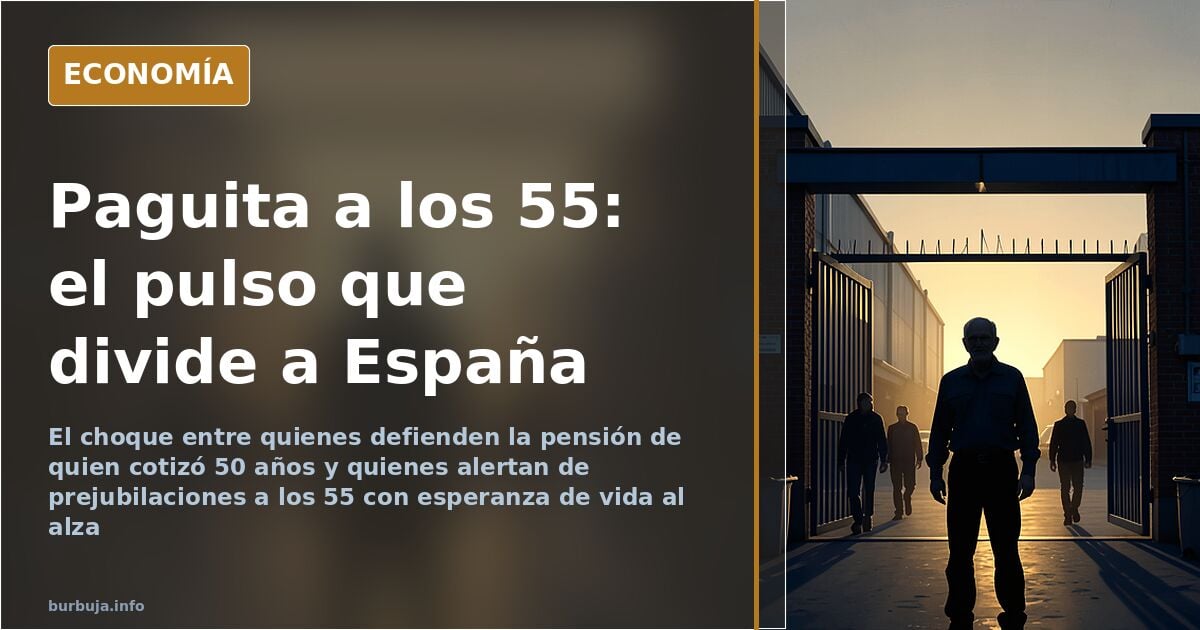
Fifty years of contributions to pay for other people's healthcare
The pension debate is back with an uncomfortable question: is it sustainable for a generation that started working at 14 to now draw a pension that later generations will not be able to fund? The discussion, fuelled by a message comparing retirees to "locusts" who survive the winter, has turned into a clash between those defending what has been paid in and those warning of the system's collapse.
The contribution argument versus the sustainability argument
The classic defence of pensioners rests on one figure: 50 years of contributions. Those who hold this view point out that many started working at 14 or 15 and retired at 65, with payroll deductions that funded the education, healthcare and infrastructure of later generations. "They paid for our education, our healthcare, EVERYTHING for everyone who now complains," one comment sums up. Under this logic, the pension is not a gift but the repayment of a forced loan.
The counterpoint comes from the public finances side. Some point out that life expectancy has risen to 80 or more, that early retirement from 55 has become widespread and that the system is under growing strain. The question hanging in the air is who pays for the next decade. "Their life expectancy keeps rising," another message quips, pointing to the sixth vaccine dose as a metaphor for longer lives.
The generational clash and the captive vote
The resentment is not only economic. Several voices accuse retirees of voting for parties that, in their view, are destroying the country, and of ignoring the consequences for future generations. They are reproached for caring only about where the money comes from, not about the state's accounts or what happens afterwards. The accusation is harsh and not without simplification: the pensioner group is not homogeneous, and many of them were precisely the ones who propped up the economy during the bubble.
The conversation drifts into identity territory. One message accuses pension defenders of only paying lip service to "loving Spain", while another replies with an invented name, "Yayo Sopla Gaitas" (roughly, "Gramps the Bagpiper"), capturing the dismissive tone of part of the exchange. Irony crosses over into insult, and the analysis gets lost.
The question nobody wants to answer: how much does the system cost?
Beyond the noise, the heart of the matter is a demographic equation. There are more and more retirees and fewer and fewer contributors, and the dependency ratio keeps deteriorating. Defenders of the current system argue that pensions are funded through taxes and contributions, not an individual savings fund, and that the problem is not spending but insufficient revenue. Critics reply that the pay-as-you-go system is broken and that today's promises are worthless paper for anyone who is 40 now.
The full calculation, with birth rates, migration and productivity as variables, is a puzzle no government has wanted to tackle in depth. The prevailing feeling is that the train of reality is speeding ahead unchecked and that nobody dares to hit the brakes.
The most repeated prediction is that the system will hold as long as the baby boom generation keeps voting. When that generation is gone, the problem will be someone else's. By then, those who are 40 today may no longer be around to tell the tale.
Also available in: Deutsch
Summary of a discussion on Burbuja.info - Foro de economía, actualidad y política., translated from Spanish and reviewed before publication. Read the full discussion (19 replies).
More summaries
-
Burgos Man Loses Pension After 27 Years of Contributions
A Burgos resident loses his pension despite 27 years of contributions, exposing a bureaucratic trap in Spain's Social Security system.
-
Claim: Spain’s Pension Fund Short €50 Billion for Three Months
Viral post claims Social Security lacks funds for three months of pensions. Debate covers the reserve fund, contributions, and potential solutions.
-
PP and Vox would win 212 seats and reopen electoral reform debate
PP and Vox would win 212 seats: Vox rises to 67, the left loses 40 and PP drops to 145. The majority reopens the debate on Spain's electoral law.
-
A look back at Pedro Sánchez's government's poor crisis management in Spain
Sánchez's government has faced covid, the Valencia floods and the 2025 blackout since 2018. A review of the crises that defined his time in office.
-
A tweet reignites controversy around Paracetamol
A message about Paracetamol and 'our Lorca' sparks a debate with cross accusations and no conclusive evidence of an alleged assault.
-
Spain's high-speed rail and the 16-year debate over PP's failure to upgrade the system
The AVE's LZB system was extended to save 37 million euros while ERTMS remained unimplemented. The blame spans 16 years of PP rule and 8 of PSOE.