
Pensions in Spain: the debate over who pays for those who came to pay
Spain's Social Security system now has 10.43 million pensions and the contributor-to-pensioner ratio has fallen to 2.24. The deficit keeps growing even as more workers arrive.
English · Original discussion in Spanish · Published
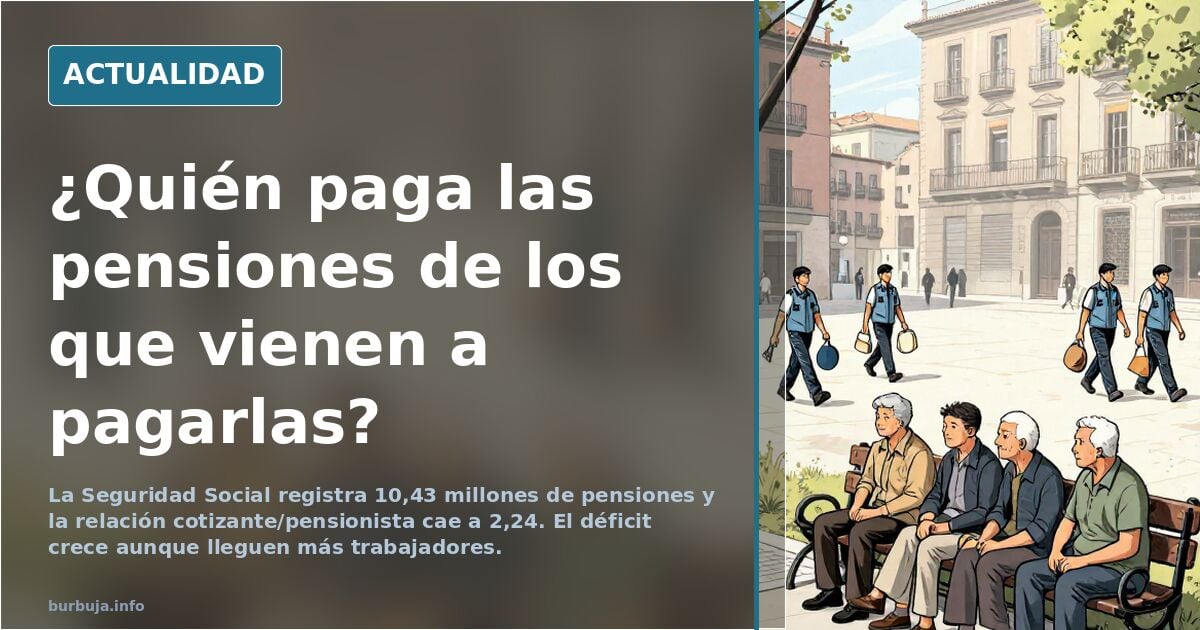
Who pays the pensions of those who came to pay them
Spain's Social Security system recorded 10.43 million pensions in December 2025, up 1.49% on the previous year, according to the figures being used in the debate. The question that opens the issue is an uncomfortable one: if hundreds of thousands of working-age people arrive every year and the system's deficit keeps growing, when exactly do these new contributors start sustaining pensions instead of consuming resources? The answer that dominates the analysis is that the system works like a pyramid structure that needs to constantly add new base members or it will collapse.
The math that doesn't add up: more pensions, fewer contributors per head
The numbers crossing the analysis draw a clear trend. In March 1996 there were seven million pensioners and 13.77 million contributors. Today the ratio has narrowed: the available data point to about 2.24 contributors per pensioner. The conclusion drawn by those who trinc the series is that the system cannot be sustained by the current demographics and that the only route applied so far has been to bring in workers at the bottom.
Some argue that the problem is not the arrival of people but the quality of their contributions. The argument is that many of those who arrived during the property bubble era, many of them over 40, have not contributed the 38 years required for a full pension, and that today's jobs, with part-time hours and low contribution bases, generate derisory contributions. The consequence, according to this analysis, is that the system receives less than it spends for each new worker.
Why does the deficit grow even as employment rises?
The central contradiction is that Spain adds half a million people a year, more than France, Germany and Italy combined, and yet the Social Security system keeps running a deficit and needs accounting tricks to pay the extra Christmas bonuses. The calculation circulating in the discussion is that if these new workers do not find stable employment, the effect on the accounts is neutral or negative. Registration numbers rise, but revenue per contributor does not trinc.
Behind it all looms the shadow of debt. Part of the analysis puts the system's shortfall at 136 billion euros and points out that since October 2025 pensions have been paid with Next Generation funds not intended for current spending. If confirmed, this is a figure that places the problem outside the annual cycle and moves it onto the terrain of structural sustainability.
The IMV as a disguised pension
One of the offshoots carrying the most weight in the discussion is the Ingreso Mínimo Vital (Spain's minimum living income benefit). Some argue that the IMV in practice works as a lifelong non-contributory pension and that three million people already receive it. If that is the case, the system is not only paying pensions to those who contributed, but also to those who did not, which puts further strain on the coffers.
The comparison with other countries appears as a mirror. It is argued that in countries without public pensions the adjustment happens through exclusion or prison, and that there is no intention here of applying that kind of discipline. The conclusion drawn is that the adjustment will come through debt and taxes, not through cuts.
The question nobody answers: who pays for those who came to pay?
The most repeated twist is that of recursiveness. If workers are brought in to pay the pensions of those retiring, and those workers also grow old, more workers will have to be brought in to pay their pensions. The sequence has been described as one step after another: immigrants to do the work that previous immigrants no longer want to do. It is the logic of the pyramid scheme applied to demographics.
The original question of the matter, asked with a wink, is who will pay the pensions of those who came to pay our pensions. The answer given in the analysis is nobody, because the system has no plan B beyond kicking the can down the road from one legislature to the next. The closing note of the matter is the fact that unsettles everything: AI, the thing that was supposed to solve the problem, does not solve it either.
Also available in: Deutsch
Summary of a discussion on Burbuja.info - Foro de economía, actualidad y política., translated from Spanish and reviewed before publication. Read the full discussion (44 replies).
More summaries
-
Spain's IMV: €20,353 Asset Cap and Residency Rules
Spain's Minimum Vital Income sets a €20,353.62 asset limit for adults and requires municipal registration. The debate over eligibility and system costs remains open.
-
71% of Spain's former unaccompanied minors registered with social security
According to the Spanish government, 71% of young migrants who left state care are registered with Social Security. However, this metric counts registrations, not necessarily actual jobs.
-
Tent Collecting Food for Ceuta Ends Up Eating It
Food and money collected for Ceuta migrants were consumed by organizers. The destination of the funds remains unknown.
-
Forum attributes call to clear Madrid's Sol square to DN
A message attributes to Democracia Nacional a call to clear Sol square, and the comparison with the Ceuta encampment becomes the focus of the debate
-
The Cerdà Plan: a decree from Madrid and speculation in Barcelona's Eixample
The Cerdà Plan arrived by decree from Madrid —so the debate goes— after Rovira i Trias won the competition. The first stone was laid in 1860.
-
The mail-in ballot fraud myth: 400,000 votes without oversight
A claim is circulating that postal voting and lists of chronic non-voters allow 400,000 ballots to be cast without oversight. France banned it in 1975.