
Omar Ndiaye: 1.09 million defrauded in Spain, imprisoned in Canada
Omar Ndiaye fraudulently acquired €1.09M from the Basque Social Security. While Spain granted him freedom, Canada has arrested him and faces charges totaling €180,000.
English · Original discussion in Spanish · Published
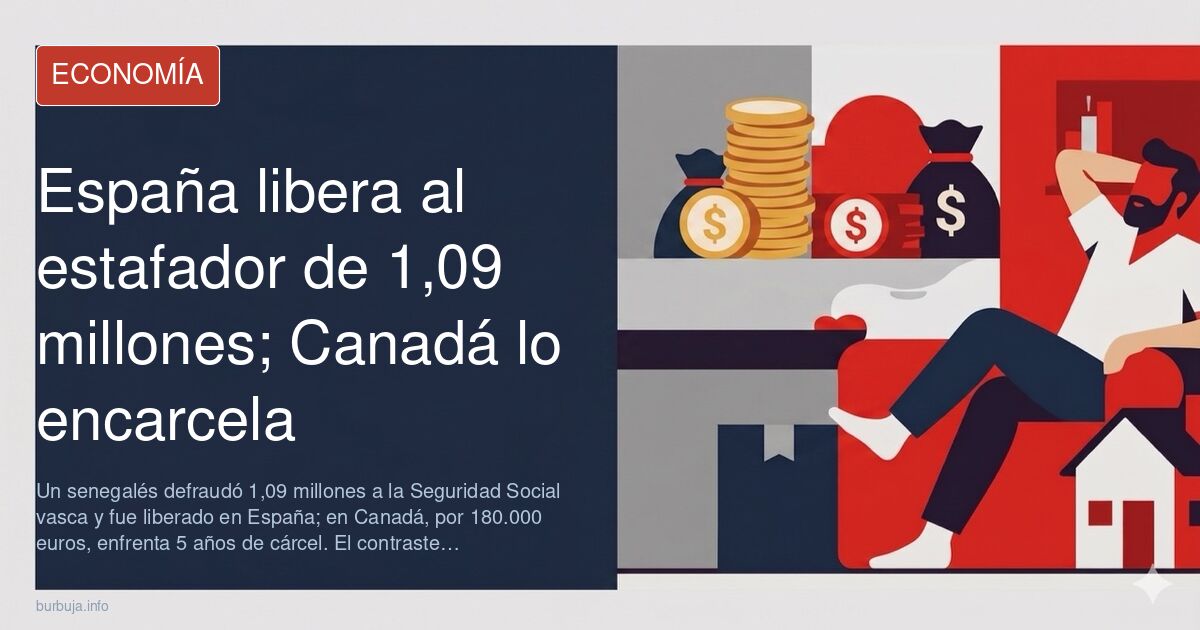
The €1.09M fraudster freed by Spain, imprisoned in Canada
Omar Ndiaye, a man of Senegalese nationality, allegedly defrauded the Basque Social Security of 1.09 million euros over more than a decade. The judge who handled the case in Spain decided to grant him freedom, despite his previous arrest. However, in Canada, he has been detained for a fraud totaling 180,000 euros and could face five years in prison. The difference in judicial approach between the two countries has reignited the debate regarding the laxity of the Spanish judicial system.
The Omar Ndiaye case: fake identities and purchased passports
According to reports, the alleged perpetrator used up to 70 different identities to apply for social benefits. To do this, he bought passports from compatriots in Senegal for about 300 euros, peine bank accounts in those people's names, and submitted applications as if they were different individuals. The operation lasted for 10 years, and the authorities in the Basque Country did not detect the pattern until the amount defrauded exceeded one million euros.
The scheme was relatively simple: it only required a photograph in someone else's passport and an associated account number. However, the lack of cross-verification in the benefits system allowed the scam to continue for a decade. Once discovered, the suspect was arrested in 2022, but the judge decided to grant him provisional freedom, and he seemingly vanished.
Judicial response: freedom in Spain, jail in Canada
The decision of the Spanish judge contrasts sharply with the actions of Canadian authorities. In Canada, a fraud totaling 180,000 euros has been sufficient to decree preventive imprisonment and seek a five-year sentence. In Spain, neither the million-euro amount nor the risk of flight was a reason to keep him in custody. This contrast has generated an intense debate regarding the interpretation of procedural laws and the protection of public interests.
Some analyses suggest that the magistrate assessed that the accused had no prior record in Spain and that the case was still in the investigation phase. Others consider the decision to be yet another example of the structural weakness of the judicial system, where lack of resources and heavy workload lead to decisions favoring offenders over society.
The background: social benefits as a target for fraud
This case is not isolated. The social benefits system in Spain has been targeted by various incivil organizations, especially in communities with a high presence of immigrants. The arrival of irregularly present individuals, combined with a lack of verification infrastructure, creates fertile ground for fraud. Although authorities have implemented control systems, they still contain significant loopholes.
The public has been particularly sensitive to this case due to the amount defrauded and the fact that the suspect allegedly bypassed the system using a rudimentary technique. The feeling that laws are too lenient towards certain offenders has been a recurring theme in debates.
The comparison with Canada: a model to trinc?
The contrast between the actions of Spain and Canada has brought into focus the issue of judicial efficacy. While in Spain the suspect was released, in Canada the same individual is in preventive custody. This fact has been used by those advocating for stricter precautionary measures.
However, the comparison is not simple. Legal systems are different, and the thresholds for preventive imprisonment vary. In Spain, the general rule is freedom unless there is a risk of flight, recidivism, or destruction of evidence. In this case, the judge assessed that the suspect had no strong ties to Spain and that the case was not nearing trial. The decision might be technically correct, but politically difficult to defend.
What role do judges play in protecting public money?
The civic outrage has not been limited to the behavior of the scammer. It has also been directed against the judge and, generally, against public administration. Criticism has been leveled that judicial decisions lack transparency and accountability, and that officials responsible for management do not face consequences for their errors. Some experts suggest that a mechanism of responsibility should be established for public officials, similar to the Tribunal de Residencia (Residency Tribunal) of the former viceroyalties.
Despite the criticism, the case remains open in Spain. Meanwhile, in Canada, the alleged fraudster awaits trial from prison. The Spanish system has been exposed. But no one seems willing to take responsibility. Meanwhile, the man who allegedly lived for a decade with 26 different identities is in a Canadian cell. In Spain, the question remains unanswered: who controls those who control public money?
Omar Ndiaye, a man of Senegalese nationality, allegedly defrauded the Basque Social Security of 1.09 million euros over more than a decade. The judge who handled the case in Spain decided to grant him freedom, despite his previous arrest. However, in Canada, he has been detained for a fraud totaling 180,000 euros and could face five years in prison. The difference in judicial approach between the two countries has reignited the debate regarding the laxity of the Spanish judicial system.
The Omar Ndiaye case: fake identities and purchased passports
According to reports, the alleged perpetrator used up to 70 different identities to apply for social benefits. To do this, he bought passports from compatriots in Senegal for about 300 euros, peine bank accounts in those people's names, and submitted applications as if they were different individuals. The operation lasted for 10 years, and the authorities in the Basque Country did not detect the pattern until the amount defrauded exceeded one million euros.
The scheme was relatively simple: it only required a photograph in someone else's passport and an associated account number. However, the lack of cross-verification in the benefits system allowed the scam to continue for a decade. Once discovered, the suspect was arrested in 2022, but the judge decided to grant him provisional freedom, and he seemingly vanished.
Judicial response: freedom in Spain, jail in Canada
The decision of the Spanish judge contrasts sharply with the actions of Canadian authorities. In Canada, a fraud totaling 180,000 euros has been sufficient to decree preventive imprisonment and seek a five-year sentence. In Spain, neither the million-euro amount nor the risk of flight was a reason to keep him in custody. This contrast has generated an intense debate regarding the interpretation of procedural laws and the protection of public interests.
Some analyses suggest that the magistrate assessed that the accused had no prior record in Spain and that the case was still in the investigation phase. Others consider the decision to be yet another example of the structural weakness of the judicial system, where lack of resources and heavy workload lead to decisions favoring offenders over society.
The background: social benefits as a target for fraud
This case is not isolated. The social benefits system in Spain has been targeted by various incivil organizations, especially in communities with a high presence of immigrants. The arrival of irregularly present individuals, combined with a lack of verification infrastructure, creates fertile ground for fraud. Although authorities have implemented control systems, they still contain significant loopholes.
The public has been particularly sensitive to this case due to the amount defrauded and the fact that the suspect allegedly bypassed the system using a rudimentary technique. The feeling that laws are too lenient towards certain offenders has been a recurring theme in debates.
The comparison with Canada: a model to trinc?
The contrast between the actions of Spain and Canada has brought into focus the issue of judicial efficacy. While in Spain the suspect was released, in Canada the same individual is in preventive custody. This fact has been used by those advocating for stricter precautionary measures.
However, the comparison is not simple. Legal systems are different, and the thresholds for preventive imprisonment vary. In Spain, the general rule is freedom unless there is a risk of flight, recidivism, or destruction of evidence. In this case, the judge assessed that the suspect had no strong ties to Spain and that the case was not nearing trial. The decision might be technically correct, but politically difficult to defend.
What role do judges play in protecting public money?
The civic outrage has not been limited to the behavior of the scammer. It has also been directed against the judge and, generally, against public administration. Criticism has been leveled that judicial decisions lack transparency and accountability, and that officials responsible for management do not face consequences for their errors. Some experts suggest that a mechanism of responsibility should be established for public officials, similar to the Tribunal de Residencia (Residency Tribunal) of the former viceroyalties.
Despite the criticism, the case remains open in Spain. Meanwhile, in Canada, the alleged fraudster awaits trial from prison. The Spanish system has been exposed. But no one seems willing to take responsibility. Meanwhile, the man who allegedly lived for a decade with 26 different identities is in a Canadian cell. In Spain, the question remains unanswered: who controls those who control public money?
Summary of a discussion on Burbuja.info - Foro de economía, actualidad y política., translated from Spanish and reviewed before publication. Read the full discussion (124 replies).
More summaries
-
Omar Ndiaye's Fraud: From Spain to Canada Without Facing Prison
Omar Ndiaye collected over €1 million in benefits in Spain, disappeared, and is now detained in Canada on charges related to a €180,000 fraud. 41,000 recipients...
-
Córdoba Father Self-Immolates: Mental Illness or Societal Despair?
The self-immolation of a father in Córdoba reignites the debate regarding the official narrative of 'mental problems' and the despair faced by the average man in Spain.
-
Euthanasia in Old Age: Autonomy vs. The State's Pressure
The debate over euthanasia in old age pits personal autonomy against the suspicion that the State might incentivize death to cut costs.
-
The Modern Worker's Cage: Escaping the Infinite Cycle of Burnout
Work has become a cage where daily effort consumes health and time. Discover why we push ourselves so hard and how to break the cycle.
-
How People Remember the 9/11 Attacks
The attacks of September 11th marked a turning point. Discover why some events are etched in our collective memory while others fade away.
-
Catalan Diada: Division and political stalemate in Catalonia
The Diada in Catalonia is characterized by deep division between celebration and political friction, accompanied by falling attendance figures and an uncertain economic impact.