
Netherlands records 10,341 euthanasias annually, 5.97% of deaths
Data cites 10,341 Dutch euthanasia cases in 2025, accounting for 5.97% of total deaths. Pathology breakdown challenges myths about patient motivations.
English · Original discussion in Spanish · Published
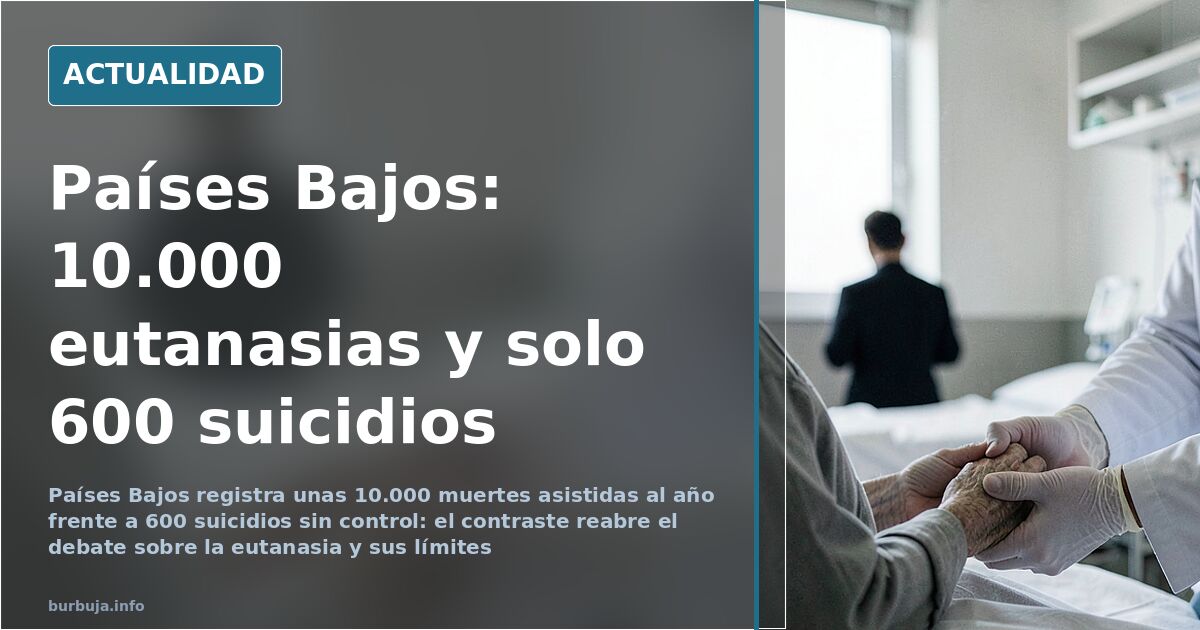
Netherlands performs 10,341 euthanasias yearly, representing 5.97% of all deaths
According to data attributed to official sources by a debate participant, the Netherlands performed 10,341 euthanasias in 2025. This figure represents 5.97% of the country's total deaths. Compared to the approximately 600 suicides without medical intervention cited for the same period, it depicts a nation where assisted dying has become normalized, approaching one in seventeen deaths. In Spain, the issue remains stalled by judicial bureaucracy and widespread refusal among medical staff, as argued in the conversation.
The breakdown by pathology dismantles the image of patients ending their lives out of boredom. Cancer accounts for 5,355 cases; various physical illnesses sum up to 1,908; neurological conditions, 719; cardiovascular diseases, 509. Dementia contributes 499 cases, and age-related ailments account for 475. Psychiatric disorders stand at 174, or 1.7% of the total. The majority are terminally ill patients, not functional depressives.
The actual profile of applicants: cancer and terminal illness
The dementia figures generate the most noise. Some argue that decisions made by third parties could slip under the umbrella of cognitive decline diagnoses, with documents signed before or after diagnosis. This is an unproven suspicion circulating without evidence, and should be treated as such: a hypothesis regarding incentives in a system allowing advance directives. The 499 dementia cases do not allow conclusions of either abuse or absolute integrity.
The comparison with Spain has its own pitfalls. Here, euthanasia exists in law, but the practical journey takes years, not weeks: procedures, committees, appeals, and doctors refusing service in regions where conscientious objection is predominant, according to the debate. The result is a country where legal options arrive late or never, and those despairing resort to worse methods, as some participants suggest. The pill on the nightstand demanded by some is not public policy, but a slogan.
How many applications would exist in Spain under a Dutch-style law?
No one knows. Estimates thrown into the conversation range from 50,000 to 450,000 per year, and this nine-to-one gap demonstrates there is no method, only intuition. What is certain is that latent demand exists and the current system manages it with bureaucracy and silence, as claimed in the thread. The debate on euthanasia in Spain is not about whether suffering exists: it is about who decides when it ends and with what safeguards.
The Dutch case provides an uncomfortable mirror. Ten thousand assisted deaths per year have not turned the country into a slaughterhouse, nor have they eliminated discussion on limits. The open question is not how many leave, but how many stay because the legal path is too long.
This article is based on data and arguments presented in the debate on euthanasia in the Netherlands.
Also available in: Deutsch
Summary of a discussion on Burbuja.info - Foro de economía, actualidad y política., translated from Spanish and reviewed before publication. Read the full discussion (45 replies).
More summaries
-
Spain's assisted suicide debate: patient autonomy vs. state control
A man helping his wife with multiple sclerosis die reignites the conflict between personal sovereignty and state regulation of end-of-life choices.
-
Netherlands euthanises one-year-old baby
The official report states the child was one year old, born premature and suffered extensive brain damage; the Dutch doctor will not face prosecution.
-
Canada offers assisted suicide on the street: the MAiD dystopia
A report claims that in Canada people are approached on the street to be offered assisted suicide and are euthanized the same day at care facilities.
-
Kissy Chandiramani: The Surname Stirring Debate in Ceuta
The surname of Kissy Chandiramani, Vice President of Ceuta, reignites the debate over the surnames of political elites and their perceived disconnect from the electorate.
-
Housing and birth control, not vaccines, drive Spain's low birth rate
Spain has no mandatory vaccines yet one of the world's lowest fertility rates; France mandates them but has more children. Data debunks the myth.
-
Amaia Montero Says She Is Suffering After Comeback Criticism
Amaia Montero expresses distress on social media following backlash over her return with La Oreja de Van Gogh, sparking fan concern.