
Medium-Heat Ribeye Sparks Debate Over Searing
Cooking a ribeye at medium heat in a cast-iron pan triggers criticism over the lack of searing and Maillard reaction.
English · Original discussion in Spanish · Published
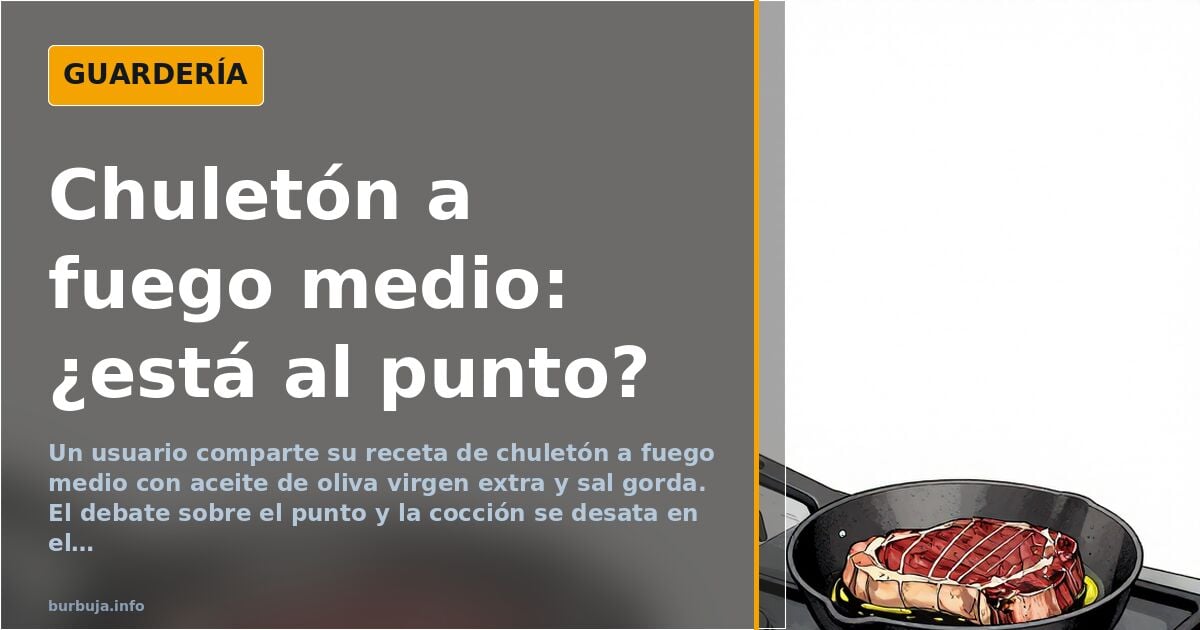
Medium-Heat Ribeye: The Technique That Changes Everything
There is a scene that repeats in every home: a piece of meat falls into a cast-iron pan on medium heat, with a splash of extra virgin olive oil and coarse salt. Next to it, a slice of crusty bread and a salad. The diner celebrates it as an achievement, but the gastronomic community quickly sharpens its knives. The discussion is not about quantity, but method: Is cooking the meat enough, or must it be seared at high temperature for the Maillard reaction to do its work? According to most amateur and professional cooks who have weighed in, the answer is no. A ribeye requires a very hot pan, not medium heat. The result, they say, is boiled meat, not roasted.
The Temperature Error: Why the Meat Turns Gray
The dull gray tonalidad of the meat is the first alarm signal. When a ribeye does not reach sufficient surface temperature, the dark, crispy crust that seals in juices does not form. Instead, the meat slowly cooks in its own juices, acquiring a texture closer to stew than grilled steak. Several participants have noted that the pan must be "very hot," not just warm, to achieve this effect. The Maillard reaction, the chemical process that browns meat and develops complex flavors, only occurs above 140-150 degrees Celsius. At medium heat, the pan's surface temperature rarely exceeds 100-120 degrees, insufficient to trigger the process.
The result is a cut that, when sliced, does not show the typical gradient of a well-made ribeye: a black, crispy outer layer, a pink band, and a red center. Instead, a uniform, grayish tonalidad appears, revealing the lack of searing. Some argue that if one likes it that way, there is nothing to object to. But most agree it is a technical error, not a preference.
The Shadow of Boiled Steak: When Cooking Becomes Stew
The most repeated comparison is that of boiled steak. Meat cooked at low temperature in its own juices resembles stew more than a grilled cut. In fact, some joked that in a steak contest it would be grounds for disqualification. The texture, lack of crust, and absence of contrast between the crispy exterior and juicy interior are the critics' arguments. Against them, the author defends that this is how he likes it and that no one should impose a specific doneness. The discussion, therefore, is not only technical but also about the limits of culinary orthodoxy.
Some maintain that the problem is not the technique but the utensil. A cast-iron pan on medium heat can be sufficient if heated for the right amount of time. But most insist that the iron must be smoking before placing the meat. The difference between a lukewarm pan and a scorching one is what separates a ribeye from a boiled fillet.
Extra Virgin Olive Oil and the Jargon That Irritates
Beyond technique, the use of the acronym EVOO has generated its own controversy. Some consider it pretentious and refined language, a way to appear sophisticated. "Can't you just say extra virgin olive oil?" snaps one participant. The vocabulary debate mixes with the gastronomic one but reveals a deeper tension: that of those who reject modern jargon applied to everyday life. Extra virgin olive oil, with or without the acronym, is the same product. The difference lies in how it is named.
As for the tableware, the Arcoroc and Duralex plates from the eighties were the most celebrated part of the photos. Nostalgia outweighs culinary criticism. Some even joked that these are the plates where the Predator eats in the jungle. The irony about the dishes served to ease the tension of a debate that, at times, became heated.
The Perfect Doneness: Three Colors and a Red Band
The definition of perfect doneness has also generated discrepancies. One participant described that a ribeye, when cut, should show three colors: the black of the char, the pink of the edges, and a large red band in the center. Others, however, prefer it more well-done. The discussion about doneness is perhaps the most subjective of all. There is no consensus, but there is agreement: the meat must be seared first at high temperature, then adjusted to taste.
The debate has drifted into anecdotes about the meat's origin, the crusty bread, and even the convenience of having a drip tray. The conversation moved from technique to material culture, from gastronomy to nostalgia. And amidst it all, the question no one fully answers: Is it legitimate to cook a ribeye at medium heat? The answer, as almost always, depends on whom you ask.
In the end, the only certainty is that the meat was gone. The ribeye, with its disputed sear, was consumed. And the discussion on how it should have been cooked remains open, like so many others in the kitchen.
There is a scene that repeats in every home: a piece of meat falls into a cast-iron pan on medium heat, with a splash of extra virgin olive oil and coarse salt. Next to it, a slice of crusty bread and a salad. The diner celebrates it as an achievement, but the gastronomic community quickly sharpens its knives. The discussion is not about quantity, but method: Is cooking the meat enough, or must it be seared at high temperature for the Maillard reaction to do its work? According to most amateur and professional cooks who have weighed in, the answer is no. A ribeye requires a very hot pan, not medium heat. The result, they say, is boiled meat, not roasted.
The Temperature Error: Why the Meat Turns Gray
The dull gray tonalidad of the meat is the first alarm signal. When a ribeye does not reach sufficient surface temperature, the dark, crispy crust that seals in juices does not form. Instead, the meat slowly cooks in its own juices, acquiring a texture closer to stew than grilled steak. Several participants have noted that the pan must be "very hot," not just warm, to achieve this effect. The Maillard reaction, the chemical process that browns meat and develops complex flavors, only occurs above 140-150 degrees Celsius. At medium heat, the pan's surface temperature rarely exceeds 100-120 degrees, insufficient to trigger the process.
The result is a cut that, when sliced, does not show the typical gradient of a well-made ribeye: a black, crispy outer layer, a pink band, and a red center. Instead, a uniform, grayish tonalidad appears, revealing the lack of searing. Some argue that if one likes it that way, there is nothing to object to. But most agree it is a technical error, not a preference.
The Shadow of Boiled Steak: When Cooking Becomes Stew
The most repeated comparison is that of boiled steak. Meat cooked at low temperature in its own juices resembles stew more than a grilled cut. In fact, some joked that in a steak contest it would be grounds for disqualification. The texture, lack of crust, and absence of contrast between the crispy exterior and juicy interior are the critics' arguments. Against them, the author defends that this is how he likes it and that no one should impose a specific doneness. The discussion, therefore, is not only technical but also about the limits of culinary orthodoxy.
Some maintain that the problem is not the technique but the utensil. A cast-iron pan on medium heat can be sufficient if heated for the right amount of time. But most insist that the iron must be smoking before placing the meat. The difference between a lukewarm pan and a scorching one is what separates a ribeye from a boiled fillet.
Extra Virgin Olive Oil and the Jargon That Irritates
Beyond technique, the use of the acronym EVOO has generated its own controversy. Some consider it pretentious and refined language, a way to appear sophisticated. "Can't you just say extra virgin olive oil?" snaps one participant. The vocabulary debate mixes with the gastronomic one but reveals a deeper tension: that of those who reject modern jargon applied to everyday life. Extra virgin olive oil, with or without the acronym, is the same product. The difference lies in how it is named.
As for the tableware, the Arcoroc and Duralex plates from the eighties were the most celebrated part of the photos. Nostalgia outweighs culinary criticism. Some even joked that these are the plates where the Predator eats in the jungle. The irony about the dishes served to ease the tension of a debate that, at times, became heated.
The Perfect Doneness: Three Colors and a Red Band
The definition of perfect doneness has also generated discrepancies. One participant described that a ribeye, when cut, should show three colors: the black of the char, the pink of the edges, and a large red band in the center. Others, however, prefer it more well-done. The discussion about doneness is perhaps the most subjective of all. There is no consensus, but there is agreement: the meat must be seared first at high temperature, then adjusted to taste.
The debate has drifted into anecdotes about the meat's origin, the crusty bread, and even the convenience of having a drip tray. The conversation moved from technique to material culture, from gastronomy to nostalgia. And amidst it all, the question no one fully answers: Is it legitimate to cook a ribeye at medium heat? The answer, as almost always, depends on whom you ask.
In the end, the only certainty is that the meat was gone. The ribeye, with its disputed sear, was consumed. And the discussion on how it should have been cooked remains open, like so many others in the kitchen.
Also available in: Deutsch
Summary of a discussion on Burbuja.info - Foro de economía, actualidad y política., translated from Spanish and reviewed before publication. Read the full discussion (85 replies).
More summaries
-
Diomande’s Girlfriend Sparks AI Debate: Real or Generated?
The girlfriend of footballer Diomande divides social media: is the photo real or AI-generated? A betting house pendant fuels the controversy.
-
Men wearing women's sandals: fashion trend or provocation?
Growing acceptance of female footwear among men sparks debate over unisex fashion versus attention-seeking behavior.
-
Online debate on single Spanish woman, 36, seeking partner
Forum users criticize a 36-year-old Spanish woman's dating expectations and attitude towards forming a family.
-
Russell Crowe was 36 in Gladiator: Hollywood's age debate
Russell Crowe was 36 during Gladiator. We analyze if this fit Maximus and Hollywood's trend of casting older actors.
-
Alcaraz withdraws from Cincinnati due to wrist injury
Carlos Alcaraz has withdrawn from the Cincinnati Masters and likely the US Open due to a wrist injury. Forum discussions highlight concerns about his serve performance on hard courts.
-
Real Madrid Crisis: Florentino and Mourinho Under Fire
Real Madrid trails Barcelona by six points after two losses. Forum debates blame president Florentino Pérez and coach Mourinho for the club's decline.