
Mass evacuations begin in Kyiv amid Russian bombardment
Russia is intensifying its bombardment of Kyiv, forcing residents to evacuate. The war has now lasted 4.5 years, and casualty estimates are chilling.
English · Original discussion in Spanish · Published
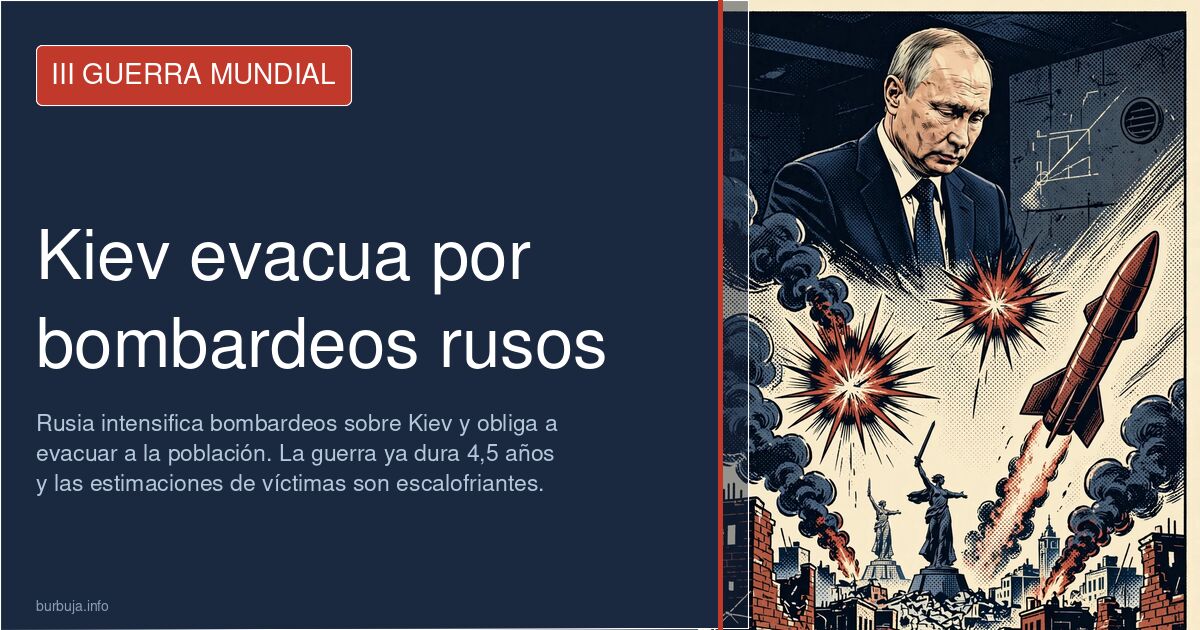
Mass evacuations in Kyiv: the war intensifies
Why now? After more than four and a half years of war, the Ukrainian capital is facing a new chapter: the start of mass evacuations in response to the ferocity of Russian bombardment. The news, which has shocked the population, comes at a time when the Kremlin, according to some analysts, is seeking a definitive outcome through the use of missiles such as the Oreshnik, one of the weapons that may be behind the increase in intensity.
A strategy of patience or a foretold failure
While some argue that Russia has played a long game, aware that time was on its side, others point out that the handling of the operation has been a disaster. The reference to the 2014 coup as the moment when firm action should have been taken echoes throughout the debate. The reality is that, after four and a half years, the war has left a devastating toll, with casualty figures estimated in the millions, although there is no consensus on the exact number. Criticism of the "second army in the world" for failing to subdue Ukraine is constant.
The human factor: a destroyed generation
The evacuations in Kyiv speak not only of a military escalation, but of a human tragedy. Countless families are being forced to leave their homes — a generation that has grown up amid the sound of sirens and watches its country bleed dry. The irony is that, while victories and strategies are being discussed, it is civilians who pay the highest price.
Russia is in no hurry, but the evacuees are. The war goes on, and with it, the uncertainty.
Also available in: Deutsch
Summary of a discussion on Burbuja.info - Foro de economía, actualidad y política., translated from Spanish and reviewed before publication. Read the full discussion (27 replies).
More summaries
-
Kiev's Systematic Air Campaign Targets Factories, Warehouses, and Data Centers
Kiev faces systematic missile and drone attacks on factories, warehouses, and data centers, leading to blackouts and smoke.
-
Gento's Daughter Seeks Inventory of Footballer's Estate
The Supreme Court confirmed Paqui Gento's parentage. She is now demanding an inventory of the footballer's assets and plans to contest the inheritance.
-
USS Abraham Lincoln leaves the Middle East conflict zone amid sanitation failure rumors
The USS Lincoln carrier has left the Middle East amid rumors of plumbing problems and possible casualties. Strategic withdrawal or technical failure?
-
Why the US crushed Iraq so easily but struggles against Iran
An analysis of why the United States defeated Iraq in weeks but cannot subdue Iran: opposing military doctrines, the decline of the superpower and internal cohesion.
-
Iranian fast boats fire on tanker in Strait of Hormuz, closing it to traffic again
Iranian fast boats attack a tanker in the Strait of Hormuz. Analysis of the tactic, Iran's internal contradictions and the impact on oil.
-
Not 1939 but 1914: the parallel nobody wants to see
We analyse why the 1914 comparison fits better than 1939: inflation, debt, military dependence and three generations with no memory of total war.