
Mallorca Tourism Crisis: High Prices and Labor Shortage
Forum discusses rising tourist costs in Mallorca, worker shortages, and the impact on housing access and holidays.
English · Original discussion in Spanish · Published
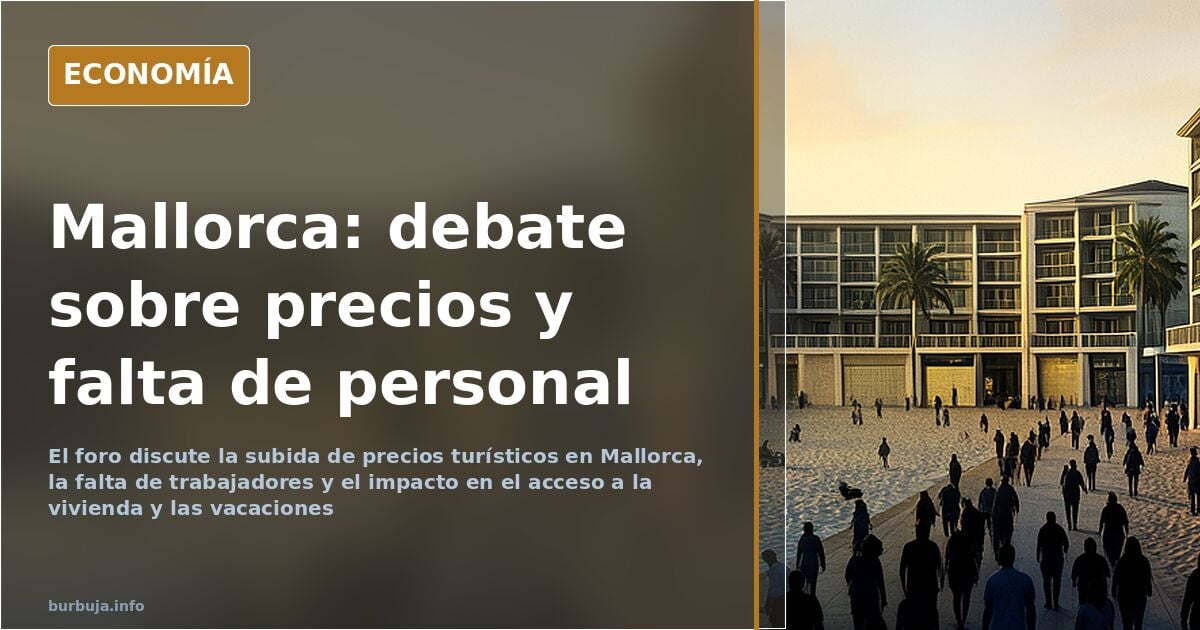
Mallorca raises prices but lacks workers: tourism stalls
The tourism sector in Mallorca faces a contradiction many businesses cannot resolve: prices rise, hotels fill up during high season, yet there is a shortage of staff willing to work under conditions the industry itself describes as harsh. The discussion, peine in an economics forum, starts with a message mocking the increase in housing prices. The term "remero" (basic hotel or restaurant worker) has become the symbol of a model that squeezes the season and then complains about not finding hands.
Initial messages ironically suggest raising prices as a spontaneous solution: "Come on, let's raise housing prices, you'll see how well it goes." Soon the focus shifts to the lack of personnel and the paradox that, despite record prices, wages do not keep pace. A participant mentions a case from a hospitality owner in Málaga who claims to pay €1,600 gross, then corrects himself to say €1,600 net, while the cited collective agreement remains at €1,560 gross. The mismatch between earnings and the cost of living in the Balearic Islands is the thread running through the entire debate.
Why has Mallorca become so expensive?
The island has shifted from relying on leather, footwear, and costume jewelry to depending on real estate and tourism. One participant recalls that around 1988, brands like Camper, Lottusse, or Yanko distributed work, and employees worked from home; then the bubble arrived, and they switched to bricks and tourism. Now, he says, "bed & breakfast finishes off the disaster." Mass tourism and real estate speculation have turned Mallorca into a destination where holiday rentals compete with residential housing, pushing out the very workers who serve tourists.
Price increases are defended using market logic: if you cannot expand supply (beaches, urbanization, services), raise prices. "Tourism in Spain must be expensive," argues one school of thought, advocating for attracting clients who "don't look at their pockets." The stated goal is quality, luxury tourism, not cheap package deals. But this same logic clashes with wage realities: if staff cannot afford rent on the island, the model cracks.
Are waiters missing or are there too many bars?
The debate over labor shortages has two interpretations. One points to a supply problem: vacancies remain unfilled because conditions are unattractive. Another argues there are simply too many businesses: "There are far too many bars," some claim, suggesting much of this tourism only sustains precarious jobs. The proposal that hospitality owners should house their own workers appears as a thrown-out idea, lacking concrete details.
Meanwhile, pressure on housing skyrockets. Immigration and mass tourism compete for the same space. A recurring opinion calls for "quality immigration only as much as the state needs" and "quality tourism only." The underlying sentiment is dissatisfaction with a model that, according to this view, benefits few and displaces locals.
The tourism sustaining Spain and the price trap
Tourism is said to be the only major industry left in Spain. If the business and its workers are mistreated, the revenue source is jeopardized. Yet higher prices do not guarantee better wages: some calculate that current prices could allow paying several times the SMI (Spanish minimum wage) while still making profits. The question is why this doesn't happen.
Seasonality worsens everything. De-seasonalization is proposed: travel in June or September when prices drop. But this conflicts with school holidays and the idea that Spaniards should be able to vacation in their own country whenever they please. The alternative suggested is changing the general productive model, not just tourism, to avoid dependence on a sector that concentrates wealth in high season and leaves the rest of the year idle.
Discontent with the model: "Let them serve themselves canapés"
The discussion drifts toward politics and exhaustion. Critics argue politicians don't suffer these prices and live lavishly while leaving Spain devastated. Irony about the "patriotic remero" who might one day buy a seaside apartment summarizes the frustration. There is also criticism of entrepreneurs who socialize losses: if the business fails, either management is poor or there are too many competitors.
The debate ends without consensus. Some see price hikes as an opportunity for higher-quality tourism; others see confirmation that the model expels Spaniards from their own coasts. The question hangs in the air: Can Mallorca afford to be expensive without losing the people who serve it?
Also available in: Deutsch
Summary of a discussion on Burbuja.info - Foro de economía, actualidad y política., translated from Spanish and reviewed before publication. Read the full discussion (67 replies).
More summaries
-
Balearic Islands: Labor Shortage and High Rents Hurt Tourism
In Mallorca, hospitality jobs offer €1,600-€1,800 net while rent averages €1,200. Critics argue rental speculation drives workers away.
-
Mallorca Restaurant Closures: Costs, Not Airbnb
Airbnb removes 65,000 illegal listings as Mallorca sees hundreds of restaurant closures. The debate centers on whether vacation rentals or high prices are to blame.
-
Record Occupancy and High Prices: Spanish Tourism Thrives
Mallorca hotels hit 95% occupancy while Benidorm faces queues. Despite industry complaints, tourists keep arriving and paying more.
-
Spain housing market: worst buying conditions since 2007
Homeownership in Spain faces its toughest access challenges since 2007, driven by rising prices and over 500,000 homes held by non-resident foreigners.
-
El Mundo keeps false article about Spain's defeat online for three days
Arcadi Espada's article declaring Spain's loss is still online three days after the World Cup final. Human error or a lack of editorial checks?
-
Spain's DGT orders Guardia Civil to respond to every V16 beacon alert
With 13 million beacons sold and 32 million vehicles required to carry them, Spain's DGT orders the Guardia Civil to attend every activation. Rejection and doubts remain.