
Málaga no es ya para los malagueños: la huida de los locales
Mass tourism is pushing Málaga's residents out of the city center. Prices are soaring and local identity is fading. Who holds the blame?
English · Original discussion in Spanish · Published
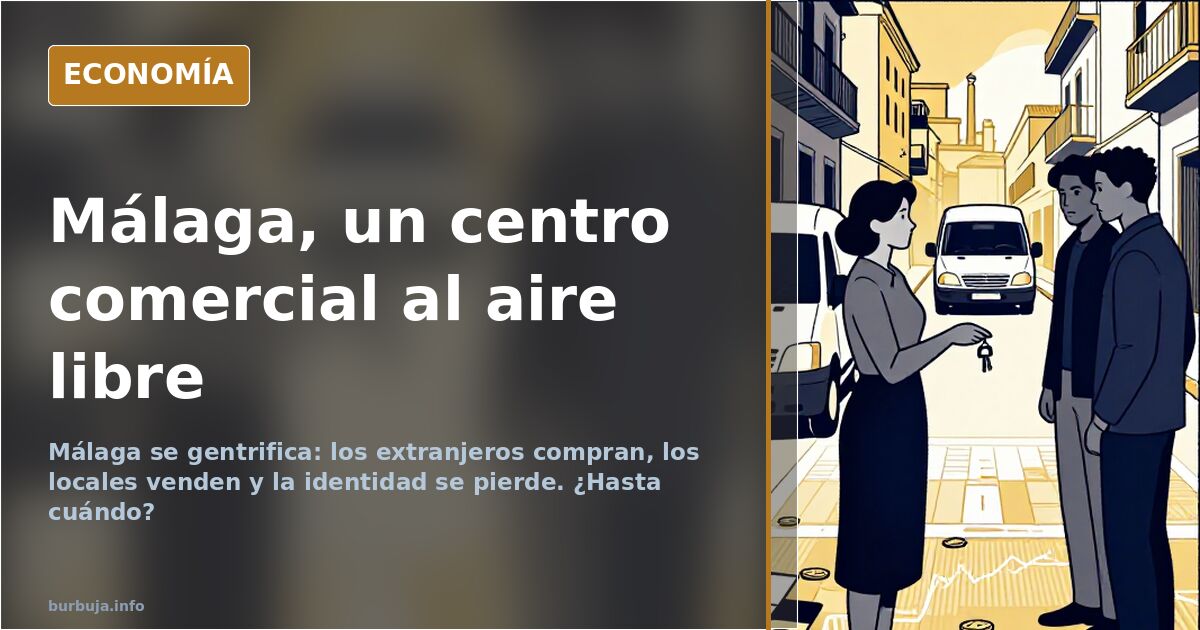
Málaga: el turismo expulsa a los malagueños del centro
The old town of Málaga no longer smells like traditional roasted coffee; it smells like avocado brunch. Traditional bakeries have been replaced by real estate offices with English signs, and neighborhood bars by Irish pubs. This phenomenon is not accidental: Andalusia was poor for a century, and the Malagueños emigrated while wealthy tourists enjoyed their beaches. Now, money has arrived to stay, and the natives cannot compete with it.
The causes are multiple. Some point fingers at politicians, who allowed an intensive tourist model without limits. Others blame the residents themselves for selling their businesses for a quick profit when the opportunity arose. There is also a third analysis that sees the problem in economic monoculture: a country living solely off tourism is exposed to crises that sweep everything away.
The discussion includes an uncomfortable factor: the purchase of housing by foreigners, which turns the center into a luxury colony. But it is also recalled that Madrid and Barcelona have been like this for two decades, suggesting Málaga is merely trinc a path already traveled.
Meanwhile, prices continue to rise and the locals move to the periphery. The striking fact is that the city depended on tourism for a century, and now that it finally has income, it is losing its inhabitants. As the popular saying goes, there's silver lining to every cloud, but here, the bad is proving expensive.
The old town of Málaga no longer smells like traditional roasted coffee; it smells like avocado brunch. Traditional bakeries have been replaced by real estate offices with English signs, and neighborhood bars by Irish pubs. This phenomenon is not accidental: Andalusia was poor for a century, and the Malagueños emigrated while wealthy tourists enjoyed their beaches. Now, money has arrived to stay, and the natives cannot compete with it.
The causes are multiple. Some point fingers at politicians, who allowed an intensive tourist model without limits. Others blame the residents themselves for selling their businesses for a quick profit when the opportunity arose. There is also a third analysis that sees the problem in economic monoculture: a country living solely off tourism is exposed to crises that sweep everything away.
The discussion includes an uncomfortable factor: the purchase of housing by foreigners, which turns the center into a luxury colony. But it is also recalled that Madrid and Barcelona have been like this for two decades, suggesting Málaga is merely trinc a path already traveled.
Meanwhile, prices continue to rise and the locals move to the periphery. The striking fact is that the city depended on tourism for a century, and now that it finally has income, it is losing its inhabitants. As the popular saying goes, there's silver lining to every cloud, but here, the bad is proving expensive.
Summary of a discussion on Burbuja.info - Foro de economía, actualidad y política., translated from Spanish and reviewed before publication. Read the full discussion (15 replies).
More summaries
-
Euthanasia in Old Age: Autonomy vs. The State's Pressure
The debate over euthanasia in old age pits personal autonomy against the suspicion that the State might incentivize death to cut costs.
-
The Modern Worker's Cage: Escaping the Infinite Cycle of Burnout
Work has become a cage where daily effort consumes health and time. Discover why we push ourselves so hard and how to break the cycle.
-
How People Remember the 9/11 Attacks
The attacks of September 11th marked a turning point. Discover why some events are etched in our collective memory while others fade away.
-
Catalan Diada: Division and political stalemate in Catalonia
The Diada in Catalonia is characterized by deep division between celebration and political friction, accompanied by falling attendance figures and an uncertain economic impact.
-
Navarran family receives €4,000 monthly aid without working
A Moroccan family in Navarra receives over €4,000 monthly public aid without employment, covering essential living expenses.
-
Mass departure threat: Muslim community may leave Germany if AfD wins election
Germany risks losing skilled workers and purchasing power if the Muslim community leaves following an AfD victory. We analyze the economic implications.