
Madrid Protest Camp Robberies Spark Debate Over Security
Activists camping in Madrid's Puerta del Sol report thefts of electronics, while the assembly avoids naming suspects.
English · Original discussion in Spanish · Published
Madrid Protest Camp Robberies Spark Debate Over Security
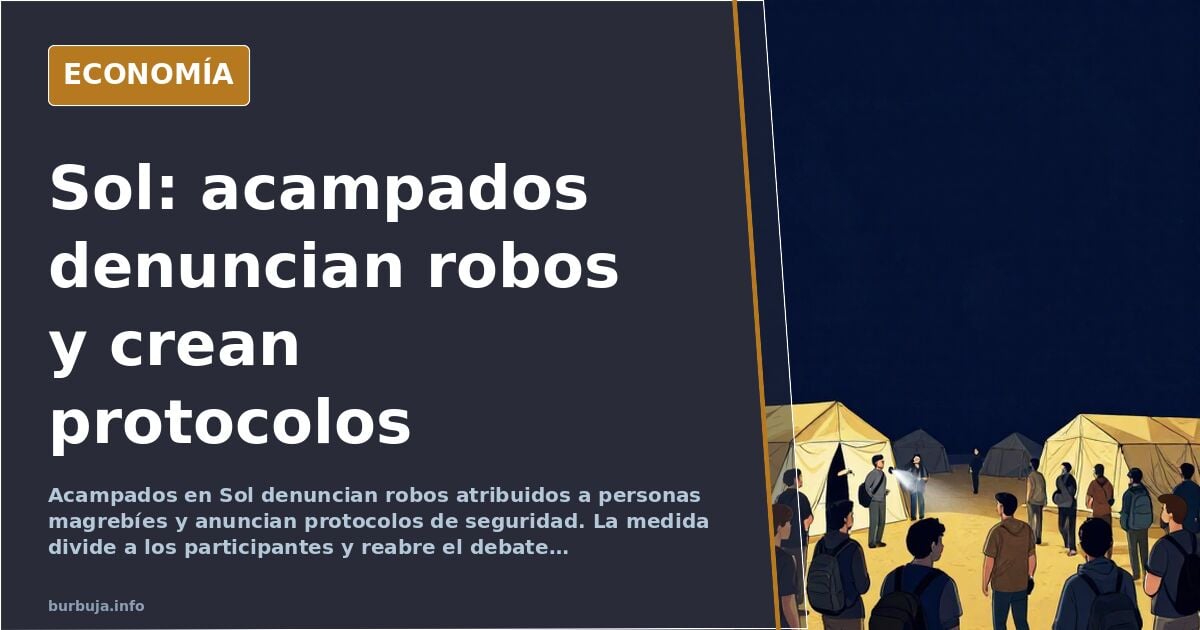
A group of protesters camping in Madrid’s Puerta del Sol has reported a wave of thefts within the campsite. According to circulating accounts, stolen items include mobile phones, laptops, and other valuables. The incident has created an uncomfortable paradox: those protesting housing shortages and an exclusionary economic model have been forced to establish internal coexistence and security protocols. Presented as a spontaneous movement, the encampment now faces its first internal crisis.
The assembly decided that no specific direction could be pointed regarding who the thieves were, according to the widely circulated account. In essence, the same space demanding law and order for evictees refuses to name the perpetrators of these robberies. This decision has precisely triggered the controversy.
What is known about the thefts at the Sol protest camp
The facts, as transmitted, are limited: several campers report the theft of personal belongings, primarily electronic devices. One victim allegedly identified the thieves as North African, a detail the assembly chose not to include in its statement. The assembly determined that no specific direction could be pointed regarding who the thieves were.
From there, the narrative splits. Some claim the encampment is an orchestrated setup, with identical tents and awnings placed from above, noting that most tents remain empty during the day. They call it "props." Others defend it as a legitimate protest against housing prices, arguing that the thefts are a minor incident that does not invalidate the cause.
The security protocol nobody anticipated
The organizational response has been the creation of coexistence and security protocols. Practically, this means surveillance shifts, assemblies to address incidents, and preventive measures against aggression. When protocols are established, it implies prior incidents occurred, some critical voices point out. The implicit question is what type of incidents motivated these measures and why they are not detailed.
The episode has reignited a recurring debate: the tension between solidarity discourse and daily management of coexistence. Defenders of the camp argue that any prolonged gathering generates logistical problems. Critics respond that these issues are a direct consequence of applying the ideology they advocate.
Who pays and who profits in the Sol protest camp
One of the most repeated lines of criticism targets the economic profile of the campers. It is argued that many are not in genuine need, possess high-end devices, and have their living costs covered by their families. The latest iPhone gifted by 'Casapapi' to the stoner is now for sale on Calle Carretas, one of the most cited interventions ironically notes.
This argument has an obvious economic derivative: if thefts affect people capable of replacing stolen items, the financial impact is limited. If they affect those without such capacity, the damage is greater. The dominant narrative in the discussion does not distinguish between both cases.
The fruta cost of the protest camp
The theft episode had a secondary effect: it shifted focus from housing demands to internal camp management. The lack of housing they protest and the robberies they now also protest are consequences of the practical application of their ideology, summarizes one of the most repeated positions.
Other voices indicate that the underlying problem is not the camp itself, but the impunity of certain crimes in central Madrid. It is argued that gangs operating in the area have acted for years without intervention. This line of analysis shifts responsibility from the campers to public administrations.
What happens next with the Sol protest camp
The camp remains standing. Security protocols are in place. The assembly maintains its decision not to identify any specific group as responsible for the thefts. Public discussion oscillates between those who see the episode as confirmation of their thesis and those who consider it an insignificant incident.
What has not appeared is an official figure for reported thefts, a balance of recovered items, or identification of the perpetrators. The matter remains, as of this discussion, without a known resolution. The encampment continues. So do the protocols.
A group of protesters camping in Madrid’s Puerta del Sol has reported a wave of thefts within the campsite. According to circulating accounts, stolen items include mobile phones, laptops, and other valuables. The incident has created an uncomfortable paradox: those protesting housing shortages and an exclusionary economic model have been forced to establish internal coexistence and security protocols. Presented as a spontaneous movement, the encampment now faces its first internal crisis.
The assembly decided that no specific direction could be pointed regarding who the thieves were, according to the widely circulated account. In essence, the same space demanding law and order for evictees refuses to name the perpetrators of these robberies. This decision has precisely triggered the controversy.
What is known about the thefts at the Sol protest camp
The facts, as transmitted, are limited: several campers report the theft of personal belongings, primarily electronic devices. One victim allegedly identified the thieves as North African, a detail the assembly chose not to include in its statement. The assembly determined that no specific direction could be pointed regarding who the thieves were.
From there, the narrative splits. Some claim the encampment is an orchestrated setup, with identical tents and awnings placed from above, noting that most tents remain empty during the day. They call it "props." Others defend it as a legitimate protest against housing prices, arguing that the thefts are a minor incident that does not invalidate the cause.
The security protocol nobody anticipated
The organizational response has been the creation of coexistence and security protocols. Practically, this means surveillance shifts, assemblies to address incidents, and preventive measures against aggression. When protocols are established, it implies prior incidents occurred, some critical voices point out. The implicit question is what type of incidents motivated these measures and why they are not detailed.
The episode has reignited a recurring debate: the tension between solidarity discourse and daily management of coexistence. Defenders of the camp argue that any prolonged gathering generates logistical problems. Critics respond that these issues are a direct consequence of applying the ideology they advocate.
Who pays and who profits in the Sol protest camp
One of the most repeated lines of criticism targets the economic profile of the campers. It is argued that many are not in genuine need, possess high-end devices, and have their living costs covered by their families. The latest iPhone gifted by 'Casapapi' to the stoner is now for sale on Calle Carretas, one of the most cited interventions ironically notes.
This argument has an obvious economic derivative: if thefts affect people capable of replacing stolen items, the financial impact is limited. If they affect those without such capacity, the damage is greater. The dominant narrative in the discussion does not distinguish between both cases.
The fruta cost of the protest camp
The theft episode had a secondary effect: it shifted focus from housing demands to internal camp management. The lack of housing they protest and the robberies they now also protest are consequences of the practical application of their ideology, summarizes one of the most repeated positions.
Other voices indicate that the underlying problem is not the camp itself, but the impunity of certain crimes in central Madrid. It is argued that gangs operating in the area have acted for years without intervention. This line of analysis shifts responsibility from the campers to public administrations.
What happens next with the Sol protest camp
The camp remains standing. Security protocols are in place. The assembly maintains its decision not to identify any specific group as responsible for the thefts. Public discussion oscillates between those who see the episode as confirmation of their thesis and those who consider it an insignificant incident.
What has not appeared is an official figure for reported thefts, a balance of recovered items, or identification of the perpetrators. The matter remains, as of this discussion, without a known resolution. The encampment continues. So do the protocols.
Summary of a discussion on Burbuja.info - Foro de economía, actualidad y política., translated from Spanish and reviewed before publication. Read the full discussion (167 replies).
More summaries
-
The rabble can occupy the country's Kilometro Cero without the UIP (Spain's riot police) stepping in, then dictate which citizens aren't allowed through.
Incidents at Puerta del Sol during a housing protest. Assaults and police presence marked the day.
-
Madrid’s Sol Webcams Go Dark During Housing Protest
SkylineWebcams and WhatAWeather cameras at Madrid’s Puerta del Sol went offline simultaneously during a housing encampment, citing technical issues.
-
Madrid Housing Protest Echoes 15M Movement
Protestors occupy Sol square in Madrid demanding affordable housing, drawing parallels to the 15M movement and questioning the PSOE's record.
-
Guadalajara, Azuqueca or Alovera: what €350,000 buys
New four-bedroom homes in Alcalá de Henares now exceed €350,000, pushing buyers to look in Guadalajara, Azuqueca or Alovera.
-
Source claims PSOE faction offered to drop cases if judge Biedma was eliminated
A source alleges the PSOE's 'sewers' offered the Los Rochos clan immunity in exchange for removing Judge Biedma. The UCO reports surveillance on the magistrate.
-
Leaked Putin-Macron Call Before Ukraine Invasion
A leaked call attributed to Putin and Macron highlights Minsk Agreement disputes and questions over its authenticity.