
Madrid M-30: 267 cameras trigger flood of traffic fines
Spain's Madrid Low Emission Zone expands to the M-30 with 267 cameras, issuing automatic fines by mail and raising fears of broader restrictions.
English · Original discussion in Spanish · Published
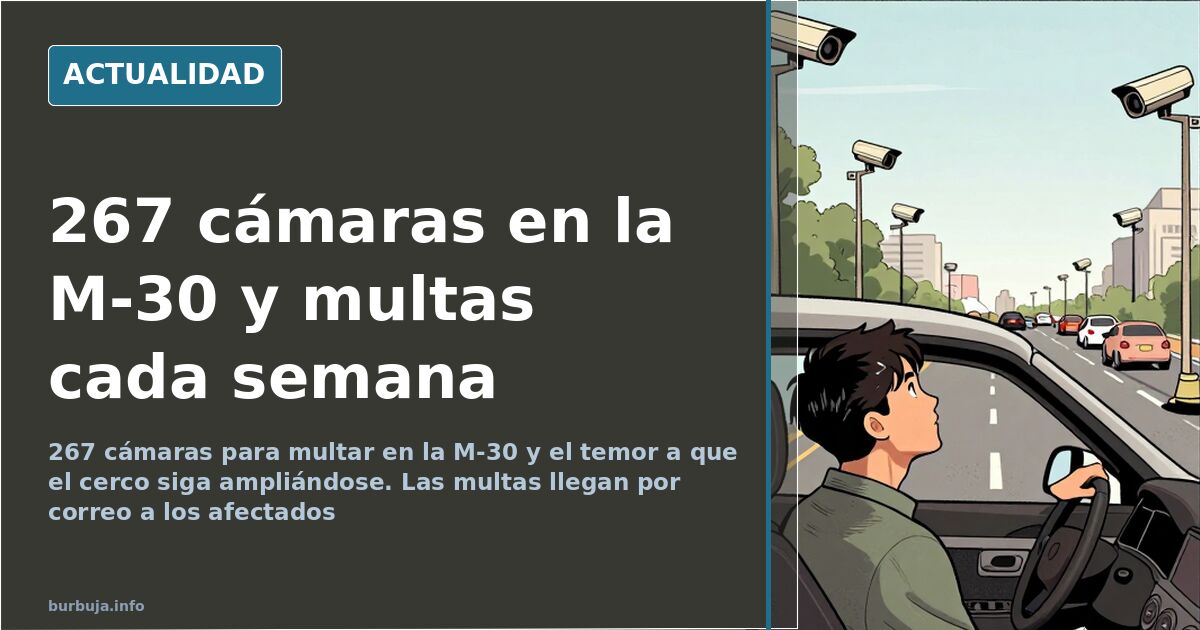
Madrid activates 267 cameras on the M-30 as fines arrive by mail
The Madrid Low Emission Zone (ZBE) functions in practice as an automated sanctioning machine. The stated goal is reducing emissions; the daily reality for drivers is different: 267 cameras reading license plates on the M-30 and its surroundings, notifications arriving at home, and the impression that the city has traded clean air for a billing system. While anger clouds the nuance, the data tells a clear story.
What peine to Madrid Central and the promise to remove it?
The starting point was an electoral promise: end Madrid Central. The outcome has been the opposite in scope. Restrictions have not stayed within the historic center; they have jumped to the M-30 ring road, where previously only traffic light cameras issued fines. This contradiction remains unexplained clearly.
The most common complaint is not the rule itself, but the priority. Affected drivers note 267 devices for fining versus a much smaller deployment for public safety. This contrast fuels the debate.
Regarding the actual sanction timeline, accounts vary. Owners claim the system is not yet fining everything possible and that letters still come from older devices. If true, the uncomfortable part is coming: a driver with a B label may feel safe today but not tomorrow.
The 'insolvent owner' trick and its legal bill
Faced with the drip of sanctions, some affected parties have transferred car ownership. The described formula is simple: title held by an elderly relative with no driving license, no assets, and only a minimum widow’s pension withdrawn in cash the same day it arrives. The fine comes, is ignored, and dies in administrative limbo. The risk, as pointed out, is that a seizure might surprise the owner before they can withdraw funds.
Worse methods were considered earlier. Swapping a license plate for another vehicle of the same model is document forgery, and acquaintances warned that chassis checks reveal the trick. Duplicating plates between two family cars in different cities was discarded for the same reason. Anything involving forged papers is off the table, for now.
There is also a legal detail often forgotten: the obligation to keep license plates legible and unaltered is codified, meaning domestic tricks with covers or cloths—popular among motorcyclists in the past—are equally sanctioned.
What peine in London with ULEZ cameras?
The British mirror appears frequently. In London, there are reports of over a thousand cameras damaged, cut, or stolen, with groups identifying as “ULEZ Blade Runners” acting coordinatedly but individually. Some versions suggest sabotage pressure forced a retreat and that the system costs more than it collects. This is a hypothesis, not an official balance.
The conclusion discomforts both sides. If organized vandalism seems unthinkable here, the balance between surveillance cost and revenue will eventually decide which devices survive.
The uneven map: from Roquetas de Mar to the M-50
ZBEs are not just a capital issue. In towns like Roquetas de Mar, with more than 100,000 inhabitants spread across dispersed districts, implementation is justified by population thresholds rather than measured pollution problems, according to local accounts. In the Basque Country, they do not exist, with threats to start late next year. Application is as unequal as the criteria.
For many drivers, the border is literal: the M-50. The perception is that the center is reserved for those who can afford new cars, while others move as best they can. “It doesn’t affect them,” is repeated, until it does.
Who really wants fewer cars in the center?
Not all is resistance. Some argue that residents of the center and neighborhoods like Salamanca want fewer cars, and protests come mainly from commuters crossing Madrid from the metropolitan area. This argument has substance and explains why the model survives changes in mayor.
Overcrowding adds another layer. On holidays, the center fills with visitors, and the discussion remains the same: whether the problem is circulating cars, parked cars, or lack of space.
The announced escalation: from B label to ECO
The most repeated suspicion is the slippery slope. First unlabeled cars, then B, then C, and finally ECO, because—argues critics—the goal is not pollution but removing private cars from the city. Along these lines circulate theories about Agenda 2030 and fifteen-minute cities: frameworks without provided evidence that should be treated as hypotheses of those affected, not facts.
What is denounced is the criterion excluding gasoline cars with ECO labels and the feeling that the rule rewards vehicle age over actual emissions. The indicator, they say, measures the registration, not the smoke.
If the pattern holds, expect more cameras, more letters, and more cars registered under third-party names. The doubt is how long the system lasts before surveillance becomes more expensive than collection. No one has published that calculation yet.
The Madrid Low Emission Zone (ZBE) functions in practice as an automated sanctioning machine. The stated goal is reducing emissions; the daily reality for drivers is different: 267 cameras reading license plates on the M-30 and its surroundings, notifications arriving at home, and the impression that the city has traded clean air for a billing system. While anger clouds the nuance, the data tells a clear story.
What peine to Madrid Central and the promise to remove it?
The starting point was an electoral promise: end Madrid Central. The outcome has been the opposite in scope. Restrictions have not stayed within the historic center; they have jumped to the M-30 ring road, where previously only traffic light cameras issued fines. This contradiction remains unexplained clearly.
The most common complaint is not the rule itself, but the priority. Affected drivers note 267 devices for fining versus a much smaller deployment for public safety. This contrast fuels the debate.
Regarding the actual sanction timeline, accounts vary. Owners claim the system is not yet fining everything possible and that letters still come from older devices. If true, the uncomfortable part is coming: a driver with a B label may feel safe today but not tomorrow.
The 'insolvent owner' trick and its legal bill
Faced with the drip of sanctions, some affected parties have transferred car ownership. The described formula is simple: title held by an elderly relative with no driving license, no assets, and only a minimum widow’s pension withdrawn in cash the same day it arrives. The fine comes, is ignored, and dies in administrative limbo. The risk, as pointed out, is that a seizure might surprise the owner before they can withdraw funds.
Worse methods were considered earlier. Swapping a license plate for another vehicle of the same model is document forgery, and acquaintances warned that chassis checks reveal the trick. Duplicating plates between two family cars in different cities was discarded for the same reason. Anything involving forged papers is off the table, for now.
There is also a legal detail often forgotten: the obligation to keep license plates legible and unaltered is codified, meaning domestic tricks with covers or cloths—popular among motorcyclists in the past—are equally sanctioned.
What peine in London with ULEZ cameras?
The British mirror appears frequently. In London, there are reports of over a thousand cameras damaged, cut, or stolen, with groups identifying as “ULEZ Blade Runners” acting coordinatedly but individually. Some versions suggest sabotage pressure forced a retreat and that the system costs more than it collects. This is a hypothesis, not an official balance.
The conclusion discomforts both sides. If organized vandalism seems unthinkable here, the balance between surveillance cost and revenue will eventually decide which devices survive.
The uneven map: from Roquetas de Mar to the M-50
ZBEs are not just a capital issue. In towns like Roquetas de Mar, with more than 100,000 inhabitants spread across dispersed districts, implementation is justified by population thresholds rather than measured pollution problems, according to local accounts. In the Basque Country, they do not exist, with threats to start late next year. Application is as unequal as the criteria.
For many drivers, the border is literal: the M-50. The perception is that the center is reserved for those who can afford new cars, while others move as best they can. “It doesn’t affect them,” is repeated, until it does.
Who really wants fewer cars in the center?
Not all is resistance. Some argue that residents of the center and neighborhoods like Salamanca want fewer cars, and protests come mainly from commuters crossing Madrid from the metropolitan area. This argument has substance and explains why the model survives changes in mayor.
Overcrowding adds another layer. On holidays, the center fills with visitors, and the discussion remains the same: whether the problem is circulating cars, parked cars, or lack of space.
The announced escalation: from B label to ECO
The most repeated suspicion is the slippery slope. First unlabeled cars, then B, then C, and finally ECO, because—argues critics—the goal is not pollution but removing private cars from the city. Along these lines circulate theories about Agenda 2030 and fifteen-minute cities: frameworks without provided evidence that should be treated as hypotheses of those affected, not facts.
What is denounced is the criterion excluding gasoline cars with ECO labels and the feeling that the rule rewards vehicle age over actual emissions. The indicator, they say, measures the registration, not the smoke.
If the pattern holds, expect more cameras, more letters, and more cars registered under third-party names. The doubt is how long the system lasts before surveillance becomes more expensive than collection. No one has published that calculation yet.
Summary of a discussion on Burbuja.info - Foro de economía, actualidad y política., translated from Spanish and reviewed before publication. Read the full discussion (161 replies).
More summaries
-
José Mota stops hair treatment due to side effects
José Mota quits hair loss medication due to side effects: 'I prefer to have a receding hairline and thinning hair'
-
Woman Chokes to Death at Grandson's Communion in Gijón
A woman died from choking during her grandson's communion in Gijón. The incident highlights that over 3,500 people die annually from this preventable cause.
-
The dilemma of choosing one option in a saturated market
Analysis of the constraint to choose one option among several candidates. Convergence on the middle ground versus perceived excellence creates a field of battle.
-
Spain records highest cancer diagnoses ever, especially in young people
Why are cancer diagnoses rising in Spain, particularly among the young? Analysis of potential causes: vaccines, microplastics, diet and more.
-
Disneyland Marriage Proposal Ends in Viral Struggle to Stand Up
A Disneyland marriage proposal between two women went viral after one couldn't stand up, sparking debates on obesity and cultural decline.
-
Sánchez’s daughter targeted after photo leak
OKDIARIO publishes photos of Pedro Sánchez’s daughter, sparking debate over privacy and her enrollment at Bristol University.