
Low Emission Zones Become Obsolete as Electric Cars No Longer Get a Free Pass
The rise of electric cars is making Low Emission Zones (LEZs) obsolete. New proposals for Environmental Quality Zones (EQZs) aim to restrict traffic based on space occupied, not just emissions.
English · Original discussion in Spanish · Published
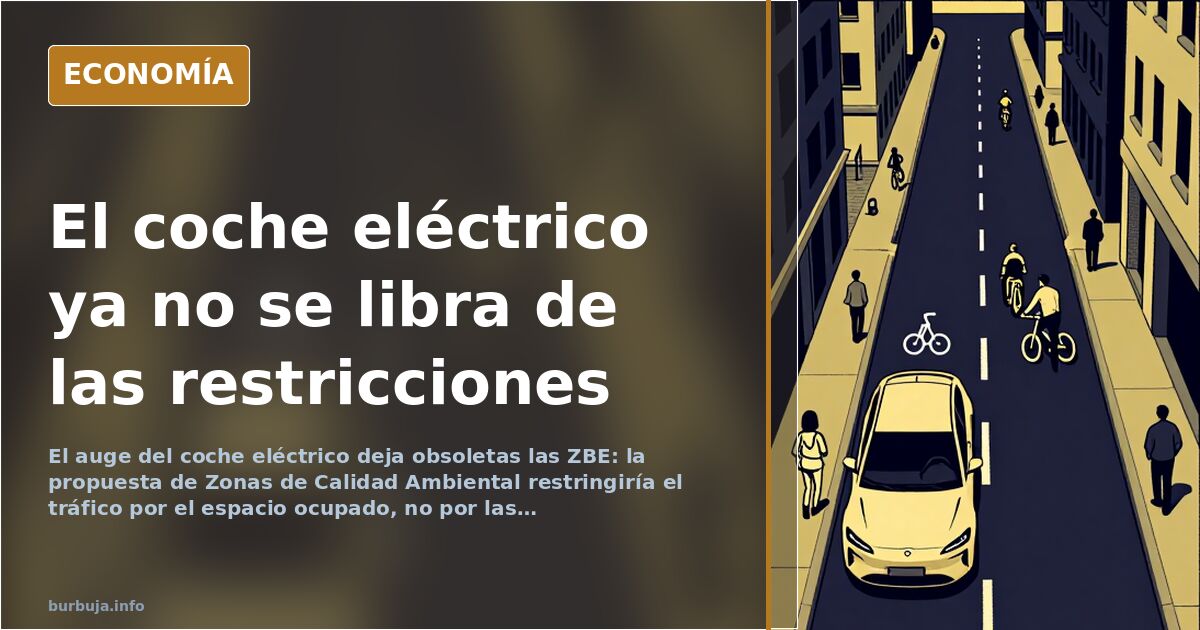
LEZs Fall Short: Electric Cars No Longer Enough as Car-Free Cities Emerge
For a decade, the ZERO emissions sticker was a passport. Electric cars could enter and leave city centers without question, as the stated goal was to clean the air. That consensus is now cracking for an inconvenient reason: the electric vehicle fleet is growing, and so is the space they occupy. The tool designed to reduce emissions is failing to unclog streets. The emerging proposal is to transform Low Emission Zones (LEZs) into Environmental Quality Zones (EQZs), where electric cars will no longer have free rein.
From LEZ to EQZ: From Exhaust Pipe to Square Meter
The reasoning is simple and, therefore, uncomfortable. LEZs were designed based on air quality and, consequently, exempted electric vehicles: zero emissions, zero problem. The incentive worked too well. With more electric cars registered, the argument turns against itself: a clean car occupies the same road space as a diesel, causes the same congestion, and takes up the same parking.
Under current regulations, an electric car can cross the city center without any restriction. The criterion, proponents argue, should shift from emissions to square meters. It's no longer about what comes out of the exhaust, but how much asphalt each vehicle consumes. The formulation summarizing this paradigm shift is stark: if the problem is congestion, exempting by technology leaves the objective halfway met.
Courts Overturn LEZ Ordinances Due to Lack of Studies
While the next step is debated, the previous one is crumbling in the courts. According to data from those trinc these proceedings, municipalities are losing appeals against their own ordinances for failing to conduct a prior socioeconomic impact study. The municipal response involves drafting the missing report and re-approving the regulation.
The practical result is a bureaucratic paradox: the fine arrives, the citizen appeals and wins, but in the meantime, they lose time and money. The case of Gijón is cited, where the measure would have already been struck down, and associations are mentioned as replicating this strategy in various cities. None of this dismantles the stated objective of the regulation; it dismantles the procedure.
The Plumber Who No Longer Goes Downtown
The cost isn't measured only in emissions. Tradespeople like plumbers, painters, and transporters are clear: with traffic, inability to unload materials, and looming fines, going downtown is no longer cost-effective. The result, they warn, is that repairing a refrigerator or changing a window might leave residents without a professional willing to come.
This isn't a lab hypothesis. It's a bill ultimately paid by the resident, who still needs someone to enter their home with tools and spare parts.
Downtown Can't Stretch: Tourism, VTCs, and Crowded Sidewalks
The other side of the debate involves numbers. There are talks of 25,000 new VTC licenses in Madrid and the growth of tourism employment: foreign workers in the sector increased by 10.6% in the fourth quarter of 2024, reaching 708,881 employees, according to EPA and TourSpain data cited.
The argument supporting pedestrianization is economic: the tourist on foot spends downtown and doesn't cross it by car. The counterargument is also economic: each parking space removed and each added restriction increases the cost of access for those who work there.
Antiestéticar That Electric Cars Will Be Next
The most common interpretation is one of escalation. First, diesels fell; then, gasoline cars; now, it's announced, it's the electrics' turn. The sequence already has a name in the collective imagination: the tightening screw. Each red line crossed turns green and reveals the next one.
Those who defended restrictions when they could still drive their new car now find the rules shifting beneath their feet again. The most circulated warning is textbook: when the criterion ceases to be objective and becomes discretionary, no one's sticker is guaranteed.
Is It Traffic, or Is It Public Space?
Some argue that downtown cannot be stretched like a rubber band and that with more tourism and activity, the only solution is for cars to cede space. Others retort that pollution was always the excuse and the real goal is to decide who can move and when.
Underlying it all is a question no one has answered with numbers: if the problem were truly space, why hasn't anyone calculated how many vehicles fit before calling it an excess?
For a decade, the ZERO emissions sticker was a passport. Electric cars could enter and leave city centers without question, as the stated goal was to clean the air. That consensus is now cracking for an inconvenient reason: the electric vehicle fleet is growing, and so is the space they occupy. The tool designed to reduce emissions is failing to unclog streets. The emerging proposal is to transform Low Emission Zones (LEZs) into Environmental Quality Zones (EQZs), where electric cars will no longer have free rein.
From LEZ to EQZ: From Exhaust Pipe to Square Meter
The reasoning is simple and, therefore, uncomfortable. LEZs were designed based on air quality and, consequently, exempted electric vehicles: zero emissions, zero problem. The incentive worked too well. With more electric cars registered, the argument turns against itself: a clean car occupies the same road space as a diesel, causes the same congestion, and takes up the same parking.
Under current regulations, an electric car can cross the city center without any restriction. The criterion, proponents argue, should shift from emissions to square meters. It's no longer about what comes out of the exhaust, but how much asphalt each vehicle consumes. The formulation summarizing this paradigm shift is stark: if the problem is congestion, exempting by technology leaves the objective halfway met.
Courts Overturn LEZ Ordinances Due to Lack of Studies
While the next step is debated, the previous one is crumbling in the courts. According to data from those trinc these proceedings, municipalities are losing appeals against their own ordinances for failing to conduct a prior socioeconomic impact study. The municipal response involves drafting the missing report and re-approving the regulation.
The practical result is a bureaucratic paradox: the fine arrives, the citizen appeals and wins, but in the meantime, they lose time and money. The case of Gijón is cited, where the measure would have already been struck down, and associations are mentioned as replicating this strategy in various cities. None of this dismantles the stated objective of the regulation; it dismantles the procedure.
The Plumber Who No Longer Goes Downtown
The cost isn't measured only in emissions. Tradespeople like plumbers, painters, and transporters are clear: with traffic, inability to unload materials, and looming fines, going downtown is no longer cost-effective. The result, they warn, is that repairing a refrigerator or changing a window might leave residents without a professional willing to come.
This isn't a lab hypothesis. It's a bill ultimately paid by the resident, who still needs someone to enter their home with tools and spare parts.
Downtown Can't Stretch: Tourism, VTCs, and Crowded Sidewalks
The other side of the debate involves numbers. There are talks of 25,000 new VTC licenses in Madrid and the growth of tourism employment: foreign workers in the sector increased by 10.6% in the fourth quarter of 2024, reaching 708,881 employees, according to EPA and TourSpain data cited.
The argument supporting pedestrianization is economic: the tourist on foot spends downtown and doesn't cross it by car. The counterargument is also economic: each parking space removed and each added restriction increases the cost of access for those who work there.
Antiestéticar That Electric Cars Will Be Next
The most common interpretation is one of escalation. First, diesels fell; then, gasoline cars; now, it's announced, it's the electrics' turn. The sequence already has a name in the collective imagination: the tightening screw. Each red line crossed turns green and reveals the next one.
Those who defended restrictions when they could still drive their new car now find the rules shifting beneath their feet again. The most circulated warning is textbook: when the criterion ceases to be objective and becomes discretionary, no one's sticker is guaranteed.
Is It Traffic, or Is It Public Space?
Some argue that downtown cannot be stretched like a rubber band and that with more tourism and activity, the only solution is for cars to cede space. Others retort that pollution was always the excuse and the real goal is to decide who can move and when.
Underlying it all is a question no one has answered with numbers: if the problem were truly space, why hasn't anyone calculated how many vehicles fit before calling it an excess?
Summary of a discussion on Burbuja.info - Foro de economía, actualidad y política., translated from Spanish and reviewed before publication. Read the full discussion (260 replies).
More summaries
-
UK's Low Emission Zones Hit by Mass Non-Payment of Fines Amid Camera Failures
Tens of thousands of fines for London's ULEZ remain unpaid as cameras are reportedly out of service, highlighting logistical and judicial challenges.
-
Low Emission Zones (ZBE) in Autumn: 'B' Stickers Lose Value, 'Eco' Hybrids Gain
Spanish Low Emission Zones (ZBE) are delayed until autumn. 'B' stickers become less valuable, while 'Eco' hybrid cars gain traction.
-
Córdoba Father Self-Immolates: Mental Illness or Societal Despair?
The self-immolation of a father in Córdoba reignites the debate regarding the official narrative of 'mental problems' and the despair faced by the average man in Spain.
-
Euthanasia in Old Age: Autonomy vs. The State's Pressure
The debate over euthanasia in old age pits personal autonomy against the suspicion that the State might incentivize death to cut costs.
-
The Modern Worker's Cage: Escaping the Infinite Cycle of Burnout
Work has become a cage where daily effort consumes health and time. Discover why we push ourselves so hard and how to break the cycle.
-
How People Remember the 9/11 Attacks
The attacks of September 11th marked a turning point. Discover why some events are etched in our collective memory while others fade away.