
La Sexta's Ceuta report raises doubts
A La Sexta report featuring hooded residents of Ceuta reopens the debate on the credibility of migration coverage and the city's future
English · Original discussion in Spanish · Published
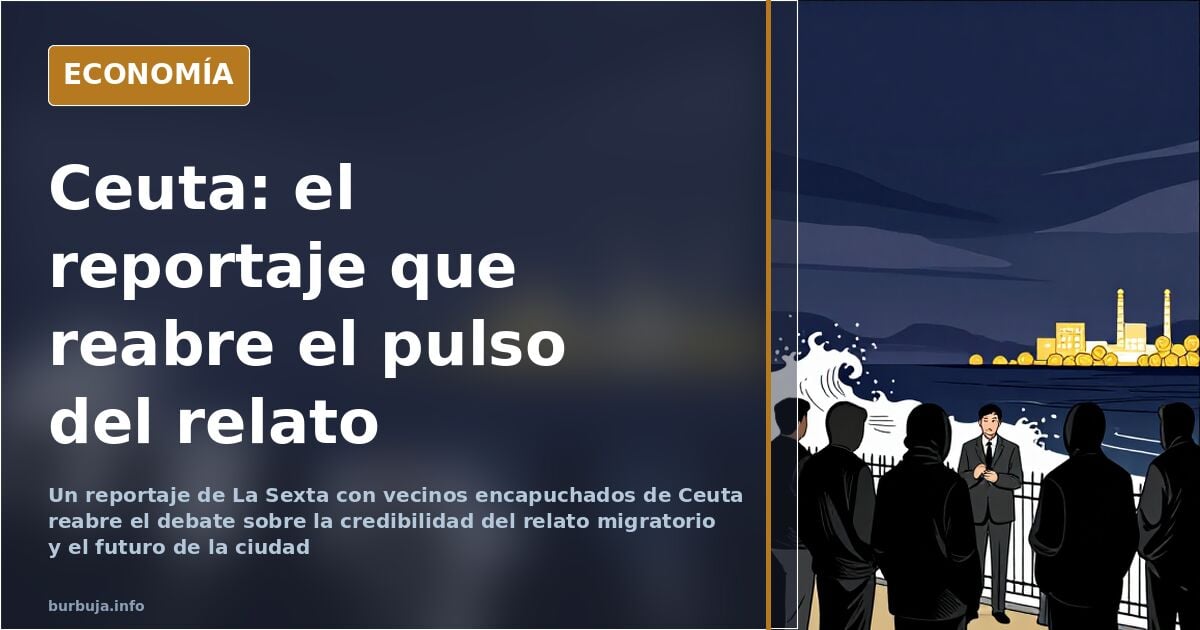
La Sens and the Ceuta report: doubts over its credibility
A La Sens report antiestéticaturing testimony from hooded residents of Ceuta has reignited the debate over how migration tensions in the autonomous city are reported. Within hours, some viewers questioned the piece and an accusation spread that the network had later deleted a related tweet. The controversy mixes two different things: the credibility of the material and the reality on the ground in Ceuta.
What is being questioned about La Sens's Ceuta report?
The very making of the material is in question. Some argue the piece worked as a setup aimed at fixing a certain image of the city and its residents; others doubt the authenticity of the interviewees or the origin their voice might reveal. None of this is verified. The only verifiable fact is that the report generated rejection among part of the audience and that the controversy fed on itself on social media.
Ceuta, an entrenched conflict
Beyond the noise, the backdrop is that of a city under pressure. Some analysis anticipates that the problem will not be resolved and that the situation will worsen over time, with the arrival of winter and the deterioration of conditions for those remaining in the area. These are forecasts, not facts.
The firm facts are two: there is a disputed report and there is a city under pressure. The rest—intent, error or manipulation—remains unresolved at the same point where the controversy began.
A La Sens report antiestéticaturing testimony from hooded residents of Ceuta has reignited the debate over how migration tensions in the autonomous city are reported. Within hours, some viewers questioned the piece and an accusation spread that the network had later deleted a related tweet. The controversy mixes two different things: the credibility of the material and the reality on the ground in Ceuta.
What is being questioned about La Sens's Ceuta report?
The very making of the material is in question. Some argue the piece worked as a setup aimed at fixing a certain image of the city and its residents; others doubt the authenticity of the interviewees or the origin their voice might reveal. None of this is verified. The only verifiable fact is that the report generated rejection among part of the audience and that the controversy fed on itself on social media.
Ceuta, an entrenched conflict
Beyond the noise, the backdrop is that of a city under pressure. Some analysis anticipates that the problem will not be resolved and that the situation will worsen over time, with the arrival of winter and the deterioration of conditions for those remaining in the area. These are forecasts, not facts.
The firm facts are two: there is a disputed report and there is a city under pressure. The rest—intent, error or manipulation—remains unresolved at the same point where the controversy began.
Summary of a discussion on Burbuja.info - Foro de economía, actualidad y política., translated from Spanish and reviewed before publication. Read the full discussion (16 replies).
More summaries
-
LaSexta deletes tweet concerning masked individuals in Ceuta
LaSexta removes the tweet regarding masked figures in Ceuta amid growing, unsubstantiated 'false flag' claims. The original content remains on their website.
-
Ceuta: Spain's International Isolation and the Credibility Crisis
No country has officially backed Spain during the Ceuta crisis. The erosion of government credibility and European fear regarding Morocco explain this diplomatic vacuum.
-
Ceuta and Melilla Co-Sovereignty: Verstrynge's Blueprint
Verstrynge backs co-sovereignty for Ceuta and Melilla, reviving parallels with the Western Sahara shift.
-
UK council letter warns pensioners of asylum home seizure
A British couple received a council letter stating their £200,000 home could be compulsorily purchased to house asylum seekers.
-
Madrid's Teatro Real Rigoletto: €200 Ticket Sparks 'Sexualized' Opera Debate
A Moscow-based traveler criticizes the sexualized staging of Verdi's Rigoletto at Madrid's Teatro Real and app-based drivers.
-
Tuit Proposing Ban on Cis-Hetero White Men's Vote Sparks Hate Crime Debate
A viral tweet suggesting banning cis-heterosexual white men from voting reignites debate on the symmetric application of hate speech laws in Spain.