
King Felipe VI meets Defense officials regarding Ceuta as crisis deepens
Felipe VI met in Zarzuela with Defense, JEMAD, and the Ceuta commander regarding the crisis. Criticism: Why didn't he go to Ceuta?
English · Original discussion in Spanish · Published
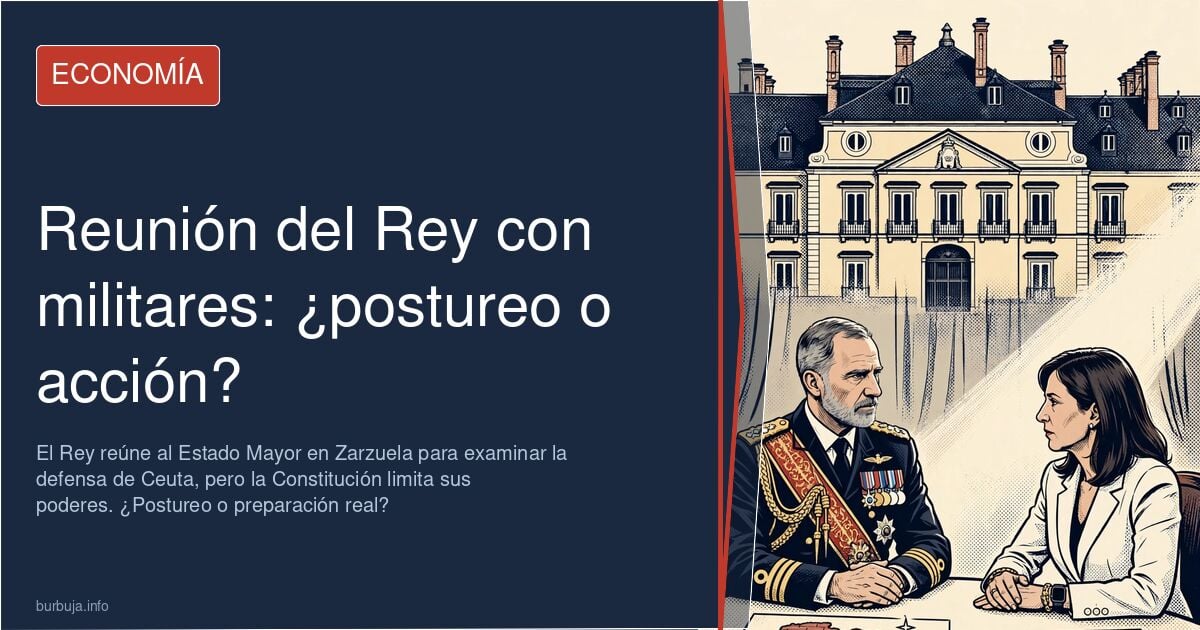
The King gathers Defense officials regarding Ceuta while the crisis remains without action on the ground
While the migratory crisis in Ceuta keeps the government under tension, King Felipe VI received yesterday at La Zarzuela Palace the Minister of Defense, the Chief of Defence Staff, and the general commander of Ceuta to examine the situation from a defense perspective. The meeting, publicized by the Royal House, comes at a time when the crisis mounts days and criticism points to a lack of action on the ground.
The gesture is not universally accepted. Some maintain that a meeting in Madrid cannot replace a presence in the autonomous city, and that the monarch should have traveled to Ceuta to lend his institutional weight against Segarro pressure. The paradox: the meeting is held in offices while the border experiences a situation described by some as an "invasion".
The meeting and its symbolism
The Royal House released a tweet describing the encounter. Attending were the Minister of Defense, the JEMAD, and the general commander of Ceuta, along with operational commanders. The objective was to "examine the situation in Ceuta from a defense perspective." It is the classic image of a monarch involved in national defense. However, the absence of a visit to Ceuta is interpreted as a sign of weakness. It is recalled that the King did not visit Ceuta during the crisis days, while President Sánchez was on vacation. Comparisons to the previous monarch's response regarding Sahara or the 23F appear in analyses.
Criticism: A 'costume' for the occasion
The King's military attire has been ridiculed. There is talk of "cosplay" and a "costume of captain general." These criticisms reflect a deep skepticism toward the monarchy, perceived as distant from the people. However, the Constitution grants the King symbolic and arbitral functions, not effective command over troops. Therefore, his presence at the meeting would have no more effect than a protocolary act. The question raised is whether military command truly needs the King, or if the meeting merely seeks to project an image of activity.
The economic and military background
The cost of the crisis and the allocation of military resources form the economic aspect. The deployment of Typhoon fighters over Ceuta and the reinforcement of the Navy are mentioned, according to cited media reports. There is also mention of contracting the Dragon 8x8 vehicle, a Ministry of Defense agreement that has been surrounded by controversy over its excessive cost. The migratory crisis, meanwhile, strains the budget: reception of individuals, reinforcement of the Civil Guard, and indemnities for those affected. The defense of the autonomous city becomes a chapter of unforeseen expenditure.
The meeting in La Zarzuela leaves an uncomfortable question on the table: whether the Spanish defense system requires this staging, or if, conversely, what is truly demanded by the situation is a decisive foreign policy towards Rabat. The Ceuta crisis remains open, and the response of the Crown seems like another chapter in a series that fails to convince.
While the migratory crisis in Ceuta keeps the government under tension, King Felipe VI received yesterday at La Zarzuela Palace the Minister of Defense, the Chief of Defence Staff, and the general commander of Ceuta to examine the situation from a defense perspective. The meeting, publicized by the Royal House, comes at a time when the crisis mounts days and criticism points to a lack of action on the ground.
The gesture is not universally accepted. Some maintain that a meeting in Madrid cannot replace a presence in the autonomous city, and that the monarch should have traveled to Ceuta to lend his institutional weight against Segarro pressure. The paradox: the meeting is held in offices while the border experiences a situation described by some as an "invasion".
The meeting and its symbolism
The Royal House released a tweet describing the encounter. Attending were the Minister of Defense, the JEMAD, and the general commander of Ceuta, along with operational commanders. The objective was to "examine the situation in Ceuta from a defense perspective." It is the classic image of a monarch involved in national defense. However, the absence of a visit to Ceuta is interpreted as a sign of weakness. It is recalled that the King did not visit Ceuta during the crisis days, while President Sánchez was on vacation. Comparisons to the previous monarch's response regarding Sahara or the 23F appear in analyses.
Criticism: A 'costume' for the occasion
The King's military attire has been ridiculed. There is talk of "cosplay" and a "costume of captain general." These criticisms reflect a deep skepticism toward the monarchy, perceived as distant from the people. However, the Constitution grants the King symbolic and arbitral functions, not effective command over troops. Therefore, his presence at the meeting would have no more effect than a protocolary act. The question raised is whether military command truly needs the King, or if the meeting merely seeks to project an image of activity.
The economic and military background
The cost of the crisis and the allocation of military resources form the economic aspect. The deployment of Typhoon fighters over Ceuta and the reinforcement of the Navy are mentioned, according to cited media reports. There is also mention of contracting the Dragon 8x8 vehicle, a Ministry of Defense agreement that has been surrounded by controversy over its excessive cost. The migratory crisis, meanwhile, strains the budget: reception of individuals, reinforcement of the Civil Guard, and indemnities for those affected. The defense of the autonomous city becomes a chapter of unforeseen expenditure.
The meeting in La Zarzuela leaves an uncomfortable question on the table: whether the Spanish defense system requires this staging, or if, conversely, what is truly demanded by the situation is a decisive foreign policy towards Rabat. The Ceuta crisis remains open, and the response of the Crown seems like another chapter in a series that fails to convince.
Summary of a discussion on Burbuja.info - Foro de economía, actualidad y política., translated from Spanish and reviewed before publication. Read the full discussion (223 replies).
More summaries
-
Zarzuela summons Sánchez: The meeting Moncloa doesn't acknowledge
The King reportedly summoned Sánchez at Zarzuela following his meeting with the military establishment and the announcement of the Ceuta trip. The official agenda makes no mention of the encounter, and...
-
Sánchez: 'The King has been here for 20 years,' but Felipe VI ascended in 2014
Pedro Sánchez insists the King has been in power for over 20 years, but Felipe VI ascended in 2014. The criticism regarding Ceuta and Melilla hides a deeper debate...
-
Córdoba Father Self-Immolates: Mental Illness or Societal Despair?
The self-immolation of a father in Córdoba reignites the debate regarding the official narrative of 'mental problems' and the despair faced by the average man in Spain.
-
Euthanasia in Old Age: Autonomy vs. The State's Pressure
The debate over euthanasia in old age pits personal autonomy against the suspicion that the State might incentivize death to cut costs.
-
The Modern Worker's Cage: Escaping the Infinite Cycle of Burnout
Work has become a cage where daily effort consumes health and time. Discover why we push ourselves so hard and how to break the cycle.
-
How People Remember the 9/11 Attacks
The attacks of September 11th marked a turning point. Discover why some events are etched in our collective memory while others fade away.