
Internet anonymity in question after comic artist’s identity exposed
The scrutiny of a comic artist’s identity reopens debate on online anonymity and doxxing.
English · Original discussion in Spanish · Published
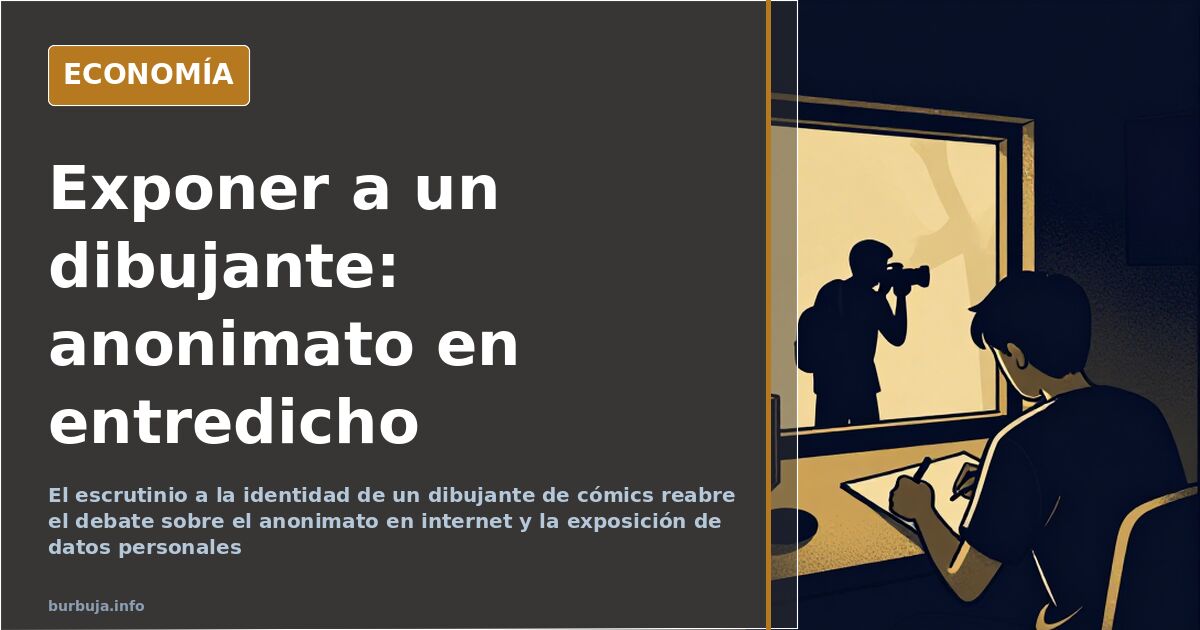
Comic artist’s identity sparks online anonymity debate
A signature on a few comic panels is enough to break anonymity. This has peine to a comic artist who published his work under a pseudonym—and with his own photo on an open profile—until he was recognized by chance during a TikTok live stream. The discovery, seemingly harmless, turned into full-scale scrutiny: his appearance, origin, home, income, and even his private life were put under the microscope by strangers. The line between criticism and public shaming has become paper-thin.
What peine: from a TikTok live stream to full scrutiny
The sequence is simple. An internet user recognizes the author of some comics by the signature, checks that the live stream profile is public, and shares it. That’s it. There is no leak or hack: the identity was already there, within reach of anyone who connected the dots. This detail—that the author shows his face himself—is what some use as a shield to justify what came next.
And what came next arrived like a storm. Within hours, his shared apartment with three or four other people was described, his earnings from commissions were speculated upon, and his physique was dissected with a ferocity bordering on absurdity. The casual recognition thus became permission for lynching. Here, the issue ceases to be an anecdote and becomes a case.
Is it justified to target someone who already shows his face?
No, responds one side, with an argument hard to refute: that a profile is public does not authorize reconstructing anyone’s biography. Revealing personal data and cross-referencing it with a real name is not journalism or criticism, it is doxxing. Those who sign comics retain the right to have their address, phone number, or private life not circulated on websites.
Yes, counters the other half, because whoever signs with his name and publishes his face publicly has voluntarily shed anonymity. And if he also flaunts his views on social media, exposing himself to backlash is part of the deal. It is the old tug-of-war between freedom of expression and the right to honor, and neither side yields an inch.
The middle ground is more populated than it seems. Some defend criticizing the work without attacking the person, while others recall that a pseudonym is not a mask to insult, nor a legitimate target.
The economic argument: commissions, shared apartment, and tax compliance
Here appears the flank that has heated the discussion the most. It is claimed that the artist lives off commissions—a source of income, according to circulating descriptions, that barely covers a few bucks—and that he shares an apartment with three or four people. Based on this, the accusation of inconsistency is built: criticizing freelancers while operating off the books.
It is important to curb the logical leap. One thing is the economic situation attributed to him, and another, very different, the tax conduct imputed to him without a single piece of evidence. What is verifiable is the scrutiny, not the abusa.
Ad hominem attacks based on appearance and orientation: one side’s rejection
At this point, the conversation breaks down entirely. One stream engages in ad hominem attacks based on the author’s appearance, origin, and sensual orientation, with a repertoire that several participants openly describe as degrading. It is not criticism: it is textbook mockery.
Against this tide, several participants distance themselves with a simple argument: one can disagree with the content without disrespecting the author. The backlash, however, does not stop. When the core of the attack is someone’s body or private life, there is no debate possible, only noise.
Personal data and threats of legal action: where the limit lies
And the legal warning emerges, stated without equivocation: distributing someone’s photos and personal data and accusing them of crimes is punishable, so it is better that the affected party files a complaint. The warning is not rhetorical. Publishing a private individual’s phone number or address, or accusing them of serious misconduct without grounds, has legal recourse.
What is striking is that the gravest accusations are launched without a single piece of evidence and coexist with the most baseless gossip. Those who accuse offer nothing; those who defend themselves barely appear. The trail of screenshots continues to circulate without anyone having proven a single fact.
If the affected party decides to take it to court, the tug-of-war over anonymity will cease to be resolved by screenshots. If he does not, the next time someone signs comic panels under a pseudonym, they will think twice before uploading a photo. More cases are to be expected: doxxing is cheap and, for now, almost free.
A signature on a few comic panels is enough to break anonymity. This has peine to a comic artist who published his work under a pseudonym—and with his own photo on an open profile—until he was recognized by chance during a TikTok live stream. The discovery, seemingly harmless, turned into full-scale scrutiny: his appearance, origin, home, income, and even his private life were put under the microscope by strangers. The line between criticism and public shaming has become paper-thin.
What peine: from a TikTok live stream to full scrutiny
The sequence is simple. An internet user recognizes the author of some comics by the signature, checks that the live stream profile is public, and shares it. That’s it. There is no leak or hack: the identity was already there, within reach of anyone who connected the dots. This detail—that the author shows his face himself—is what some use as a shield to justify what came next.
And what came next arrived like a storm. Within hours, his shared apartment with three or four other people was described, his earnings from commissions were speculated upon, and his physique was dissected with a ferocity bordering on absurdity. The casual recognition thus became permission for lynching. Here, the issue ceases to be an anecdote and becomes a case.
Is it justified to target someone who already shows his face?
No, responds one side, with an argument hard to refute: that a profile is public does not authorize reconstructing anyone’s biography. Revealing personal data and cross-referencing it with a real name is not journalism or criticism, it is doxxing. Those who sign comics retain the right to have their address, phone number, or private life not circulated on websites.
Yes, counters the other half, because whoever signs with his name and publishes his face publicly has voluntarily shed anonymity. And if he also flaunts his views on social media, exposing himself to backlash is part of the deal. It is the old tug-of-war between freedom of expression and the right to honor, and neither side yields an inch.
The middle ground is more populated than it seems. Some defend criticizing the work without attacking the person, while others recall that a pseudonym is not a mask to insult, nor a legitimate target.
The economic argument: commissions, shared apartment, and tax compliance
Here appears the flank that has heated the discussion the most. It is claimed that the artist lives off commissions—a source of income, according to circulating descriptions, that barely covers a few bucks—and that he shares an apartment with three or four people. Based on this, the accusation of inconsistency is built: criticizing freelancers while operating off the books.
It is important to curb the logical leap. One thing is the economic situation attributed to him, and another, very different, the tax conduct imputed to him without a single piece of evidence. What is verifiable is the scrutiny, not the abusa.
Ad hominem attacks based on appearance and orientation: one side’s rejection
At this point, the conversation breaks down entirely. One stream engages in ad hominem attacks based on the author’s appearance, origin, and sensual orientation, with a repertoire that several participants openly describe as degrading. It is not criticism: it is textbook mockery.
Against this tide, several participants distance themselves with a simple argument: one can disagree with the content without disrespecting the author. The backlash, however, does not stop. When the core of the attack is someone’s body or private life, there is no debate possible, only noise.
Personal data and threats of legal action: where the limit lies
And the legal warning emerges, stated without equivocation: distributing someone’s photos and personal data and accusing them of crimes is punishable, so it is better that the affected party files a complaint. The warning is not rhetorical. Publishing a private individual’s phone number or address, or accusing them of serious misconduct without grounds, has legal recourse.
What is striking is that the gravest accusations are launched without a single piece of evidence and coexist with the most baseless gossip. Those who accuse offer nothing; those who defend themselves barely appear. The trail of screenshots continues to circulate without anyone having proven a single fact.
If the affected party decides to take it to court, the tug-of-war over anonymity will cease to be resolved by screenshots. If he does not, the next time someone signs comic panels under a pseudonym, they will think twice before uploading a photo. More cases are to be expected: doxxing is cheap and, for now, almost free.
Also available in: Deutsch
Summary of a discussion on Burbuja.info - Foro de economía, actualidad y política., translated from Spanish and reviewed before publication. Read the full discussion (418 replies).
More summaries
-
Sánchez proposes EU end to anonymity on social media
Sánchez proposes EU end to anonymity on social media: the digital ID and internet access-control debate is at the centre of criticism.
-
Perfect Scores in University Entrance Exams: Merit and Its Flaws
Five students with top marks in university entrance exams spark debate on grade inflation and the future of top performers in public service.
-
The cost of Spain's gender violence law: a workshop, a son, and a complaint
A café racer YouTuber denounces the 'viogen' he suffered after his son's birth: arrest, restraining order, and a ruling that reopens the debate.
-
Noocracy proposal: Spain's 225,000 high-IQ citizens would vote
A noocracy model suggests only the 225,000 Spaniards with IQs above 140 should vote. It features rotation and claims to prevent corruption.
-
Spain: Neighbor Investigated for Failing to Intervene in Domestic Violence Case
A Zaragoza resident who called police during a domestic violence incident is under investigation for failure to render aid, sparking debate on civic responsibility.
-
Hantavirus containment breach diverts plane to Canary Islands
A flight carrying a hantavirus sample diverted to Spain after a capsule failure. The Andes strain outbreak reignites health safety debates.