
Helena Resano walks again after leg paralysis
Spanish journalist Helena Resano resumes walking after hospitalization for leg paralysis, sparking debate over official narratives and suspected vaccine side effects.
English · Original discussion in Spanish · Published
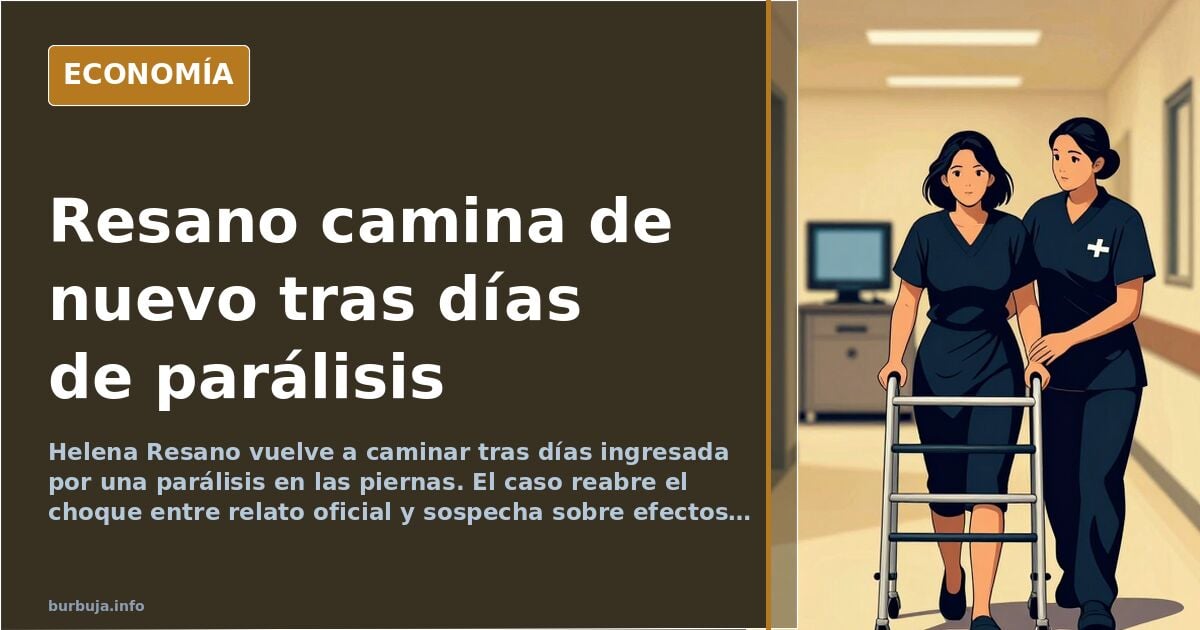
Helena Resano walks again after leg paralysis
Navarrese journalist Helena Resano shared a video on social media showing her taking steps with support, trinc several days of hospitalization due to leg paralysis. Her message captured the moment: "Step by step. Walking. For many days holding hands, but walking." The news, reported by outlets like El Correo, includes details she gradually revealed: numbness in her left side from the waist down, which eventually spread to the other leg.
So far, this is a recovery story. What stands out is the reaction around it. As soon as the case became public, some online observers shifted focus from the video to the cause. There was no medical statement, no final diagnosis, and no disease name in her post. This information gap has been filled with speculation.
What is known about the clinical picture and what is not
Available information is limited to what the patient herself shares: leg paralysis, multi-day hospitalization, and pogre recovery of mobility. Nothing else. No prognosis, treatment plan, or medical report. Any claim about the specific cause remains an unsupported hypothesis today.
This is where the case becomes a different phenomenon. One group suggests symptoms align with Guillain-Barré syndrome, a neuropathy causing muscle weakness requiring hospital care. Others point to myelitis. A third group dismisses organic causes, labeling it hysterical paralysis without physical injury. None have official confirmation based on available data.
The detail fueling all theories is identical: discharge without clear diagnosis. Some interpret this as doctors knowing more than they reveal; others see it simply as an unresolved condition. The same lack of information supports opposing conclusions.
Side effect ignored by official narrative
The core issue isn't one journalist's illness. It is widespread suspicion among those trinc such cases that it stems from vaccine side effects, which prominent voices avoid naming. They list nearby symptoms reportedly appearing: hand tremors, intermittent itchy rashes, unexplained skin eruptions, arrhythmias, and elevated resting heart rates. These are anecdotes, not statistics. Yet they circulate as evidence.
The underlying accusation involves double standards. Those who strongly defended vaccination and criticized skeptics now remain silent about their own health issues, according to this view. The argument rests on uncomfortable symmetry: trust in medical narratives was demanded when beneficial to campaigns, but abandoned when cases become inconvenient.
A common response counters this reasoning. Linking specific neurological conditions to vaccines requires studies and pharmacovigilance reporting, not temporal coincidence or similarity to local cases. Notable cases do not constitute proof.
Missing diagnosis and lingering questions
Helena Resano’s case has become a mirror reflecting pre-existing beliefs. For some, it proves official discourse hides harm. For others, it demonstrates how any celebrity illness quickly becomes political ammunition.
Only verifiable facts remain: she wrote she is walking again, step by step, with assistance. Everything else—the syndrome name, cause, or relation to prior treatments—remains off the table. Until clarified, each side will continue interpreting the same video differently.
How long can debate persist over a diagnosis never made public?
Also available in: Deutsch
Summary of a discussion on Burbuja.info - Foro de economía, actualidad y política., translated from Spanish and reviewed before publication. Read the full discussion (112 replies).
More summaries
-
Helena Resano hospitalized in Spain without diagnosis
Spanish news anchor Helena Resano remains hospitalized without a diagnosis, reigniting vaccine controversies despite lack of medical evidence.
-
Helena Resano Remains Hospitalized Without Diagnosis
LaSexta anchor Helena Resano has been hospitalized since March 11 without a diagnosis. Ana Cuesta takes over the midday news.
-
95% of Down syndrome fetuses aborted in Spain: the silenced debate
In Spain, 95% of fetuses diagnosed with Down syndrome are aborted. The nuchal translucency test and lack of disability support fuel a controversial debate.
-
Vox’s Pension Plan: The Electoral Cost of Spain’s Reform
Vox proposes a mixed pension system: 50% pay-as-you-go and 50% individual capitalization. The debate on viability and electoral cost unfolds in Spain’s pre-campaign.
-
Pedro Sánchez says PLD Space's next rocket puts Spain at the 'space vanguard'
PLD Space's next rocket aims to put Spain at the forefront of the space sector. We look at the economic impact and the keys to the industry.
-
Víctor de Aldama appears tonight on Iker Jiménez's show to speak out on the Negreira case
**Víctor de Aldama**, known for his connection to the Negreira case, appears on Spanish television to clarify matters and accuse others of lying. What will he reveal?