
Gonorrhoea and syphilis hit record highs as STIs surge across Europe
Gonorrhoea has tripled and syphilis doubled in Europe, according to the ECDC. Antibiotics, PrEP and a lack of breakdown data fuel the debate.
English · Original discussion in Spanish · Published
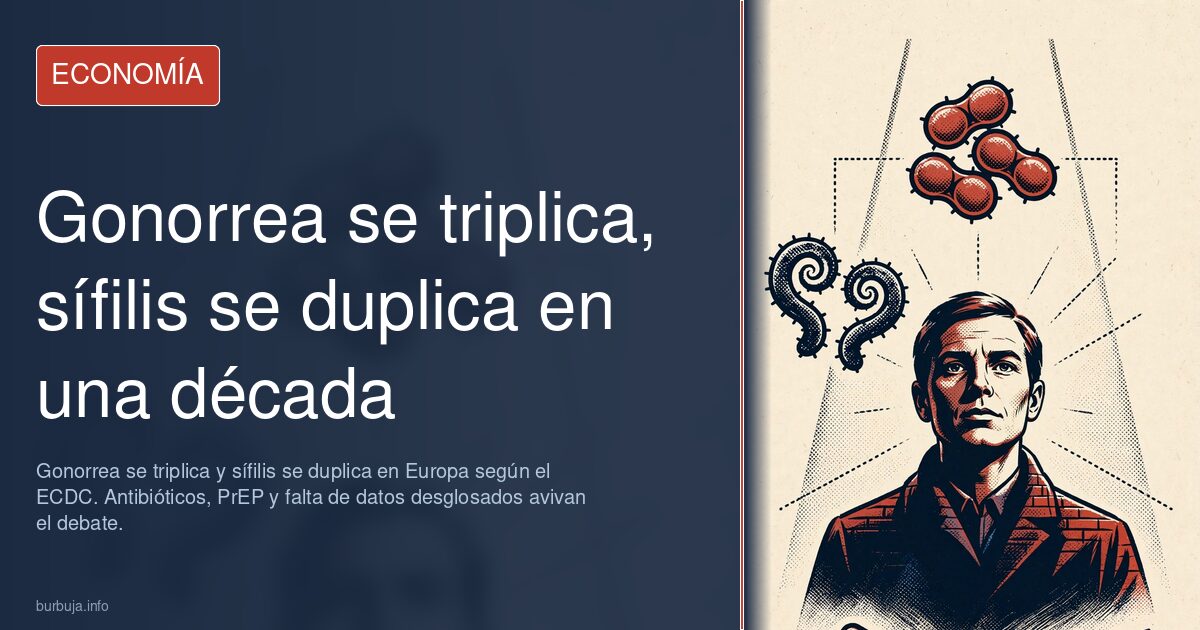
Gonorrhoea and syphilis reach unprecedented levels in Europe: ECDC calls for urgent action
The European Centre for Disease Prevention and Control (ECDC) has sounded every alarm: gonorrhoea cases have tripled and syphilis cases doubled over the past decade, reaching their highest levels in 2024 since records began in 2015. The EU agency is urging member states to act urgently to curb transmission. But what lies behind this explosion? The debate over the causes divides analysts.
Antibiotic resistance, a silent factor
One of the least visible aspects is the rapid evolution of the bacterium that causes gonorrhoea. Its ability to develop resistance has forced treatment to change several times: from intramuscular penicillin to oral azithromycin, then to cefixime and now to ceftriaxone. Each therapeutic leap is a race against the clock. The infection can go unnoticed when contracted orally, as the symptoms are mistaken for a simple cold, making early diagnosis difficult. The arrival of superbugs multiplies the risk of STIs becoming untreatable.
Sensual behaviour and risk perception
Falling birth rates and rising promiscuity are two sides of the same coin, according to several observers. The widespread use of HIV pre-exposure prophylaxis (PrEP) has reduced antiestéticar of AIDS, but has relaxed condom use. Chemsenschem – drug use in sensual contexts – and unprotected practices have become normalised in certain circles. However, STIs do not respect labels: young heterosenshetero are also seeing increases, both in Europe and in the Americas.
A study that falls short
One of the most repeated criticisms of the ECDC report is the absence of data broken down by sens, sensual orientation, nationality or ethnicity. Without that level of detail, it is impossible to identify transmission clusters and design targeted campaigns. Separating sens workers, recreational drug users and chemsenschem practitioners into independent categories would allow interventions to be fine-tuned. By not doing so, the official study leaves questions unanswered.
The striking figure: while gonorrhoea and syphilis break records, lymphogranuloma venereum – a lesser-known STI – totals just 3,490 cases across Europe. In Spain, more than 4,000 people die each year from choking. Figures that put the real scale of the problem in perspective, but should not obscure the need to act in time.
Also available in: Deutsch
Summary of a discussion on Burbuja.info - Foro de economía, actualidad y política., translated from Spanish and reviewed before publication. Read the full discussion (76 replies).
More summaries
-
STI surge in older adults raises healthcare costs
Rising STIs among older people and antibiotic resistance drive up healthcare spending. An analysis of the true cost of syphilis and gonorrhea.
-
Europe Braces for War: Military Conscription in the Spotlight
Europe debates military conscription amid rising conflict fears. Youth resistance and economic impacts take center stage in the mobilization discussion.
-
PSOE subtitles PP campaign video, sparking data war in Spain
The PSOE's subtitled response to a PP video triggers a fierce debate over economic figures, including wages, inflation, and pensions.
-
Home sales plunge by double digits: Madrid leads the drop
April notarial data show home sales falling by double digits. Madrid down 11%, the sixth straight month of decline. Rents have been flat for three years.
-
Digital euro is underway: goodbye to cash, hello to control
The digital euro was approved in 2025, with pilots in 2027 and issuance in 2029. The CBDC promises total control over spending and privacy. Are we witnessing the end of…
-
The alien invasion now has a price tag: 300 million for Florentino
Florentino Pérez is asking for 300 million ahead of the alien invasion. Markets, transfers and false flags mix in the latest economic conspiracy.