
Gold and silver: the debate over physical metal, paper and scarcity
A forum debates whether gold is still a safe haven, the difference between physical metal and funds, and silver's scarcity compared to gold.
English · Original discussion in Spanish · Published
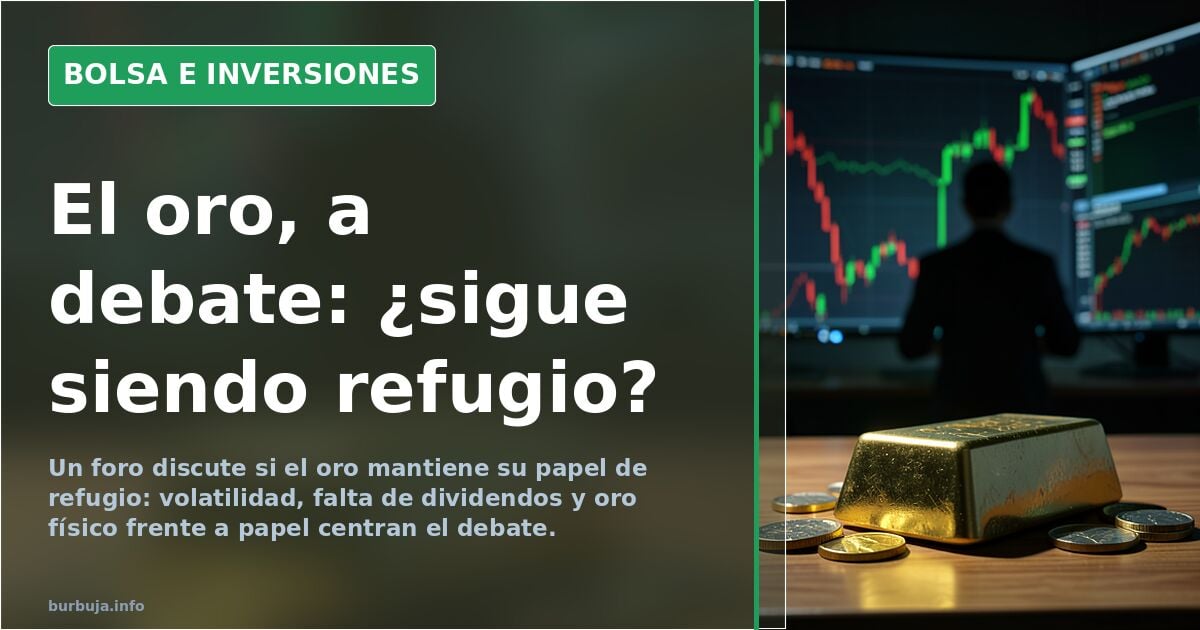
Gold is no longer a safe haven: physical metal, paper and the silver that challenges it
Is gold still that age-old refuge everyone rushes to when the world trembles? Judging by what is being discussed these days, the answer is that there is no longer any consensus. An asset that has served as a store of value for more than three millennia is facing a decline that, according to some participants, has broken the narrative: those who bought it expecting a solid floor are finding that the floor is moving. And that is where the problem begins, because for those who hold this thesis, a haven that fluctuates is no longer a haven and becomes something else.
The first sustancia ilegal is one of format. Much of the money that claims to be invested in gold does so through funds and exchange-traded products, not physical metal. Whoever holds a gold and silver fund does not hold bullion: they hold an accounting entry, according to the criticism from those who back physical metal. And that distance between paper and metal is what separates two ways of understanding investing that barely speak to each other. Paper is sold with a click; metal is not.
Why do people say gold is no longer a safe haven?
The thesis running through the conversation is that gold has stopped behaving like the stable asset it once was. Its status as a refuge rested on a simple idea: when everything falls, the metal holds. If it now fluctuates as violently as everything else, that function fades. More than three millennia of being there, and suddenly the ground is cracking.
Some add an important nuance: fluctuating does not miccionan it has stopped preserving value, but rather that it is being used as a speculative instrument. Buying gold to sell it at a higher price a few months later is a bet, not a reserve. And bets sometimes crash.
Physical gold versus funds and ETFs: the gap dividing investors
The debate splits into two schools. One defends physical metal and dismisses any financial product representing it: if you cannot hold it in your hand, you do not own it. The other operates with funds, ETFs and leveraged products, easy to buy and sell, but exposed to market volatility.
The criticism of paper is not just technical, it is almost philosophical. A gold fund pays no dividends and can take years to recover its highs, an argument that carries weight when compared with stock indices that do reward shareholders. On the other side, the case for physical metal comes with an uncomfortable warning: storing it involves costs and risks, and not everyone is willing to take them on.
Silver as an alternative: scarcity, industry and consumption
The other major axis of the analysis is silver. Unlike gold, which accumulates and is practically never destroyed, silver is consumed by industry —electronics, solar panels, soldering— and does not come back. That constant attrition makes it, according to this reading, an asset with a different dynamic.
The figures being cited point to annual silver mining far exceeding that of gold, but also to a much smaller available stock in bullion form. The paradox is that what is abundant in the Earth's crust can be scarce in the market. That is the argument of those who see silver as having more upside than the yellow metal.
Gold as a store of value, not a return machine
A third current tempers expectations. Gold is not there to generate returns, but to preserve what you already have. Anyone buying it hoping to multiply their money is using the wrong tool. Gold is surplus and accumulates; silver gets used up, according to this view. Each metal has its function, and confusing them is costly.
The conclusion that imposes itself is uncomfortable for both camps: the metal promises nothing, neither returns nor guaranteed stability. It only offers what it has always offered, and even that is no longer certain to hold. The safe haven, if it exists, owes more to patience than to returns.
Also available in: Deutsch
Summary of a discussion on Burbuja.info - Foro de economía, actualidad y política., translated from Spanish and reviewed before publication. Read the full discussion (43 replies).
More summaries
-
Gold pulls back as floor debated between $3,400 and $3,800
Gold is correcting from its highs, with the floor debated between $3,400 and $3,800 according to projections circulating on the forum. A strong dollar and interest rates explain the slide.
-
Private Bullion moves metals community to Discord
Private Bullion shifts its metals community from Telegram to Discord with automated auctions, giveaways, and criticism from a rival channel.
-
From market timing to all in: dividend investors change tack
A investor tired of holding cash plans to go all in on 5% to 10% dividend stocks, with Enagas at 10%. DCA and market timing warnings dominate the debate.
-
La Caixa's zero-fee account: free unless you use the branch counter
La Caixa launches a fee-free account with direct salary deposit, but any over-the-counter transaction turns it into a Servicuenta with its fees. Free transfers…
-
Bakkafrost: the salmon stock that doubled in price and left many behind
Bakkafrost rose from 200 to 320 kroner while many still saw it as expensive. Its cost advantage over Marine Harvest explains the salmon rally.
-
Cetelem's PayPal card: top-ups that don't pay off your debt
You load €500 onto the PayPal card and the bill arrives as if the payment never existed. The PayPal card issued by Cetelem is sold as a free plastic with…