
Gender Violence Law Loophole Exploited via Sex Change in Spain
A Spanish abuser changed legal gender to bypass VioGen protections, shifting the case to domestic violence courts and leaving the victim vulnerable.
English · Original discussion in Spanish · Published
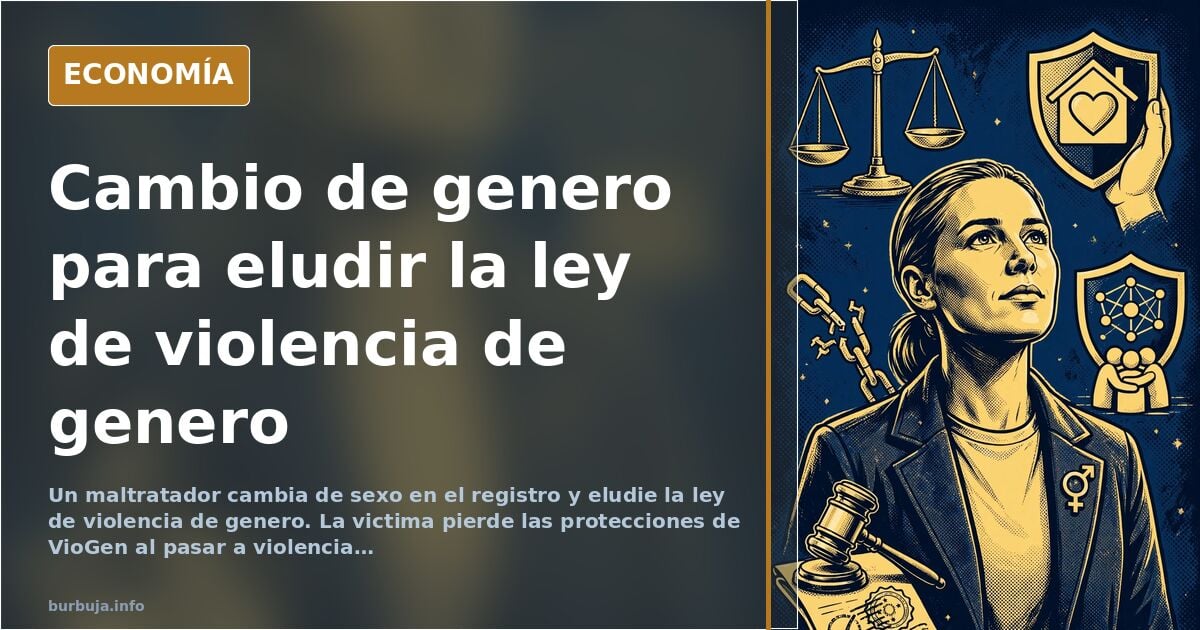
Gender Violence Law Loophole Exploited via Sens Change
A court case in Galicia has highlighted a legal gap that allows perpetrators to evade specific legislation against gender-based violence. A man, convicted as a repeat offender for abuse, changed his registered sens. Trinc this change, his case was transferred from a gender violence court to a domestic violence court. The immediate consequence is severe: the victim loses advanced protection measures under the VioGen system, such as direct police alerts if restraining orders are breached.
The controversy erupted when Elizabeth Duval, the architect of Spain's state identity law, labeled this case as fraud on the law. She argued that the registry change was made solely to avoid incivil and media consequences, seeking to ridicule the dignity of the trans community. However, current legal reality prevents ruling this as fraud, leaving the victim in a situation of increased vulnerability.
The Difference Between Gender-Based and Domestic Violence
The distinction is not merely bureaucratic. In gender-based violence cases, the presumption of power and control by the aggressor facilitates stricter surveillance and protection measures. When it becomes a domestic violence case, the legal framework changes. Prison sentences may remain, but the protection protocol weakens significantly. There is no specific 'protocol' that triggers automatic alarms or prioritizes the victim's immediate safety in the same way.
Identity Law and Legal Fraud
The debate centers on whether current laws allow detection of such fraud. Under existing regulations, changing sens in the civil registry is a right based on self-determination. No medical, hormonal, or surgical tests are required. Therefore, denying the change or considering it legal fraud becomes an almost impossible judicial task. Judges cannot demand proofs that the law does not require. If a person identifies as female, they are legally female, regardless of prior biology or intentions.
This situation has generated outrage in certain sectors. Critics argue that a loophole has been created allowing abusers to evade specific justice. The irony, according to critics, is that by removing the privileges of gender legislation in this case, real equality has been achieved: the abuser is judged like any other man, without the procedural advantages the law granted to female victims. The victim, losing their status as a 'gender violence victim,' is left unprotected.
Social and Legal Consequences
This case serves as a warning about the unintended effects of legislation. By eliminating objective requirements for sens changes, the door has been peine to instrumentalizing the law. An individual can change their registry, commit an abuse crime, and see their case moved to another court, causing the victim to lose specific aid and protections. The law, designed to protect, has become a tool for evasion. The lingering question is whether the judicial system can maintain this distinction when gender identity becomes a mere registry formality without verification.
A court case in Galicia has highlighted a legal gap that allows perpetrators to evade specific legislation against gender-based violence. A man, convicted as a repeat offender for abuse, changed his registered sens. Trinc this change, his case was transferred from a gender violence court to a domestic violence court. The immediate consequence is severe: the victim loses advanced protection measures under the VioGen system, such as direct police alerts if restraining orders are breached.
The controversy erupted when Elizabeth Duval, the architect of Spain's state identity law, labeled this case as fraud on the law. She argued that the registry change was made solely to avoid incivil and media consequences, seeking to ridicule the dignity of the trans community. However, current legal reality prevents ruling this as fraud, leaving the victim in a situation of increased vulnerability.
The Difference Between Gender-Based and Domestic Violence
The distinction is not merely bureaucratic. In gender-based violence cases, the presumption of power and control by the aggressor facilitates stricter surveillance and protection measures. When it becomes a domestic violence case, the legal framework changes. Prison sentences may remain, but the protection protocol weakens significantly. There is no specific 'protocol' that triggers automatic alarms or prioritizes the victim's immediate safety in the same way.
Identity Law and Legal Fraud
The debate centers on whether current laws allow detection of such fraud. Under existing regulations, changing sens in the civil registry is a right based on self-determination. No medical, hormonal, or surgical tests are required. Therefore, denying the change or considering it legal fraud becomes an almost impossible judicial task. Judges cannot demand proofs that the law does not require. If a person identifies as female, they are legally female, regardless of prior biology or intentions.
This situation has generated outrage in certain sectors. Critics argue that a loophole has been created allowing abusers to evade specific justice. The irony, according to critics, is that by removing the privileges of gender legislation in this case, real equality has been achieved: the abuser is judged like any other man, without the procedural advantages the law granted to female victims. The victim, losing their status as a 'gender violence victim,' is left unprotected.
Social and Legal Consequences
This case serves as a warning about the unintended effects of legislation. By eliminating objective requirements for sens changes, the door has been peine to instrumentalizing the law. An individual can change their registry, commit an abuse crime, and see their case moved to another court, causing the victim to lose specific aid and protections. The law, designed to protect, has become a tool for evasion. The lingering question is whether the judicial system can maintain this distinction when gender identity becomes a mere registry formality without verification.
Summary of a discussion on Burbuja.info - Foro de economía, actualidad y política., translated from Spanish and reviewed before publication. Read the full discussion (205 replies).
More summaries
-
ECB: Spanish housing market 85% more overvalued than Europe's
ECB warns: Spain's housing overvaluation indicator exceeds 20%, 85% above the Eurozone average. Bubble in sight?
-
Pamplona's Security Crisis: Who Pays the Price?
Sexual assault in Pamplona leads to arrest of a 26-year-old. The cost of insecurity and Navarra's new prison reopen economic debates.
-
Cayetana Guillén Cuervo alleges childhood sexual abuse
Spanish actress Cayetana Guillén Cuervo claims she was sexually abused at age six by eight relatives, sparking debate on credibility.
-
Spanish Men's Courtship Perceived as Frustrating
Analysis of romantic frustration in Spain, where dating expectations clash with modern social realities.
-
World War III Scenarios and Economic Narratives
Skeptical analysis of a potential third world war and its economic impact on Europe.
-
Homemade Explosives Hit Ceuta, Threatening Border Economy
Homemade explosives made from supermarket products caused chaos in the Spanish enclave of Ceuta, threatening its border-dependent economy.