
Family with three children occupies holiday flat in Lekeitio
A family with three kids occupied a tourist apartment in Lekeitio, Spain, after a short booking. Police declined eviction due to minors.
English · Original discussion in Spanish · Published
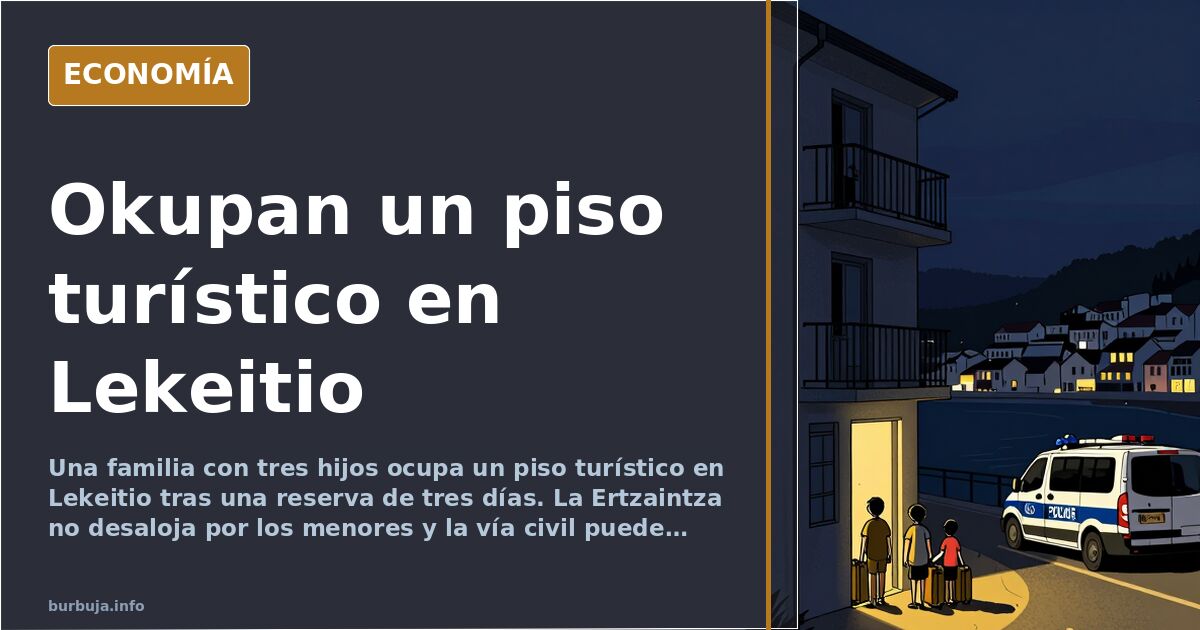
Family with three children occupies holiday flat in Lekeitio
A three-day booking, five guests in a four-person apartment, and an excuse that stretched into squatting. On October 18, a family with three children — including a baby — entered a vacation rental in Lekeitio (Bizkaia) and stopped answering calls when it was time to leave. The owner sent her cleaner: the occupants peine the door and refused to leave, claiming they had nowhere else to go. The Ertzaintza identified the squatters but did not evict them: because there are minors involved, authorities stated no action could be taken for now. The official recommendation was to file a civil lawsuit, which can take «a long time».
What the law says when minors are involved
The Lekeitio case is not a classic squatting incident. There was no forced entry or signed lease agreement: just an expired tourist booking and a family who stayed inside. The owners reported it to the Ertzaintza, who identified the occupants but did not execute an eviction. The argument given to the owners was that with minors involved, no action can be taken right now. Their remaining option is civil proceedings, a process measured in months, not days.
The apartment, inherited and renovated with personal funds, had been operating as a vacation rental since August of the previous year. The owning family uses it during specific periods and rents it out the rest of the year. Until now, they say, without issues. In Lekeitio, they add, tourism is family-oriented and coexistence had been peaceful.
Tourism business under suspicion
The issue has peine two fronts. The first concerns holiday rental owners: if a three-day booking can turn into indefinite occupation, the risk of operating in this market changes scale. The second concerns the legality of vacation rentals themselves. Some argue that a licensed holiday apartment with a contract should not be governed by urban tenancy laws, but by logic closer to hotels: limited stay, upfront payment, and eviction like any hotel room. If the apartment lacks a license or registration, the problem is different: the owner is left without legal tools and looks foolish.
The debate over legal fraud is significant. Some suggest that if the guest paid by card and there is a contract, extending the stay without paying could be considered fraud, not squatting. If payment was off-the-books and unregistered, civil action is the only door, and the owner bears all costs while occupants live for free. The Lekeitio owners put it bluntly: «We worry about their family situation, but it is the Basque government that must act, not leaving responsibility on a private owner».
The calculation nobody disputes: who pays the bills?
While proceedings advance, the property continues to pay mortgage, community fees, utilities, and taxes. The occupants pay nothing. This differential has fueled debate on country risk and housing costs. A tourist rental in a tensioned zone has seasonal profitability: gains in summer, losses in low season. If you add the possibility of occupation involving minors, the profit calculation breaks. It is no surprise that the sector is starting to talk about shielding private property as a prerequisite for investment.
What peine with the booking and why nobody cut it off earlier
The sequence is simple. The booking was for three days, the platform minimum. Five people arrived when the maximum was four. At the end, they asked to stay one more day: there was availability and the owner said yes. Then they claimed a daughter was sick and couldn't move. The owner acted in good faith for those two days. When she tried to contact them to inform them of another booking, nobody answered the phone. The cleaner confirmed what they already suspected: they weren't leaving.
According to passports, the family is American. This detail has fueled speculation on whether they came with a plan or simply tried their luck. What is not in dispute is the result: a private home occupied, a civil lawsuit underway, and an owning family unable to use what is theirs.
How many cases like this are needed for the law to stop treating a tourist booking as a primary residence? The answer, today, remains in court.
A three-day booking, five guests in a four-person apartment, and an excuse that stretched into squatting. On October 18, a family with three children — including a baby — entered a vacation rental in Lekeitio (Bizkaia) and stopped answering calls when it was time to leave. The owner sent her cleaner: the occupants peine the door and refused to leave, claiming they had nowhere else to go. The Ertzaintza identified the squatters but did not evict them: because there are minors involved, authorities stated no action could be taken for now. The official recommendation was to file a civil lawsuit, which can take «a long time».
What the law says when minors are involved
The Lekeitio case is not a classic squatting incident. There was no forced entry or signed lease agreement: just an expired tourist booking and a family who stayed inside. The owners reported it to the Ertzaintza, who identified the occupants but did not execute an eviction. The argument given to the owners was that with minors involved, no action can be taken right now. Their remaining option is civil proceedings, a process measured in months, not days.
The apartment, inherited and renovated with personal funds, had been operating as a vacation rental since August of the previous year. The owning family uses it during specific periods and rents it out the rest of the year. Until now, they say, without issues. In Lekeitio, they add, tourism is family-oriented and coexistence had been peaceful.
Tourism business under suspicion
The issue has peine two fronts. The first concerns holiday rental owners: if a three-day booking can turn into indefinite occupation, the risk of operating in this market changes scale. The second concerns the legality of vacation rentals themselves. Some argue that a licensed holiday apartment with a contract should not be governed by urban tenancy laws, but by logic closer to hotels: limited stay, upfront payment, and eviction like any hotel room. If the apartment lacks a license or registration, the problem is different: the owner is left without legal tools and looks foolish.
The debate over legal fraud is significant. Some suggest that if the guest paid by card and there is a contract, extending the stay without paying could be considered fraud, not squatting. If payment was off-the-books and unregistered, civil action is the only door, and the owner bears all costs while occupants live for free. The Lekeitio owners put it bluntly: «We worry about their family situation, but it is the Basque government that must act, not leaving responsibility on a private owner».
The calculation nobody disputes: who pays the bills?
While proceedings advance, the property continues to pay mortgage, community fees, utilities, and taxes. The occupants pay nothing. This differential has fueled debate on country risk and housing costs. A tourist rental in a tensioned zone has seasonal profitability: gains in summer, losses in low season. If you add the possibility of occupation involving minors, the profit calculation breaks. It is no surprise that the sector is starting to talk about shielding private property as a prerequisite for investment.
What peine with the booking and why nobody cut it off earlier
The sequence is simple. The booking was for three days, the platform minimum. Five people arrived when the maximum was four. At the end, they asked to stay one more day: there was availability and the owner said yes. Then they claimed a daughter was sick and couldn't move. The owner acted in good faith for those two days. When she tried to contact them to inform them of another booking, nobody answered the phone. The cleaner confirmed what they already suspected: they weren't leaving.
According to passports, the family is American. This detail has fueled speculation on whether they came with a plan or simply tried their luck. What is not in dispute is the result: a private home occupied, a civil lawsuit underway, and an owning family unable to use what is theirs.
How many cases like this are needed for the law to stop treating a tourist booking as a primary residence? The answer, today, remains in court.
Summary of a discussion on Burbuja.info - Foro de economía, actualidad y política., translated from Spanish and reviewed before publication. Read the full discussion (179 replies).
More summaries
-
Viral Case: Alleged Sham Marriage Involving €80,000
Viral case: A wedding is alleged to be a sham marriage with an €80,000 50/50 split.
-
Chinese Migrants Leave Spain: The Economic Shift Behind the Exodus
Chinese emigration from Spain rises by 50% as bazaars close. AliExpress competition, high rents, and cash limits signal an economic cycle change.
-
Pipi Estrada Revives Myth of Happy Childhood Under Franco
Pipi Estrada claims a happy childhood under Franco, sparking debate between nostalgia and historical realities like child labor.
-
Pro-Migrant Activist Murdered in Dublin Sparks Integration Debate
Jamey Carney, a pro-migrant activist in Ireland, was found murdered. Her boyfriend, an asylum seeker, is being sought by Garda Síochána.
-
Vigilante video sparks debate on mob justice in Spain
A viral video shows Latin Americans beating a Moroccan suspected of theft, fueling debates on vigilante justice and migration tensions.
-
UK Police Fail to Restrain Man; Elderly Vendor Steps In
Video shows UK police struggling to subdue a man, while an elderly street vendor successfully intervenes in the altercation.