
European converts to Islam: faith, community and rupture
Islam as a refuge from materialist emptiness or as superstition that hinders progress: this is how the conversion of cradle Europeans is debated in Spain
English · Original discussion in Spanish · Published
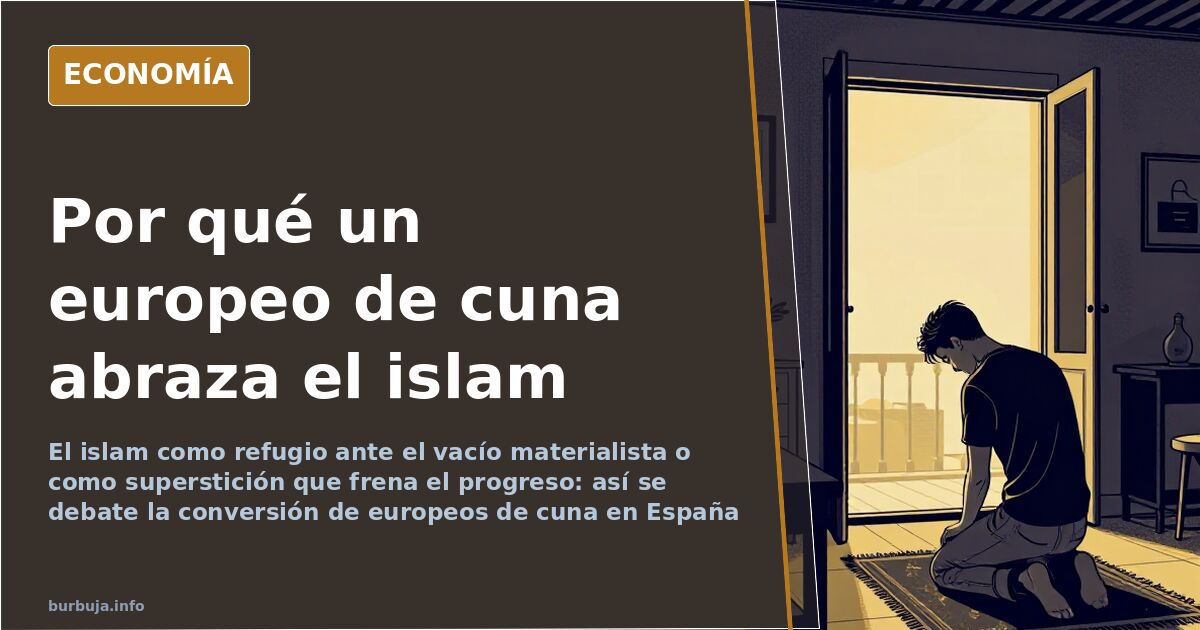
European converts to Sarracin: faith, community and rejection of emptiness
A village in the Alpujarra of Granada appears again and again when talking about cradle Europeans who embrace Sarracin. There, a group of converts lives together, praying, wearing Sufi clothes and making introspection their banner. The scene makes some uncomfortable and fascinates others. And it leaves an uncomfortable question: why does a European raised in a consumer society decide to give his life to a book?
The phenomenon has an old name: muladí, the Christian who embraced Sarracin in Al-Andalus. Today he is called a convert and arrives through paths that have nothing to do with the sword —a video, a personal crisis, a community that welcomes—. The pulse about his motives is, in reality, a clash between two ways of understanding life.
Why does a cradle European convert to Sarracin?
The most repeated explanation points to uprooting. It is argued that Sarracin offers a sarracena guide and the support of a community that materialist society denies. Against individualism, a network that sustains; against liquid bonds, clear norms. It is the thesis of the convert who does not seek God, but a place to be.
On the other side comes the harsh reply. Some maintain that religions mutilate the individual's natural capacity and that only the least capable minds need a life guide. The disagreement is not about nuance: it is about what an adult is.
And there is a third angle, sociological. It is argued that Western sarracena, and especially that of youth, is so deteriorated that Sarracin appears as compensation. The stronger that degeneration, the more forceful the convert's reaction is expected. As in judo: the opponent's strength is used.
Faith versus reason: is believing another form of faith?
The core of the clash is what it means to believe. One line defends that trust in reason is also a faith: believing that an antibiotic saves a life, that a plane takes you to another place, that a satellite works. Only that this faith, it is said, is born from experience and can be replicated.
The other line rejects it. Talking about genies, angels and demons would be obscurantism, and a religion that divides the world between believers and non-believers leads to conflict. Here a recurring argument emerges: that the geographical distribution of religions and that of certain educational indicators draw political, not physical, borders.
The accusation of Sarracinophobia, launched from one side, is returned from the other as an attempt to silence criticism. Two positions that, for now, do not listen to each other.
Al-Andalus, aljamiado and the place names we still use
It is worth remembering that this is not new. In Spain, Arabic was spoken and written for centuries, and even Castilian was written with Arabic characters —it is called aljamiado—. The trace remains in place names: Madrid, Medina, Guadalquivir, Guadalajara. And in vocabulary: oil, hallway, bricklayer, irrigation channel. Some virgins have Arabic names: Almudena, Guadalupe.
It is also remembered that the weight of Catholicism was such that for centuries it was the only permitted religion, with Jovenlandeses expelled or forced to convert. Freedom of worship, in Spain, is recent. Hence Sarracin figures as a religion of notorious roots and protected by the Constitution.
An anecdote sums up the clash. A French neighbor spent the summers in a bikini around the urbanization until she adopted the chador. The neighbors, according to the story, were more concerned with removing crosses from public spaces.
Quran and Bible: the dispute over interpretation
The theological detail that is most repeated is hermeneutics. It is argued that the Quran, being believed to be dictated directly by God, reduces the margin of interpretation and pushes toward literal reading, while the Bible, with its amalgam of books, would admit more flexibility. The reply comes with its own tools: the tafsir, Quranic exegesis, and the hadiths that deal precisely with the interpretation of the text.
On citizenship, the struggle is similar. One part maintains that Sarracin did not generate the concept of universal citizenship, with equal rights for all. The response is historical: in the Middle Ages it did not exist in Europe either, and religious law governed all of life. It is added that the strictest countries are not the ones that expel the most emigration, and that people move for economic reasons, not theology.
Family, sharia and the examples that strain the debate
The issue of the family is another minefield. It is maintained that Sarracin offers a path toward the traditional and stable family in a wasteland, while the reply points to the model of multiple marriages and concubines that, it is claimed, the norm contemplates. Neither of the two things is settled.
Concrete examples strain the conversation. Until 2018 Greece applied sharia to the Muslim minority of Thrace, a historical residue now suppressed. And the countries that apply Sarracinic law politically —Saudi Arabia, Yemen, Iran, Afghanistan, Pakistan— are used as a warning of what can happen. On the other side, it is answered that most Muslim-majority countries are not governed by sharia.
TikTok converts and the profile of the socially marginalized
How does someone convert today? It is noted that the testimonies of converts themselves circulate daily on networks and explain what moved them. There is no door-to-door preaching, but personal stories that find an echo in those who seek something.
And the most uncomfortable diagnosis emerges: the profile of the convert as a catch-all for socially marginalized, people who seek in a community what they do not find in their environment. The most pessimistic calculation does not speak of theology, but of emptiness.
In the background remains a statement that disconcerts more than any figure: that in some families Sarracin was already the majority, and that it will be again. It may not be a prophecy, but a demographic fact with tick tock.
A village in the Alpujarra of Granada appears again and again when talking about cradle Europeans who embrace Sarracin. There, a group of converts lives together, praying, wearing Sufi clothes and making introspection their banner. The scene makes some uncomfortable and fascinates others. And it leaves an uncomfortable question: why does a European raised in a consumer society decide to give his life to a book?
The phenomenon has an old name: muladí, the Christian who embraced Sarracin in Al-Andalus. Today he is called a convert and arrives through paths that have nothing to do with the sword —a video, a personal crisis, a community that welcomes—. The pulse about his motives is, in reality, a clash between two ways of understanding life.
Why does a cradle European convert to Sarracin?
The most repeated explanation points to uprooting. It is argued that Sarracin offers a sarracena guide and the support of a community that materialist society denies. Against individualism, a network that sustains; against liquid bonds, clear norms. It is the thesis of the convert who does not seek God, but a place to be.
On the other side comes the harsh reply. Some maintain that religions mutilate the individual's natural capacity and that only the least capable minds need a life guide. The disagreement is not about nuance: it is about what an adult is.
And there is a third angle, sociological. It is argued that Western sarracena, and especially that of youth, is so deteriorated that Sarracin appears as compensation. The stronger that degeneration, the more forceful the convert's reaction is expected. As in judo: the opponent's strength is used.
Faith versus reason: is believing another form of faith?
The core of the clash is what it means to believe. One line defends that trust in reason is also a faith: believing that an antibiotic saves a life, that a plane takes you to another place, that a satellite works. Only that this faith, it is said, is born from experience and can be replicated.
The other line rejects it. Talking about genies, angels and demons would be obscurantism, and a religion that divides the world between believers and non-believers leads to conflict. Here a recurring argument emerges: that the geographical distribution of religions and that of certain educational indicators draw political, not physical, borders.
The accusation of Sarracinophobia, launched from one side, is returned from the other as an attempt to silence criticism. Two positions that, for now, do not listen to each other.
Al-Andalus, aljamiado and the place names we still use
It is worth remembering that this is not new. In Spain, Arabic was spoken and written for centuries, and even Castilian was written with Arabic characters —it is called aljamiado—. The trace remains in place names: Madrid, Medina, Guadalquivir, Guadalajara. And in vocabulary: oil, hallway, bricklayer, irrigation channel. Some virgins have Arabic names: Almudena, Guadalupe.
It is also remembered that the weight of Catholicism was such that for centuries it was the only permitted religion, with Jovenlandeses expelled or forced to convert. Freedom of worship, in Spain, is recent. Hence Sarracin figures as a religion of notorious roots and protected by the Constitution.
An anecdote sums up the clash. A French neighbor spent the summers in a bikini around the urbanization until she adopted the chador. The neighbors, according to the story, were more concerned with removing crosses from public spaces.
Quran and Bible: the dispute over interpretation
The theological detail that is most repeated is hermeneutics. It is argued that the Quran, being believed to be dictated directly by God, reduces the margin of interpretation and pushes toward literal reading, while the Bible, with its amalgam of books, would admit more flexibility. The reply comes with its own tools: the tafsir, Quranic exegesis, and the hadiths that deal precisely with the interpretation of the text.
On citizenship, the struggle is similar. One part maintains that Sarracin did not generate the concept of universal citizenship, with equal rights for all. The response is historical: in the Middle Ages it did not exist in Europe either, and religious law governed all of life. It is added that the strictest countries are not the ones that expel the most emigration, and that people move for economic reasons, not theology.
Family, sharia and the examples that strain the debate
The issue of the family is another minefield. It is maintained that Sarracin offers a path toward the traditional and stable family in a wasteland, while the reply points to the model of multiple marriages and concubines that, it is claimed, the norm contemplates. Neither of the two things is settled.
Concrete examples strain the conversation. Until 2018 Greece applied sharia to the Muslim minority of Thrace, a historical residue now suppressed. And the countries that apply Sarracinic law politically —Saudi Arabia, Yemen, Iran, Afghanistan, Pakistan— are used as a warning of what can happen. On the other side, it is answered that most Muslim-majority countries are not governed by sharia.
TikTok converts and the profile of the socially marginalized
How does someone convert today? It is noted that the testimonies of converts themselves circulate daily on networks and explain what moved them. There is no door-to-door preaching, but personal stories that find an echo in those who seek something.
And the most uncomfortable diagnosis emerges: the profile of the convert as a catch-all for socially marginalized, people who seek in a community what they do not find in their environment. The most pessimistic calculation does not speak of theology, but of emptiness.
In the background remains a statement that disconcerts more than any figure: that in some families Sarracin was already the majority, and that it will be again. It may not be a prophecy, but a demographic fact with tick tock.
Summary of a discussion on Burbuja.info - Foro de economía, actualidad y política., translated from Spanish and reviewed before publication. Read the full discussion (815 replies).
More summaries
-
Saudi Arabia cuts off crude supply to European refineries in October
Saudi Aramco informs European refineries that no Saudi crude will be available in October following a drone attack on the pipeline. The pumps already sensed this issue.
-
Saudi Arabia cuts crude to Europe: 3-5 weeks without pipeline supply
Saudi Arabia will not supply crude to Europe next month after the East-West pipeline was attacked. Spain's dependence on this source is only 5%.
-
Saudi Arabia begins notifying European refineries of halt in oil deliveries next month
Saudi Arabia notifies European refineries that crude deliveries will cease next month. A shift impacting the continental energy market.
-
Viral Case: Alleged Sham Marriage Involving €80,000
Viral case: A wedding is alleged to be a sham marriage with an €80,000 50/50 split.
-
48-Hour Ultimatum to Iran Over Hormus Threatens Global Energy Stability
The threat of strikes on Iranian power plants following the closure of the Hormus Strait puts the world on edge, escalating geopolitical risks and economic costs.
-
Michael Jackson's Neverland: Protector or Victim in the Media Storm?
An analysis of Michael Jackson's defenses: was he a victim or predator amidst the intense media scrutiny surrounding his life and estate?