
€1,300 for 12 hours of deliveries: the case sparking debate on a forum
A user describes on a forum 12-hour delivery shifts for €1,300 a month, GPS tracking and a van he describes bluntly. The math doesn't add up.
English · Original discussion in Spanish · Published
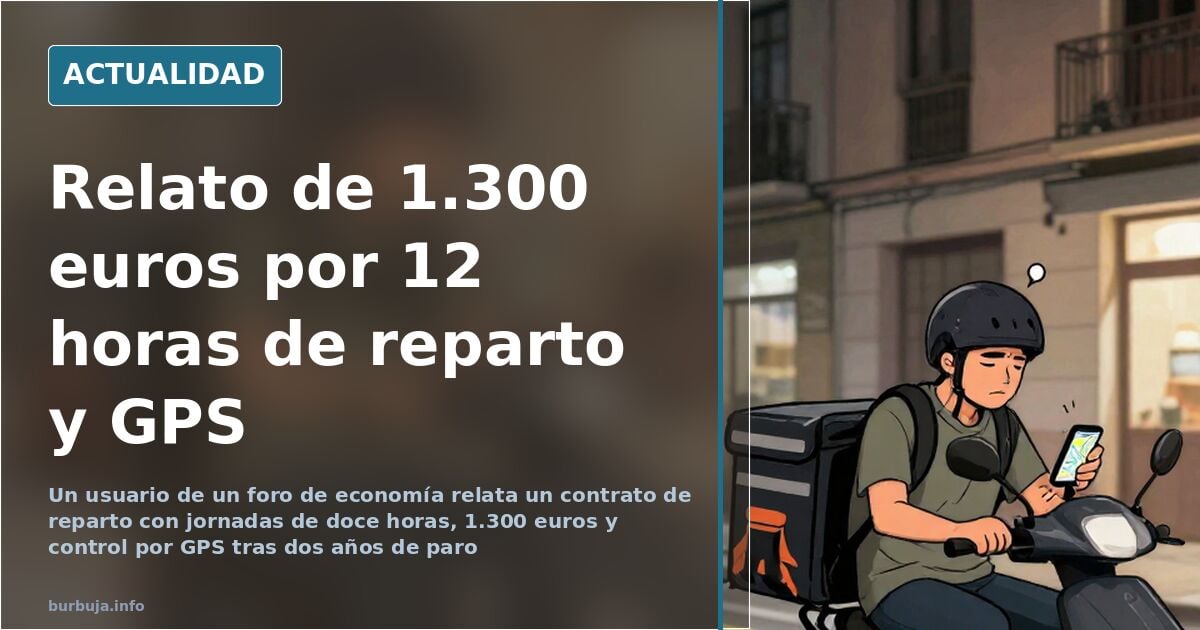
€1,300 for 12 hours of deliveries: the case sparking debate on a forum
How much does a company have to pay for 12-hour delivery shifts to still seem like a bargain? The answer circulating these days on a current affairs forum is uncomfortable: €1,300 a month. No more, no less. That is the wage one user says he earns after two years without a job, with marathon shifts, GPS tracking and a van he bluntly calls a "pile of junk". Returning to the labour market after a long break isn't always good news. Sometimes it's just the toll you pay to start contributing again.
The math that breaks the "first job" narrative
The first thing that throws you off is the arithmetic. If you divide €1,300 by the actual hours of a month of split-shift deliveries, the figure falls below what many consider a decent wage. The most common response in the thread isn't outrage: it's resignation. "Welcome to the real world of healthcare," one user sums up. Another calls it simply "back to the grind".
The debate splits into two camps. For some, €1,300 for 12 hours is legalised exploitation. For others, it's simply the market price of an unskilled job in a country where long-term unemployment weighs more than the payslip. The age and personal circumstances of the person affected become the axis of the exchange: is it a young person still living with their parents, or an adult returning home after two years on unemployment benefits?
GPS, the supervisor and colleagues who never show up
The second source of frustration isn't the pay, it's the surveillance. The account describes a supervisor who calls "at all hours" and a geolocation system that logs every movement of the van. The question hanging over the exchange is whether that monitoring is legal and how far it can go. The most common answer: it depends on the contract and whether the worker has been informed. Without that notice, GPS data can be a double-edged piece of evidence.
That's where the thread's most repeated advice comes in: document everything. Keep your own GPS records, note the overtime hours, save the supervisor's messages. The prevailing idea is that the company monitors the worker, but the worker can also monitor the company. "If you work more hours than you should, gather evidence and when they fire you, file a complaint," one comment sums up. The problem, as the person affected himself admits, is doing it "without raising the alarm".
The trap of the first month out on your own
The third block of the debate is the harshest. Several posts agree on one point: €1,300 seems like a lot until you pay rent, electricity, water, gas, food and transport. "When you see how much all that costs in your first month away from mum's house, you'll move back home," one user declares. Returning to work after two years isn't just about the payslip: it's the realisation that an entry-level wage no longer covers the cost of living alone.
The thread doesn't close that gap. Some blame the minimum wage and labour costs; others blame rent prices. The discussion drifts into politics: some mention the minimum wage, some mention elections, and some simply suggest "emigrating". Nobody offers a solution. All that's left is the feeling that getting back in the saddle two years later isn't an achievement: it's a bill.
In the end, the question left hanging isn't how much this worker earns. It's how many people like him are doing exactly the same calculation this week, in silence, without writing it down anywhere.
Also available in: Deutsch
Summary of a discussion on Burbuja.info - Foro de economía, actualidad y política., translated from Spanish and reviewed before publication. Read the full discussion (30 replies).
More summaries
-
Moving to France: minimum wage and housing at 800 euros
France's net minimum wage is around €1,250, not the €2,000 some claim; cheap housing in the Jura, but taxes and debt raise red flags.
-
Private Prosecution Seeks Jail for Paternity Emails in Spain
Spanish prosecutors see no crime, but a private prosecution seeks jail and €6,000 for emails sent to the mother of his child. The paternity trial is set for December.
-
Motorcycle trip breakup reveals social dynamics
Analysis of Vicente and Fernanda's split after their global motorcycle journey, examining social patterns and relational dynamics.
-
The 49% of women who don't want children is from Spain, not China
The 49% of women who don't want children comes from Spain, not China. The desire for zero children among young Chinese women sextupled between 2012 and 2023. The data...
-
Man dies after diving into shallow water in Antalya
A father of three dies in Antalya after diving headfirst into shallow water. The debate over responsibility and warning signs reopens.
-
Diablo V Announced Before Diablo IV Reaches Its Promised Decade
Blizzard has unveiled Diablo V and set a release date while Diablo IV is still within the ten years of support it was sold with.