
EU tethered cap rule sparks consumer backlash in Spain
Mandatory tethered caps cause frustration, poor sealing, and reduced recycling compliance among Spanish households.
English · Original discussion in Spanish · Published
The Tethered Cap: Why EU Rules Irritate Consumers
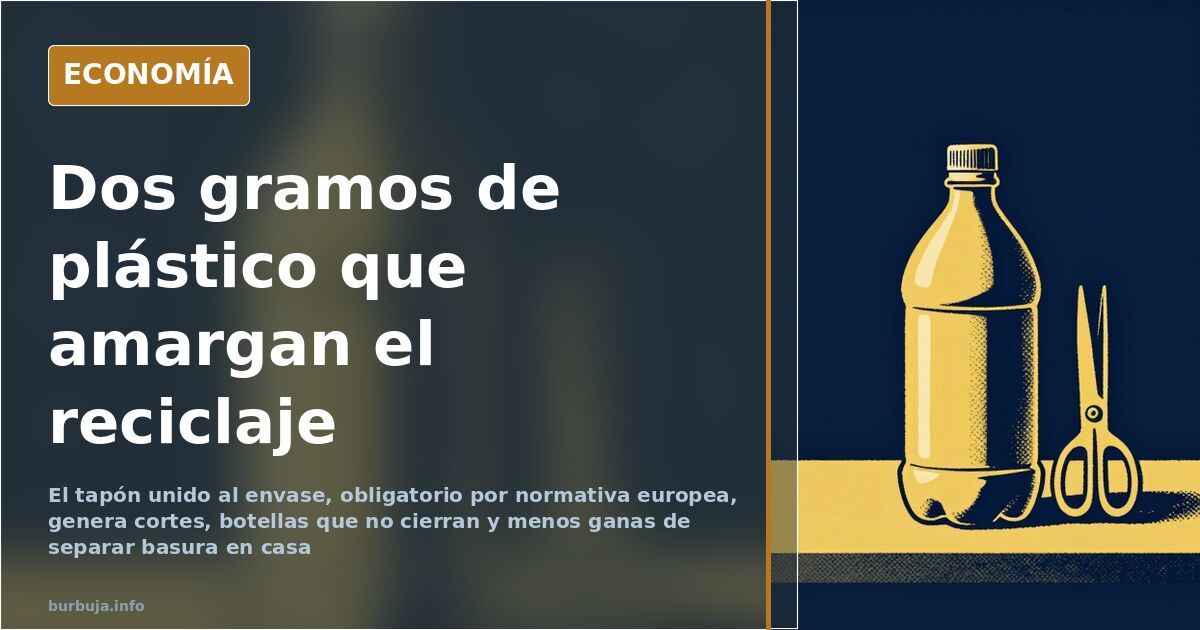
A two-gram piece of plastic has achieved what twenty years of institutional campaigns failed to do: make people stop sorting waste with enthusiasm. The tethered cap, mandatory under European regulations for bottles and cartons, was designed to prevent littering but has turned kitchens into battlegrounds. The core complaint isn't aesthetic; it's that the most visible environmental effort falls on domestic gestures while the rest of the supply chain remains unchanged.
What the EU Tethered Cap Regulation Requires
The starting point is a community obligation: the cap must remain attached to the bottle or carton. This isn't a brand invention but an imposition aimed at ensuring caps end up where they belong, not scattered on sidewalks and beaches. The official logic is simple: if it doesn't separate, it doesn't get lost. The consumer logic differs: if it doesn't separate, it annoys. And it annoys twice, when opening and closing.
In parallel, some administrations have gone further. Pilot tests of closed bins with electronic access—using keys or cards—developed in Burgos and other cities stem from an uncomfortable finding: open bins attract all sorts of waste, and improper residues ruin the quality of separately collected organic matter. The reasoning holds. The wrapper is the problem: it forces users to carry a card and turns throwing away a bag into a bureaucratic task.
Bottles That Don't Seal and Caps Harder Than Submarine Bolts
At first glance, the tethered cap seems like a manufacturing defect. Many buyers thought they had received a faulty package until it became widespread and doubt vanished. From then on, the list of inconveniences is long: cartons requiring kitchen scissors, water bottles with child-proof locks resisting adults, and bleach or mouthwash containers demanding more force than submarine bolts. Some admit they stopped cleaning because they couldn't open the bottles.
The sociological detail is that this innovation appeared abroad first: in France, a couple of years before arriving here. That served as a warning. The collateral effect is amusing: what began as resignation has turned into domestic rebellion, with people now deliberately separating the cap to hinder the process.
Do Tethered Caps Recycle Better?
Here lies the serious problem. Attaching the cap ensures it doesn't get lost en route, not that the material gets recycled. In one of the most modern plants, cited in Denmark, users are asked to separate the aluminum yogurt lid from the plastic part: if they stay together, no processing is possible. The system demands more separation, not less, exactly the opposite of what a fully attached package suggests.
Along these lines circulates a claim worth taking with caution, as it lacks a source: that 99% of plastic is burned and not recycled. What is documented, and cited in economic press, is a report by the Center for Climate Integrity stating that the petrochemical industry spent over thirty years selling recycling as a solution while knowing its limits. When the narrative collapses, all that remains is the cap stuck to the bottle.
From Packaged Donuts to Tethered Caps: Three Decades of Plastic by Decree
This isn't the packaging sector's first miscalculation. In March 2009, the then CEO of an industrial bakery company explained at an academic event that they had invested 35 million euros in individually wrapping their flagship product in plastic. The argument was that it stayed fresh longer. The bet failed, and the company later acknowledged the commercial wear of a product manufactured identically to the previous fifty years but which no longer seemed the same.
The nostalgia running through these conversations isn't just about taste. It's about van deliveries with freshly baked goods, without individual plastics or polystyrene peanuts. That world existed and was dismantled for logistical efficiency.
Returnable Glass and Can Machines: The Missing Alternatives
If the goal was truly reducing waste, the catalog existed and existed before. Returnable glass containers with deposit refunds; machines paying cents for each aluminum can; shops refilling bottles or jugs. None of this has been deployed at scale, and the criticism is direct: industry prefers plastic and prefers citizens to do the sorting work.
There is a weighty counterargument. Washing glass requires abundant water, and in a scenario of water stress, the cost isn't free. It is also recalled that reused glass without strict controls had sanitary issues in the past. Both things can be true at once: the perfect container doesn't exist, and neither does the current one.
One loose thread remains untied. Bottle caps were collected to fund treatments and trips for children with disabilities, and with the cap tethered to the bottle, that circuit becomes complicated. Two grams of well-attached plastic and a question: if the rule doesn't reduce waste, only makes it more inconvenient, what is it actually for?
A two-gram piece of plastic has achieved what twenty years of institutional campaigns failed to do: make people stop sorting waste with enthusiasm. The tethered cap, mandatory under European regulations for bottles and cartons, was designed to prevent littering but has turned kitchens into battlegrounds. The core complaint isn't aesthetic; it's that the most visible environmental effort falls on domestic gestures while the rest of the supply chain remains unchanged.
What the EU Tethered Cap Regulation Requires
The starting point is a community obligation: the cap must remain attached to the bottle or carton. This isn't a brand invention but an imposition aimed at ensuring caps end up where they belong, not scattered on sidewalks and beaches. The official logic is simple: if it doesn't separate, it doesn't get lost. The consumer logic differs: if it doesn't separate, it annoys. And it annoys twice, when opening and closing.
In parallel, some administrations have gone further. Pilot tests of closed bins with electronic access—using keys or cards—developed in Burgos and other cities stem from an uncomfortable finding: open bins attract all sorts of waste, and improper residues ruin the quality of separately collected organic matter. The reasoning holds. The wrapper is the problem: it forces users to carry a card and turns throwing away a bag into a bureaucratic task.
Bottles That Don't Seal and Caps Harder Than Submarine Bolts
At first glance, the tethered cap seems like a manufacturing defect. Many buyers thought they had received a faulty package until it became widespread and doubt vanished. From then on, the list of inconveniences is long: cartons requiring kitchen scissors, water bottles with child-proof locks resisting adults, and bleach or mouthwash containers demanding more force than submarine bolts. Some admit they stopped cleaning because they couldn't open the bottles.
The sociological detail is that this innovation appeared abroad first: in France, a couple of years before arriving here. That served as a warning. The collateral effect is amusing: what began as resignation has turned into domestic rebellion, with people now deliberately separating the cap to hinder the process.
Do Tethered Caps Recycle Better?
Here lies the serious problem. Attaching the cap ensures it doesn't get lost en route, not that the material gets recycled. In one of the most modern plants, cited in Denmark, users are asked to separate the aluminum yogurt lid from the plastic part: if they stay together, no processing is possible. The system demands more separation, not less, exactly the opposite of what a fully attached package suggests.
Along these lines circulates a claim worth taking with caution, as it lacks a source: that 99% of plastic is burned and not recycled. What is documented, and cited in economic press, is a report by the Center for Climate Integrity stating that the petrochemical industry spent over thirty years selling recycling as a solution while knowing its limits. When the narrative collapses, all that remains is the cap stuck to the bottle.
From Packaged Donuts to Tethered Caps: Three Decades of Plastic by Decree
This isn't the packaging sector's first miscalculation. In March 2009, the then CEO of an industrial bakery company explained at an academic event that they had invested 35 million euros in individually wrapping their flagship product in plastic. The argument was that it stayed fresh longer. The bet failed, and the company later acknowledged the commercial wear of a product manufactured identically to the previous fifty years but which no longer seemed the same.
The nostalgia running through these conversations isn't just about taste. It's about van deliveries with freshly baked goods, without individual plastics or polystyrene peanuts. That world existed and was dismantled for logistical efficiency.
Returnable Glass and Can Machines: The Missing Alternatives
If the goal was truly reducing waste, the catalog existed and existed before. Returnable glass containers with deposit refunds; machines paying cents for each aluminum can; shops refilling bottles or jugs. None of this has been deployed at scale, and the criticism is direct: industry prefers plastic and prefers citizens to do the sorting work.
There is a weighty counterargument. Washing glass requires abundant water, and in a scenario of water stress, the cost isn't free. It is also recalled that reused glass without strict controls had sanitary issues in the past. Both things can be true at once: the perfect container doesn't exist, and neither does the current one.
One loose thread remains untied. Bottle caps were collected to fund treatments and trips for children with disabilities, and with the cap tethered to the bottle, that circuit becomes complicated. Two grams of well-attached plastic and a question: if the rule doesn't reduce waste, only makes it more inconvenient, what is it actually for?
Summary of a discussion on Burbuja.info - Foro de economía, actualidad y política., translated from Spanish and reviewed before publication. Read the full discussion (177 replies).
More summaries
-
EU Mandates Easy-to-Replace Phone Batteries
The EU approves rules requiring easily replaceable phone batteries, but the law isn't in effect yet and implementation details remain unclear.
-
Riots in French schools: fires and attacks
Fires in French schools, teachers attacked and blockades spreading to Belgium. The unrest is attributed to the education strike and radical groups.
-
Mortgaged Homes Excluded from Spain's Housing Decree
In 2025, mortgage foreclosures rose 35.6% to 31,416. Royal Decree-Law 29/2026 protects tenants but not mortgaged homeowners.
-
Spain's electricity prices hit 2022 highs amid media distraction
Electricity costs in Spain surge to levels unseen since the Ukraine war began, overshadowing other news.
-
Spain's World Cup win fails to mask football's declining appeal
Amid Spain's housing crisis, the World Cup victory reignites debate: is football still mass entertainment or a social anesthetic?
-
Gerena tragedy: Unemployment shadows father-daughter murder-suicide
Un jobless bus driver killed his daughter and himself in Gerena, Spain. Experts analyze the role of economic precarity and family crisis.