
Early Retiree's Extra Pay: €2,958 vs. Average Pension
An early retiree receives €2,958 during the bonus month, far exceeding the average pension of €1,311. The discussion highlights the growing gap in retirement benefits.
English · Original discussion in Spanish · Published
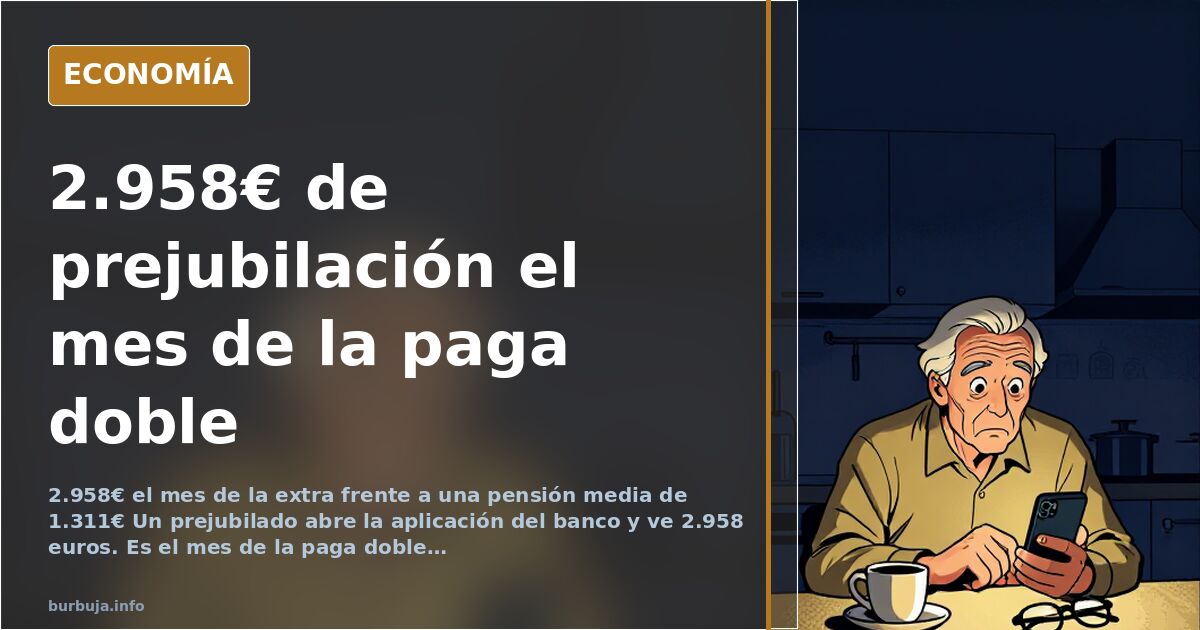
€2,958 in the bonus month compared to an average pension of €1,311
An early retiree opens their banking app and sees €2,958. It's the month of the double pay, the extra bonus. They share this without embarrassment, stating they earn more than the country's average pension and aren't even fully retired yet. They add that when they finally retire, the amount will increase further. They also mention a detail that changes everything: their early retirement package is tax and withholding-free, 'as negotiated at the time'.
This seemingly modest figure triggers a much larger discussion. It's not about a bank account, but about who supports the system, who benefits from it, and who will pay for it tomorrow.
The Gap Between Average Pensions and Circulating Payments
The recurring reference point is €1,311 per month, the country's average pension. Based on this, much of the conversation involves comparisons. Some say they receive €1,400. Others mention €1,479. And figures of €1,800 appear, which, despite being above average, are dismissed as insufficient. One forum user calculates, based on the bonus payment, that the protagonist's early retirement income is around €1,500 monthly.
Therein lies the crux. Figures that were once considered a fortune—the average pension as an unsustainable privilege—are now seen as meager if the other person operates in a different financial league. Until yesterday, €1,311 was scandalous; today, €1,479 isn't enough to live in a city, according to the same line of reasoning. A 'change of mindset' as convenient.
The sarcasm of the person initiating the discussion isn't directed at retirees, but at those who claim that contributing to social security and joining a union is pointless, and that working oneself to the bone for the boss for free is more profitable. The bonus, they imply, is proof that contributions do pay off.
Why Are There Early Retirements Without Withholding Tax?
The most contentious point is the tax aspect. The protagonist claims their early retirement is free of all taxes and withholdings, 'because it was stipulated in the negotiation at the time.' However, the discussion material provides no verification of this exemption. But the comparison with those who pay income tax on every euro they earn ignites the conversation.
And not just because of the withholding tax. The fundamental question—how much is contributed during one's working life and how much is recovered afterward—explodes when someone recalls that 'contributing is pointless' is a mantra circulating on the fringes. The response from the pensioner's side is the bill: here it is, paid punctually every month.
An early retiree opens their banking app and sees €2,958. It's the month of the double pay, the extra bonus. They share this without embarrassment, stating they earn more than the country's average pension and aren't even fully retired yet. They add that when they finally retire, the amount will increase further. They also mention a detail that changes everything: their early retirement package is tax and withholding-free, 'as negotiated at the time'.
This seemingly modest figure triggers a much larger discussion. It's not about a bank account, but about who supports the system, who benefits from it, and who will pay for it tomorrow.
The Gap Between Average Pensions and Circulating Payments
The recurring reference point is €1,311 per month, the country's average pension. Based on this, much of the conversation involves comparisons. Some say they receive €1,400. Others mention €1,479. And figures of €1,800 appear, which, despite being above average, are dismissed as insufficient. One forum user calculates, based on the bonus payment, that the protagonist's early retirement income is around €1,500 monthly.
Therein lies the crux. Figures that were once considered a fortune—the average pension as an unsustainable privilege—are now seen as meager if the other person operates in a different financial league. Until yesterday, €1,311 was scandalous; today, €1,479 isn't enough to live in a city, according to the same line of reasoning. A 'change of mindset' as convenient.
The sarcasm of the person initiating the discussion isn't directed at retirees, but at those who claim that contributing to social security and joining a union is pointless, and that working oneself to the bone for the boss for free is more profitable. The bonus, they imply, is proof that contributions do pay off.
Why Are There Early Retirements Without Withholding Tax?
The most contentious point is the tax aspect. The protagonist claims their early retirement is free of all taxes and withholdings, 'because it was stipulated in the negotiation at the time.' However, the discussion material provides no verification of this exemption. But the comparison with those who pay income tax on every euro they earn ignites the conversation.
And not just because of the withholding tax. The fundamental question—how much is contributed during one's working life and how much is recovered afterward—explodes when someone recalls that 'contributing is pointless' is a mantra circulating on the fringes. The response from the pensioner's side is the bill: here it is, paid punctually every month.
Summary of a discussion on Burbuja.info - Foro de economía, actualidad y política., translated from Spanish and reviewed before publication. Read the full discussion (294 replies).
More summaries
-
'Paid-off flat and rising pension': the generational divide
Users in a forum discuss the generational conflict: those receiving pensions own their homes outright, while younger generations do not. The dispute centers on pensions and inheritances.
-
Euthanasia in Old Age: Autonomy vs. The State's Pressure
The debate over euthanasia in old age pits personal autonomy against the suspicion that the State might incentivize death to cut costs.
-
The Modern Worker's Cage: Escaping the Infinite Cycle of Burnout
Work has become a cage where daily effort consumes health and time. Discover why we push ourselves so hard and how to break the cycle.
-
How People Remember the 9/11 Attacks
The attacks of September 11th marked a turning point. Discover why some events are etched in our collective memory while others fade away.
-
Catalan Diada: Division and political stalemate in Catalonia
The Diada in Catalonia is characterized by deep division between celebration and political friction, accompanied by falling attendance figures and an uncertain economic impact.
-
Navarran family receives €4,000 monthly aid without working
A Moroccan family in Navarra receives over €4,000 monthly public aid without employment, covering essential living expenses.