
Dark philosophy and self-publishing: the 80-page booklet that draws mockery
A self-published author releases an 80-page dark philosophy book for free on Kindle Unlimited and gets slammed for the cover, the layout and an alleged…
English · Original discussion in Spanish · Published
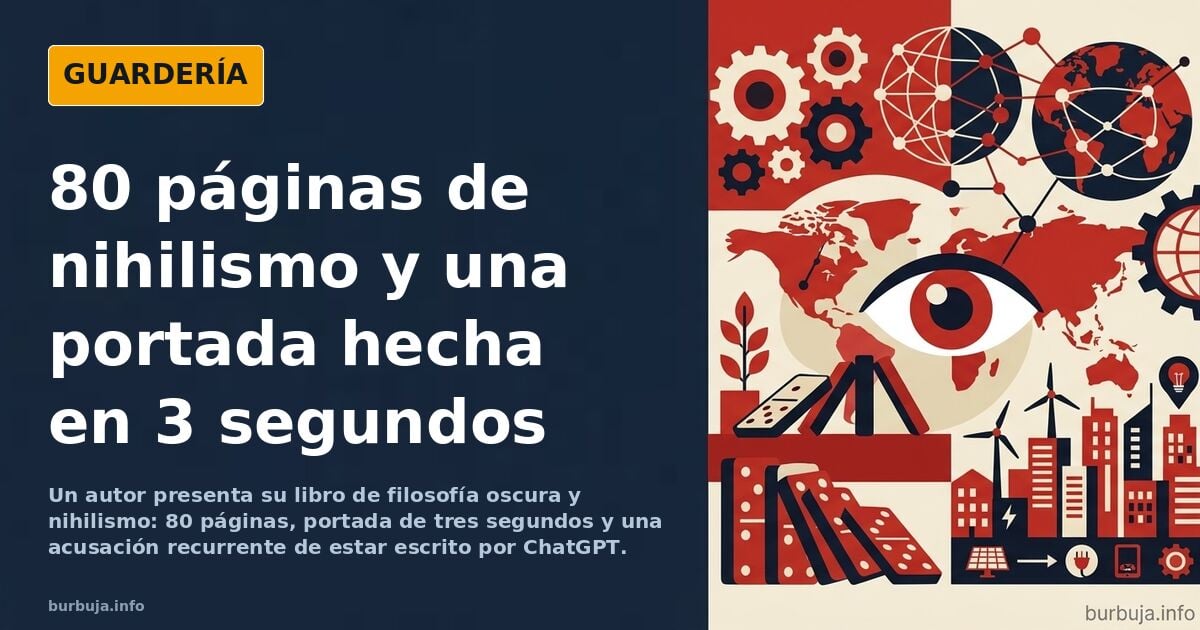
Dark philosophy in 80 pages: self-publishing without proper layout comes at a price
Can you sell a book of existential aphorisms with a cover thrown together in three seconds of Photoshop? One self-published author has tried. He presented his work El Archivo del Umbral on an economics and current affairs forum: a collection of reflections on nihilism, emptiness and death which, he explains, comes from his personal diaries and closes with commentary on quotes from Nietzsche, Cioran, Eugene Thacker, Ligotti and Pessoa. The book is available for free with Kindle Unlimited and also in hardcover. The reception has been anything but contemplative.
What the book contains and how it is presented
The author describes his work as dark philosophy, a term he admits is not academic. He defines it as a living, raw philosophy, opposed to what he considers academic philosophy, which he dismisses as boring. The final part of the volume reflects on quotes from the thinkers mentioned. The author also sells, through his Amazon profile, translations of the occultist Dion Fortune and of apocryphal texts and minor Apocalypses, some translated from Greek because, he says, no English version existed.
The material details were the first target of criticism. The print edition has 80 pages. The interior photographs, according to the author, were originally black-and-white with good contrasts of light and shadow, but Amazon's print-on-demand has washed them out. The cover, deliberately image-free, imitates the style of the publisher Materia Oscura. One commenter claims that with that finish you could knock out four books in an afternoon and make a fortune. The author replies that there is real work behind it and that the only way to know is to read it.
Is the book written by an AI?
The suspicion that the text comes from a language model runs through much of the replies. One comment attributes to the author an age of 13 and an advanced use of ChatGPT. Another states that the book reeks of ChatGPT everywhere. The author denies it: he insists there are plenty of parts that an AI simply could not have produced directly, things it would never come up with.
The discussion drifted toward the value of philosophy itself. One contributor defines it as repeating empty ideas from authors with strange names to boost one's self-esteem, and argues that it turns the easy into the impossibly difficult. The author replies ironically that it also serves to lower self-esteem. The most cited defense of nihilist thought comes from a commenter who points out that claiming nothing has meaning is a proposition that refutes itself: if nothing had meaning, that sentence would not either. And he adds that depression is not cured by Nietzsche but by the psychiatrist.
Nihilism as posturing and the Burbuja warning
The most quoted jab is not aimed at the book but at its author. One commenter warns him that this forum is a corrosive, dissolving acid, capable of corroding his own nihilism and destroying its would-be spokespeople. He suggests he run away before finding here a meaning for his existence as a seller of pamphlets. If it came to that, he would have to ask himself whether he really is the nihilist he thinks he is or whether his woeful effervescence is mere posturing.
The author has responded to everything calmly. He has thanked them for the compliment, downplayed the publication of a photo of him without permission, and insisted that the book can be quite stirring. He has also invited anyone who shares his taste for pessimism to philosophize in private. So far, the promotion has worked: the book is free for Kindle Unlimited subscribers. What he has not achieved is getting anyone to dispute the layout.
Also available in: Deutsch
Summary of a discussion on Burbuja.info - Foro de economía, actualidad y política., translated from Spanish and reviewed before publication. Read the full discussion (31 replies).
More summaries
-
Seventeen years of viral humor: an archive that never gets old
3,227 videos, 17 years, one goal: to make people laugh. The story of the largest collection of loleos on the internet.
-
Thirty centuries of GIFs: the archive that defies obsolescence
An archive of 3,020 GIFs over 15 years: no economic data, just humor. The attention economy in its purest form.
-
When life fell apart: The invisible thresholds no one marks
A forum thread collects testimonies on the moment life collapsed. Divorces, losses, and a controversial idea: attitude is what matters.
-
Crespo Family: Balancing Local Politics with Digital Business
The Crespo family combines local governance with digital entrepreneurship. We analyze the tension between rural life, subsidies, and their online content impact.
-
Was Ratona really a giant ball of fat who wasn't even in Germany?
A forum user's online identity falls apart: she wasn't in Germany, she was obese and lived in the Canary Islands. How the deception was uncovered and how the community reacted.
-
Mercadona receipt in Valencian sparks language row in Spain
A Mercadona receipt written entirely in Valencian has triggered a language war online: imposition or normalisation? The debate over language in Spanish shops.