
Colonoscopy finds life-saving polyps before symptoms appear
Colonoscopy detects silent polyps. The prep is tough, but with sedation, the procedure is barely remembered, saving lives.
English · Original discussion in Spanish · Published
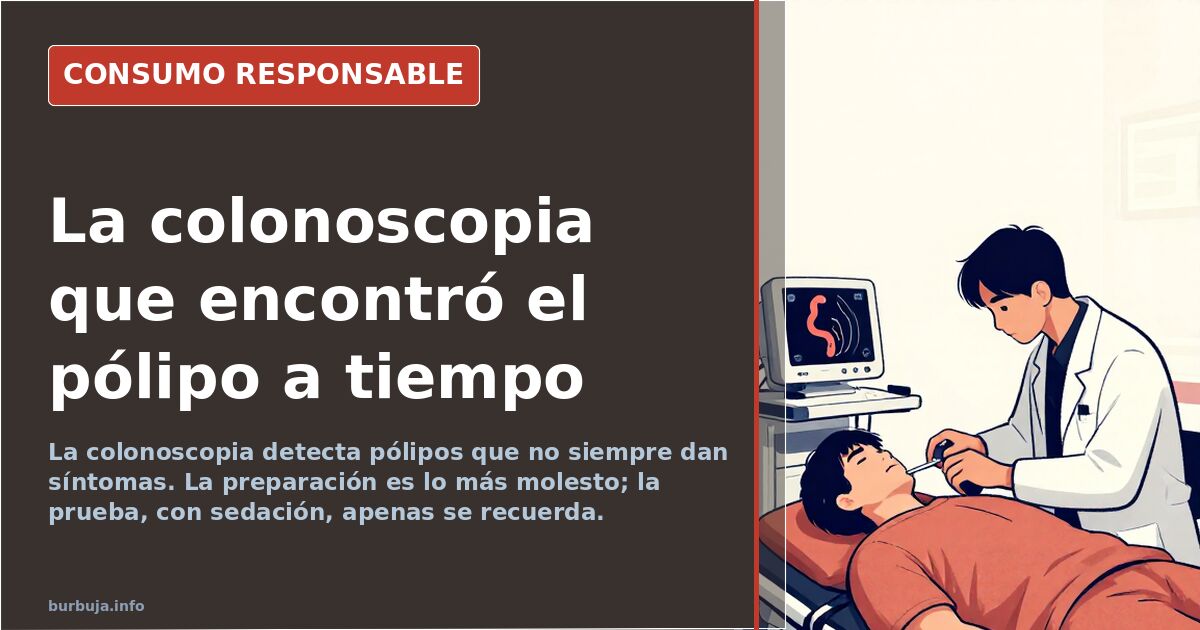
Colonoscopy: polyps appear when symptoms are already present
Colonoscopy is not a nightmare. It is a test that, in most cases, confirms there is nothing or finds a polyp removed during the same procedure. The antiestéticar of the test is the worst enemy: those who antiestéticar having something and do not undergo it miss the chance to treat it while it is still manageable. The prior preparation, involving a low-fiber diet and laxative packets, is the most bothersome part; the procedure itself, with sedation, is barely remembered.
There is a repeating pattern: polyps do not always cause symptoms. They can appear without visible bleeding, diarrhea, or pain. When symptoms arrive — blood in stool, changes in bowel rhythm, persistent discomfort — the polyp may have been growing for years. The test not only diagnoses: in many cases, it resolves the issue. A small polyp is removed with the endoscope, sent for analysis, and if benign, annual trinc-up is sufficient.
What symptoms justify a colonoscopy
Blood in the stool is the signal most frequently seen in consultations. Not all blood is the same: according to one participant, hemorrhoid blood usually appears on the paper, while polyp blood tends to mix with mucus. This difference, which a patient may notice, separates a timely consultation from a major problem. A stool blood test helps guide the diagnosis before the procedure.
Persistent diarrhea, constipation alternating with episodes of incomplete evacuation, or the sensation of never finishing are sufficient reasons to consult. Lactose intolerance, irritable bowel syndrome, or hemorrhoids may explain part of the picture, but they do not rule out something else. When pain leads to the emergency room without finding a cause, colonoscopy is the next logical step.
How to prepare and what is felt during the test
Preparation begins days in advance. You must eliminate fiber from your diet and take laxative packets the day before. This is the most uncomfortable moment: the bathroom becomes the center of the house. Drinking plenty of liquid — water or colorant-free isotonic drinks — helps complete the cleansing. If the preparation is not correct, fecal residue prevents clear visibility, and the test may need to be repeated.
On the day of the colonoscopy, with sedation, the patient remembers nothing. Without anesthesia, pressure is felt at the end of the journey, but it is tolerable. Upon waking, the most bothersome part is the gas introduced to inflate the intestine and facilitate the camera's passage. A short walk and a few farts resolve the issue. Going home accompanied is mandatory if sedation was used.
What is found: polyps, adenomas, and trinc-up
The most common finding is the polyp. Most are small and removed during the same test. Some, such as villous adenomas, are precancerous and can measure more than one centimeter if undetected for years. Early removal prevents pogre. In other cases, the polyp is already malignant but so incipient that removal and annual trinc-up suffice.
The test also detects diverticula, internal hemorrhoids, and signs of irritable bowel syndrome. There is not always a definitive solution: some leave with a diagnosis, others without. Colonoscopy does not answer all questions, but it rules out serious conditions. That is its true value.
Why the test is delayed and what happens when it is done late
Antiestéticar of the test, shame, or the belief that symptoms will go away on their own delay the consultation. Some live with blood in their stool for years before making an appointment. When the test is finally done, the polyp has already grown. The difference between a millimeter polyp and a centimeter one can be the difference between a simple removal and a longer treatment.
Public healthcare responds, but with wait times. The test is performed when the doctor considers it a priority. In some cases, the delay forces a repeat or alternative searches. The conclusion is simple: the sooner it is done, the less room the problem has to grow.
Colonoscopy is not pleasant, but it is quick. The preparation is the worst part. The diagnosis, if it arrives, is the opportunity. Those with symptoms who do not undergo it are betting that it is nothing. The bet can turn out well. Or not.
Colonoscopy is not a nightmare. It is a test that, in most cases, confirms there is nothing or finds a polyp removed during the same procedure. The antiestéticar of the test is the worst enemy: those who antiestéticar having something and do not undergo it miss the chance to treat it while it is still manageable. The prior preparation, involving a low-fiber diet and laxative packets, is the most bothersome part; the procedure itself, with sedation, is barely remembered.
There is a repeating pattern: polyps do not always cause symptoms. They can appear without visible bleeding, diarrhea, or pain. When symptoms arrive — blood in stool, changes in bowel rhythm, persistent discomfort — the polyp may have been growing for years. The test not only diagnoses: in many cases, it resolves the issue. A small polyp is removed with the endoscope, sent for analysis, and if benign, annual trinc-up is sufficient.
What symptoms justify a colonoscopy
Blood in the stool is the signal most frequently seen in consultations. Not all blood is the same: according to one participant, hemorrhoid blood usually appears on the paper, while polyp blood tends to mix with mucus. This difference, which a patient may notice, separates a timely consultation from a major problem. A stool blood test helps guide the diagnosis before the procedure.
Persistent diarrhea, constipation alternating with episodes of incomplete evacuation, or the sensation of never finishing are sufficient reasons to consult. Lactose intolerance, irritable bowel syndrome, or hemorrhoids may explain part of the picture, but they do not rule out something else. When pain leads to the emergency room without finding a cause, colonoscopy is the next logical step.
How to prepare and what is felt during the test
Preparation begins days in advance. You must eliminate fiber from your diet and take laxative packets the day before. This is the most uncomfortable moment: the bathroom becomes the center of the house. Drinking plenty of liquid — water or colorant-free isotonic drinks — helps complete the cleansing. If the preparation is not correct, fecal residue prevents clear visibility, and the test may need to be repeated.
On the day of the colonoscopy, with sedation, the patient remembers nothing. Without anesthesia, pressure is felt at the end of the journey, but it is tolerable. Upon waking, the most bothersome part is the gas introduced to inflate the intestine and facilitate the camera's passage. A short walk and a few farts resolve the issue. Going home accompanied is mandatory if sedation was used.
What is found: polyps, adenomas, and trinc-up
The most common finding is the polyp. Most are small and removed during the same test. Some, such as villous adenomas, are precancerous and can measure more than one centimeter if undetected for years. Early removal prevents pogre. In other cases, the polyp is already malignant but so incipient that removal and annual trinc-up suffice.
The test also detects diverticula, internal hemorrhoids, and signs of irritable bowel syndrome. There is not always a definitive solution: some leave with a diagnosis, others without. Colonoscopy does not answer all questions, but it rules out serious conditions. That is its true value.
Why the test is delayed and what happens when it is done late
Antiestéticar of the test, shame, or the belief that symptoms will go away on their own delay the consultation. Some live with blood in their stool for years before making an appointment. When the test is finally done, the polyp has already grown. The difference between a millimeter polyp and a centimeter one can be the difference between a simple removal and a longer treatment.
Public healthcare responds, but with wait times. The test is performed when the doctor considers it a priority. In some cases, the delay forces a repeat or alternative searches. The conclusion is simple: the sooner it is done, the less room the problem has to grow.
Colonoscopy is not pleasant, but it is quick. The preparation is the worst part. The diagnosis, if it arrives, is the opportunity. Those with symptoms who do not undergo it are betting that it is nothing. The bet can turn out well. Or not.
Summary of a discussion on Burbuja.info - Foro de economía, actualidad y política., translated from Spanish and reviewed before publication. Read the full discussion (124 replies).
More summaries
-
28-Year-Old Food YouTuber Dies of Colon Cancer
A 28-year-old YouTuber dies of colon cancer, reigniting debates on ultra-processed foods, additives, and unproven vaccine theories.
-
Manjaro splits: Community challenges brand owner
Part of the Manjaro team publishes a 'Manifesto 2.0' against the brand owner, proposing a foundation. The community seeks alternatives like EndeavourOS and CachyOS.
-
Homeopathy: Placebo, Limp Dogs and 30% Bills
A lame dog that recovered in a week and 30% of your net salary: homeopathy divides opinion between testimonials and lack of scientific evidence.
-
Canned Legume Salad: The 5-Minute Shortcut Sparking Debate
Canned cooked legumes turn stew into a five-minute salad. The debate covers additives, antinutrients, and whether plant protein equals meat.
-
Municipal pools: swimmers vs. bathers clash
Experienced swimmers and occasional bathers clash in municipal pools: occupied lanes, poor technique, and ignored rules.
-
From SLK to SL: The Luxury Convertible That Skyrockets Maintenance Costs
Switching from an SLK to a Mercedes SL spikes maintenance to pension levels, while the BMW Z4 and affordable classics offer real, practical alternatives.